

The All Ford Day, one of the largest car shows of its type, celebrated its 35th Anniversary in 2026, drawing in big numbers of Ford and Ford family vehicles. What has attracted more than 1,500 cars, commercial vehicles and trucks in recent years was hit by the US-Iran war fuel price spike, so the 2026 show was down on numbers. Still, a touch over 1,000 display vehicles was impressive.
While this event always pulls in plenty of new and classic Aussie Fords, there’s a healthy amount of American Fords on show, too, like Mustangs and their Shelby variants.
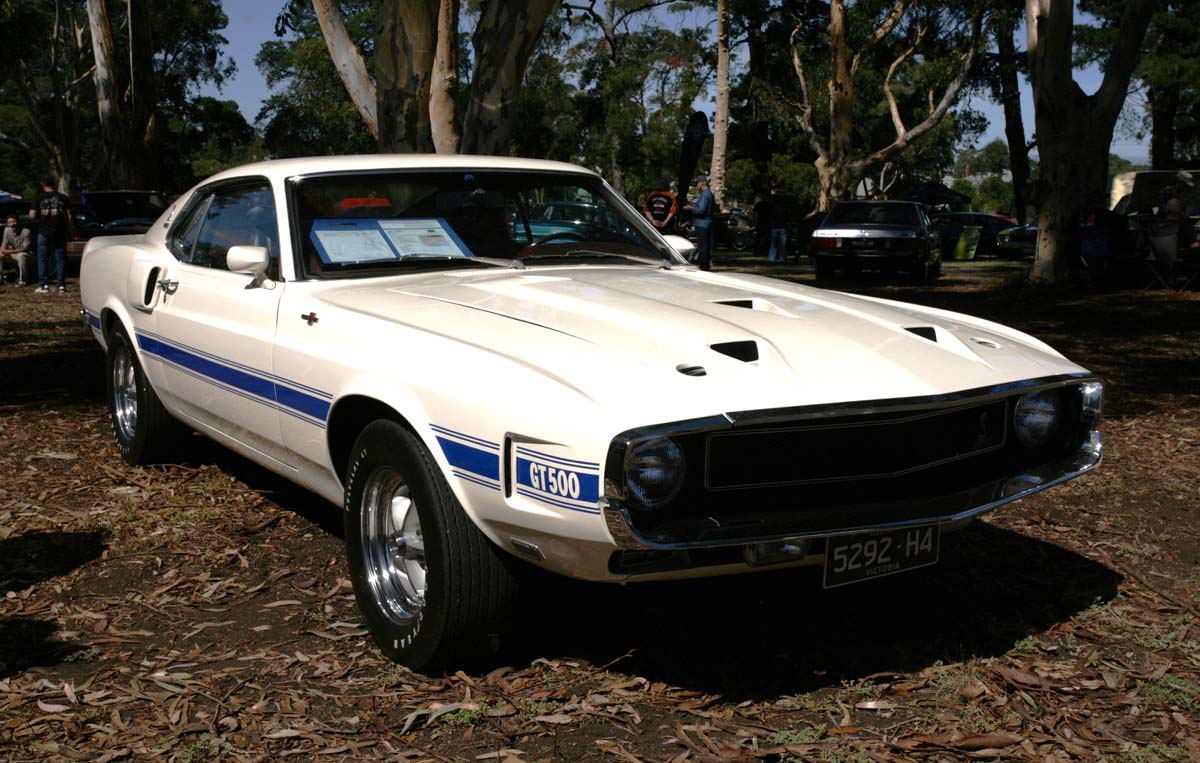
The Shelby Mustang story started in 1965, when Carroll Shelby, a Le Mans 24 Hour winner who’d already developed and released a Ford V8-engined version of the AC Cobra, turned his attention to the Mustang. The first Shelby ‘GT350’ was based on the 1965 Mustang fastback and offered in track and road forms. The former featured a tuned 289 V8, specific front bumper, deleted rear seat, special wheels, competition-spec suspension and competition brakes (disc front, drum rear). Street-legal versions of the GT350 only got the upgraded suspension and brakes. Just 36 examples of the full race-spec GT350 were built in 1965, but they were still winning events in SCCA competition into 1967.
For the 1966 Shelby Mustangs, more colours were available, rear side vents were replaced with plexiglass panels, functional rear quarter air scoops were added to cool the brakes, with an automatic transmission optional. Production more than doubled, with a ‘GT350H’ introduced for rental through Hertz agencies across the US.
In 1967, the bonnet was changed, a rear spoiler added and a ‘GT500’ model introduced. This was to the same basic formula as the GT350, but with a 428 Big Block V8 and a focus on straight line speed, rather than racetrack cornering and handling. It was a popular choice, outselling the GT350 by 2 to 1.
These were the last of the “real” Shelby Mustangs, as from 1968, production was moved to Shelby American’s facility in California to A.O. Smith in Michigan - closer to Ford’s HQ.
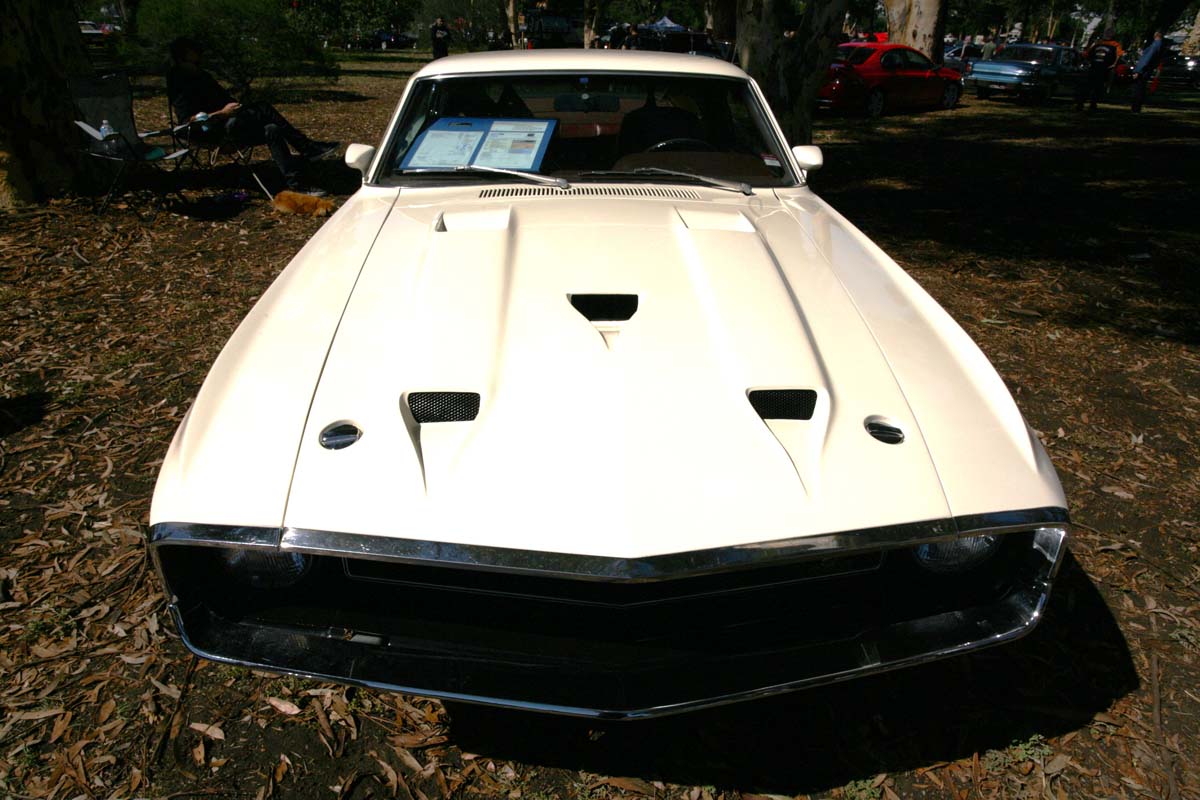
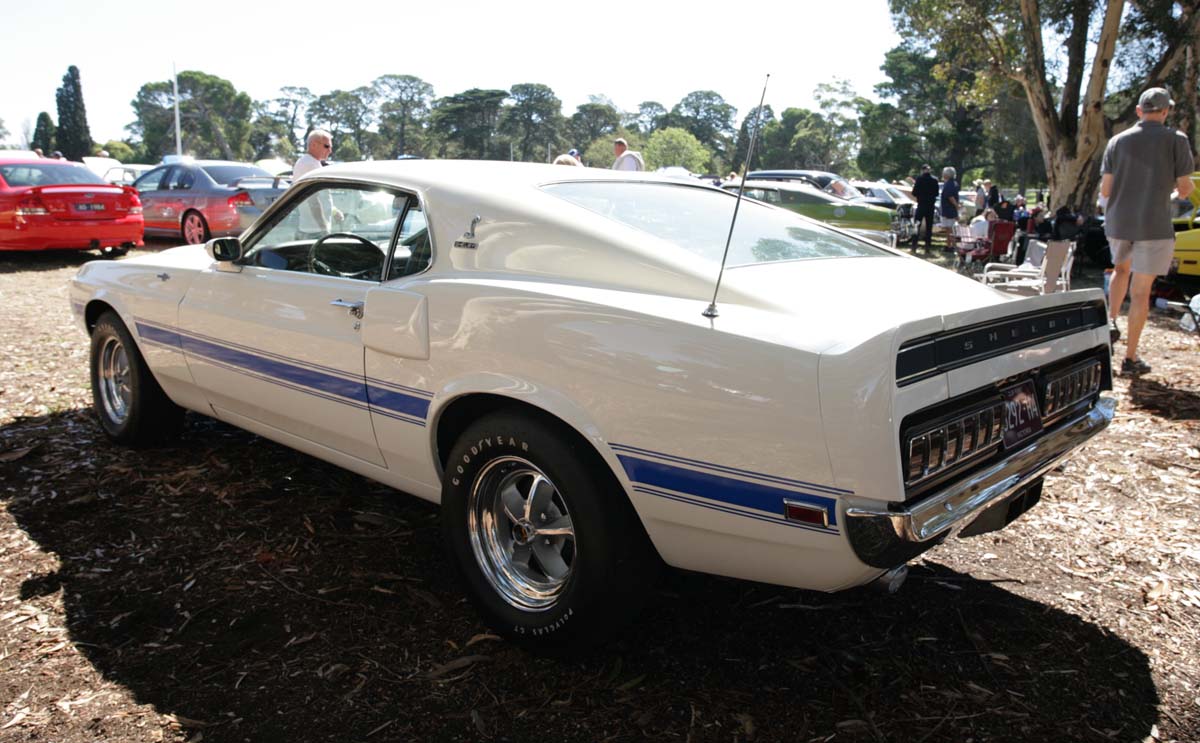
The ’68 Shelbys added a convertible to the mix and replaced the GT350’s 289 with a 302 V8, then changed again when the new-for-1969 Mustangs were introduced. These looked significantly different from previous Shelbys, with the key change being a front end that tunnelled the grille and headlights within a fibreglass bonnet and front guards. The back end was revised, too, but the sequential tail lights - a Shelby feature since 1967 - remained.
Several factors saw the Shelby program come to an end in 1969, not least of which was a trio of in-house rivals in the form of the Boss 302, Boss 429 and Mach 1 Mustangs. Shelby production ended in 1969, with unsold cars altered cosmetically and re-titled as 1970 models.
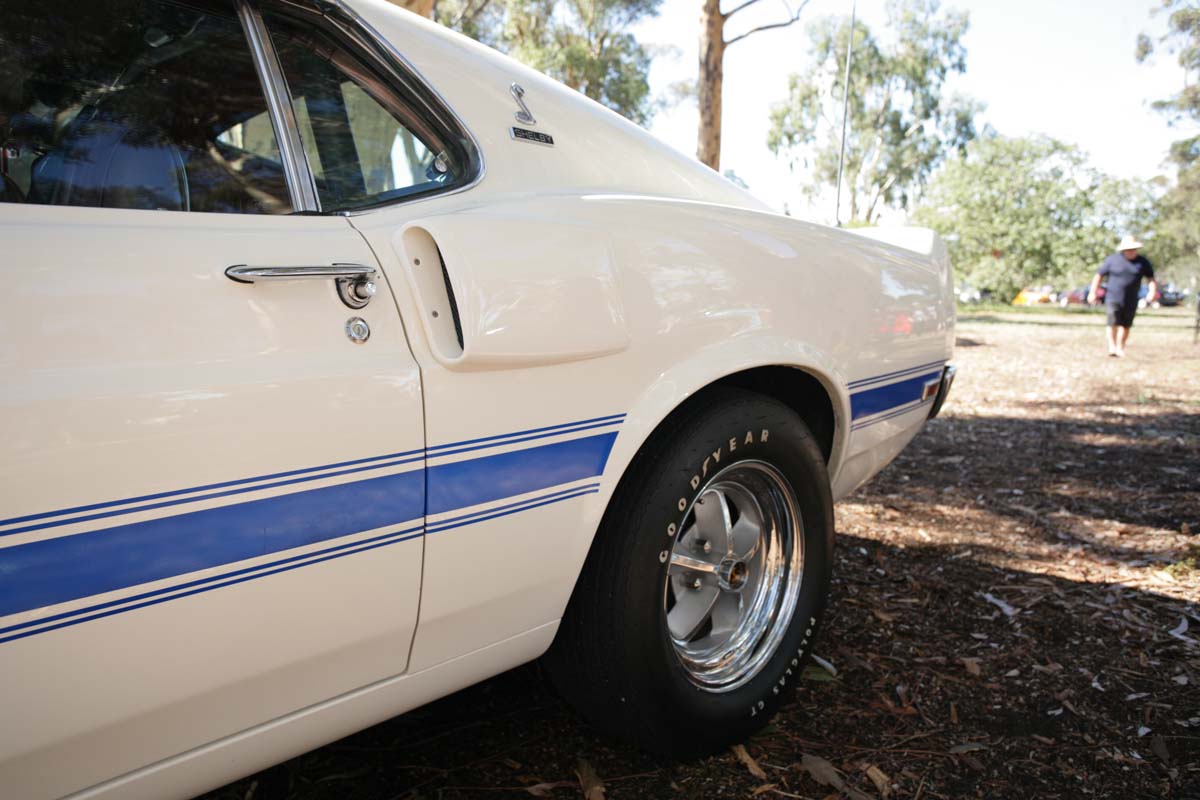
A Marti report displayed with the 1969 Shelby GT500 featured shows it was built in June, 1969, but not sold until February, 1970. Equipped with a range of factory options, including a C6 automatic transmission, Traction-Lok diff, air conditioning and AM/FM stereo, this Shelby was sold new in Georgia, but it’s unknown when it came to Australia. Appearing to be factory-spec in all visible areas, authentic features included Shelby alloy wheels and Goodyear Polyglas GT tyres.
For JUST CARS’ report from the 2026 All Ford Day, click HERE.


