Words: Mike Ryan
Photos: Bugatti
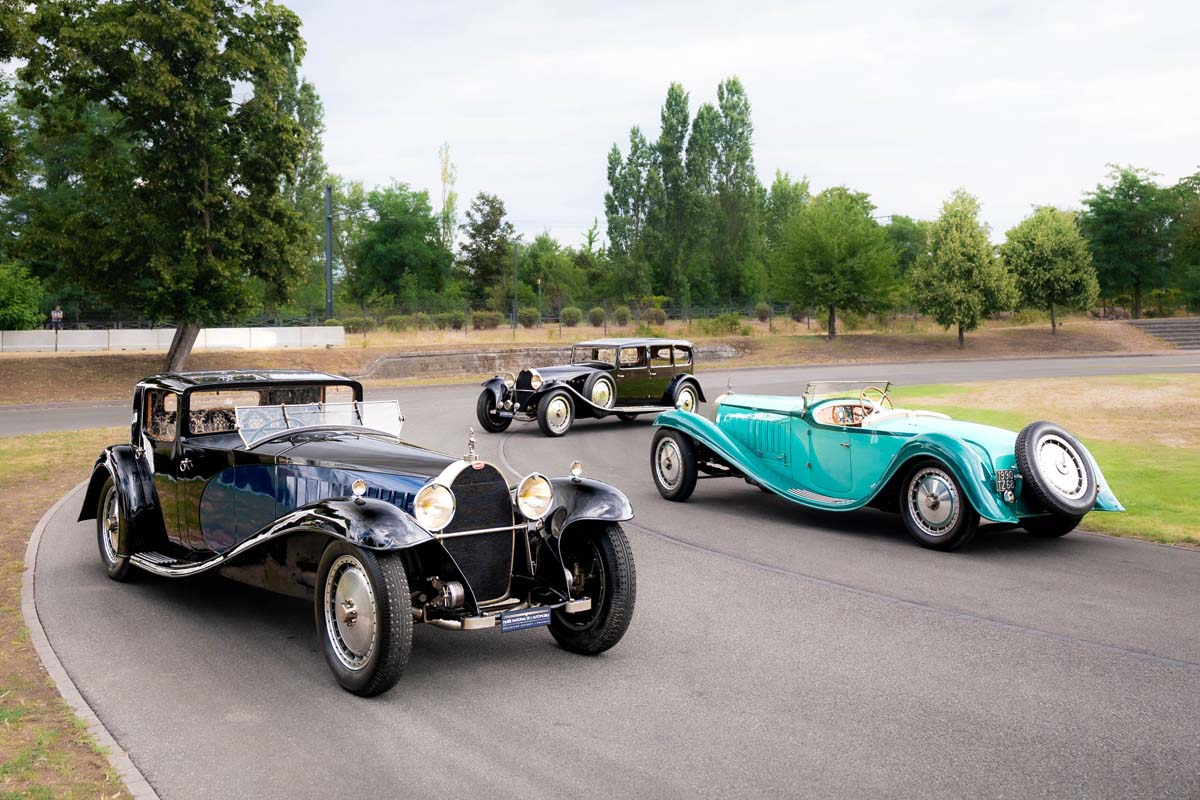
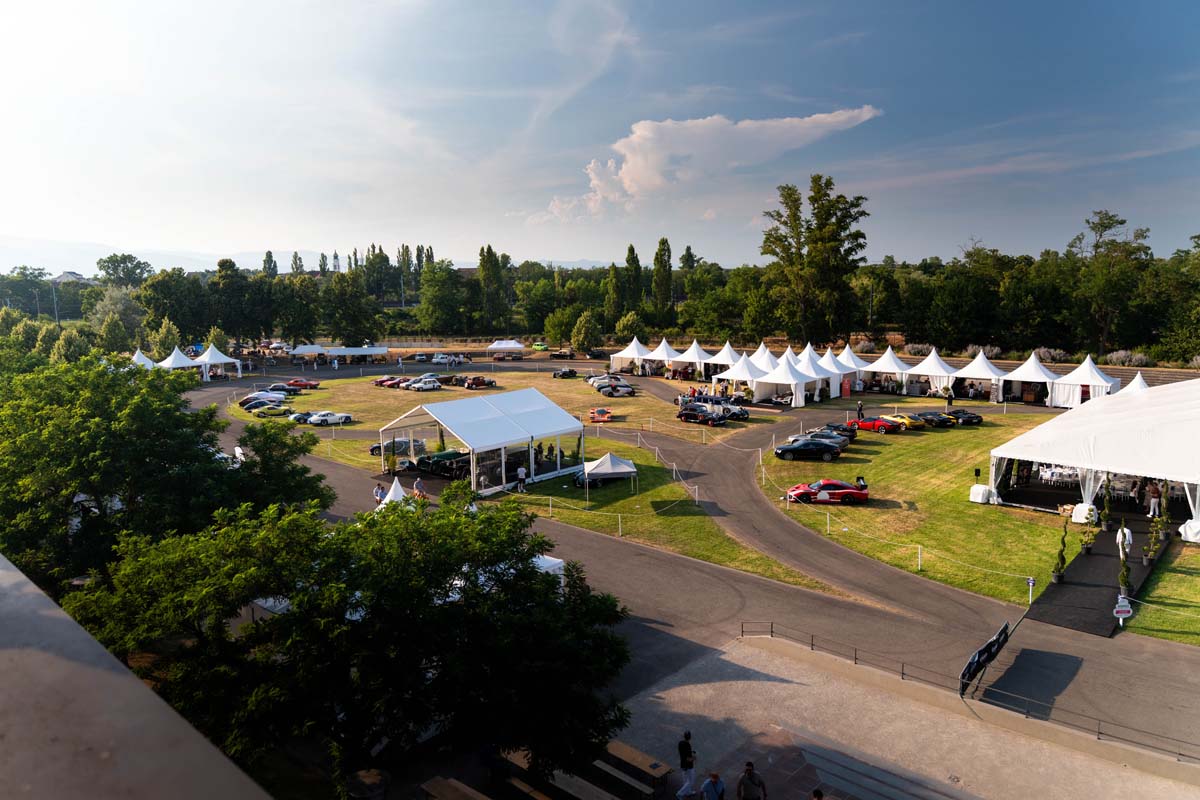
This past June, the first-ever ‘Concours d’Elegance International Schlumpf’ was held at the Musée National de l’Automobile – Collection Schlumpf. Located in Mulhouse, France (around an hour south of Bugatti’s spiritual home of Molsheim), the Schlumpf Collection is internationally renowned and holds the largest collection of Bugattis in the world. As such, it was only natural that the famous French marque featured strongly in the first edition of this concours.
Open to vehicles from all eras, the concours featured more than 170 entries, drawn from collectors worldwide, with cars as diverse as a C1980s Peugeot 205 Turbo 16 hatch and an Alfa Romeo ‘Aerospider’ rear-engined sports car from the 1930s. The latter came from the garage of German collector, Georg Gebhard, who also displayed a desirable Lamborghini Miura. Gautam Sen, the highly-regarded authority on classic cars in his native India, brought along an Hispano-Suiza H6C and a Mercedes-Benz 540K from the Dastan Auto World Vintage Car Museum in Daskroi, India.
In temperatures nudging 41 degrees Celsius, road cars and hypercars rubbed shoulders with race cars, which meant the likes of a BMW Z8 and Aston Martin Vantage V600 (apparently one of only 12 built in LHD) shared the concours field - on the museum's autodrome - with a Koenigsegg Jesko, Ferrari Enzo, Mercedes-AMG One, Aston Martin Valhalla, Porsche 935 Clubsport in retro ‘Salzburg’ livery, and a Porsche 962C, to name a few. There was also a wild ‘Herakles’ one-off that reimagined the Alpine A110 as a Dakar-style off-road racer.
Judging for the concours was led by former F1 driver, Thierry Boutsen, and included a Best in Show award, Elegance Award and special award presented by the museum itself. Other judging categories were defined by era – Pre-1930, 1931-50, 1951-70 and 1971-95 – with a Supercars category open to vehicles from 1996-2026.
Royale Procession
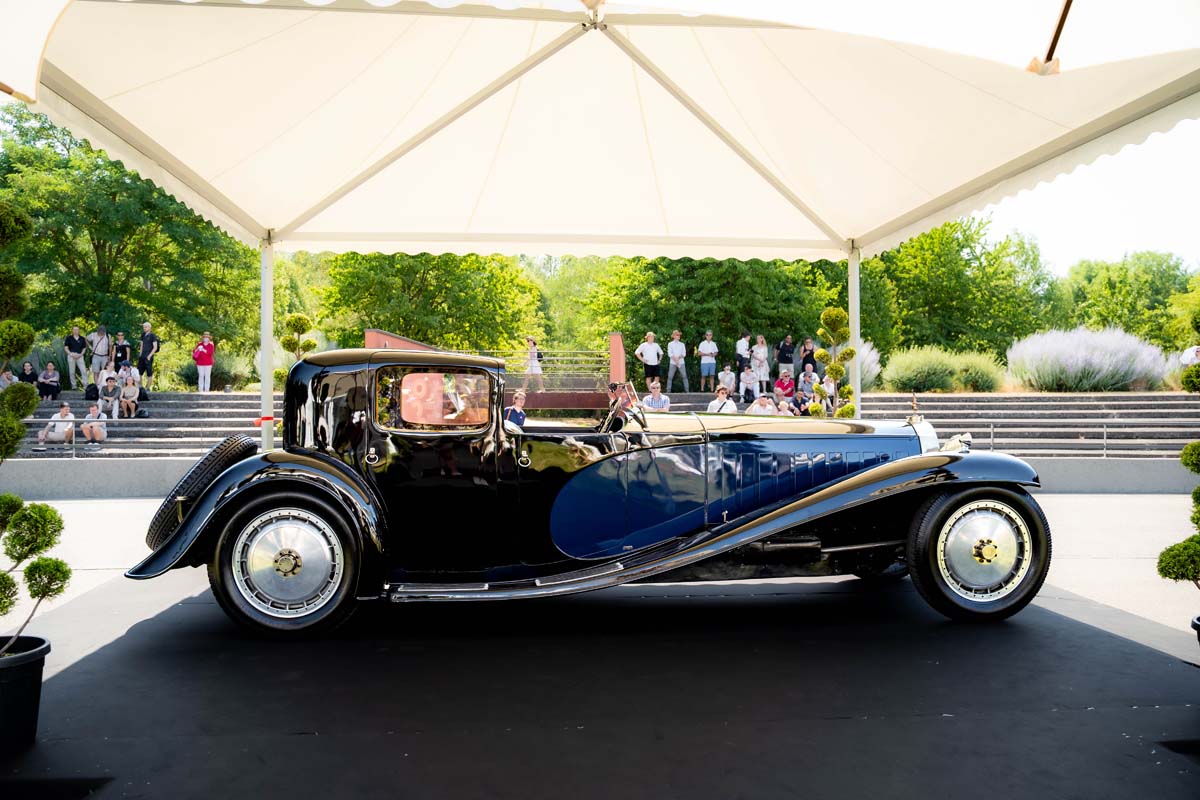
Bugatti’s presence at this event was led by a trio of imposing Type 41 limousines. Also known as the Royale, the Type 41 was announced in 1926, but only one prototype and six production cars (some sources say one or two more) would be built by 1933. A handful of recreations and tributes have appeared since.
Intended as Bugatti’s challenger to Rolls-Royce, the Type 41 was powered by a massive 14.7-litre straight eight engine in prototype form, reduced to 12.8 litres for the production cars. A three-speed transaxle was innovative, but the Type 41’s cable-operated drum brakes, live axles and leaf spring suspension definitely weren’t.
As was common with cars of this type at this time, Bugatti only supplied the Type 41 as a rolling chassis to the customer for bodywork and fitout by the coachbuilder of their choice. These went to coachbuilders in France, Germany and the UK in period, while at least one briefly wore the body from a Packard.
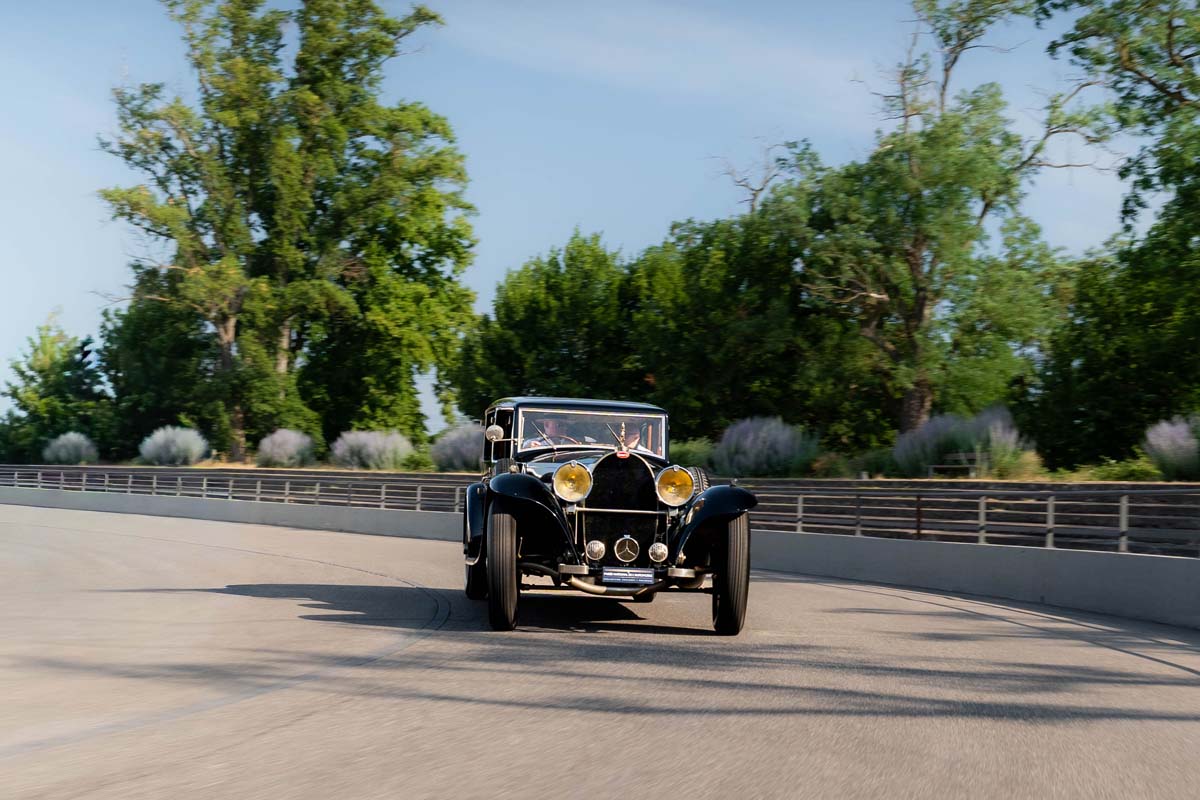
The three Royales in the Collection Schlumpf include a Weymann-bodied car known as the ‘Coupe Napoleon,’ a four-door limousine with a body by English coachbuilders Park Ward, and a reproduction of the car with a body designed and built in-house at Bugatti known as the ‘Esders’ roadster. All three are in running condition and were exercised in the museum grounds during the concours.
The Show before the Show
To launch this all-new concours, the Musée National de l’Automobile – Collection Schlumpf chose the Monaco Historic Grand Prix in April. Prince Albert II of Monaco was entrusted with the Coupe Napoleon for a lap of the historic Monaco street circuit, accompanied by Christophe Piochon, President of Bugatti Automobiles.
Past and Future
Along with cars that have history going back almost a century, Bugatti creations at the concours also included those from the new millennium; specifically their supercars and hypercars with the iconic W16 engine. Debuting in 2005, the W16 was an 8.0-litre quad-turbo powerplant that produced up to 1,361kW and 1,851Nm in its most potent form. Powering the well-known Veyron and Chiron, the W16 also featured in the Bolide, Mistral and other one-off and short-run cars from Bugatti’s recent history.
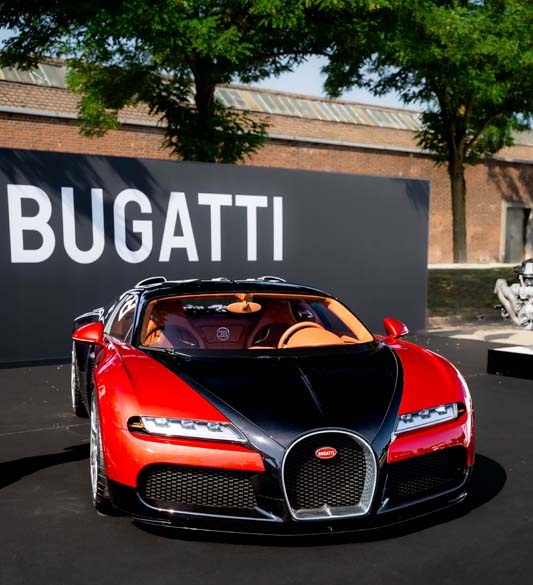
At the concours, a W16 engine was displayed alongside the W16-powered, Veyron-based ‘F.K.P. Hommage’. The second creation from Bugatti's Programme Solitaire, the unique F.K.P. Hommage paid tribute to Prof. Dr. Ferdinand Karl Piëch; the man who championed the Veyron’s introduction while head of the Volkswagen Group. A car that redefined the limits of performance, luxury and engineering at the dawn of the 21st century, the Veyron is unlikely to ever be repeated as the automotive world moves toward hybridisation and electrification.
Concours Contenders
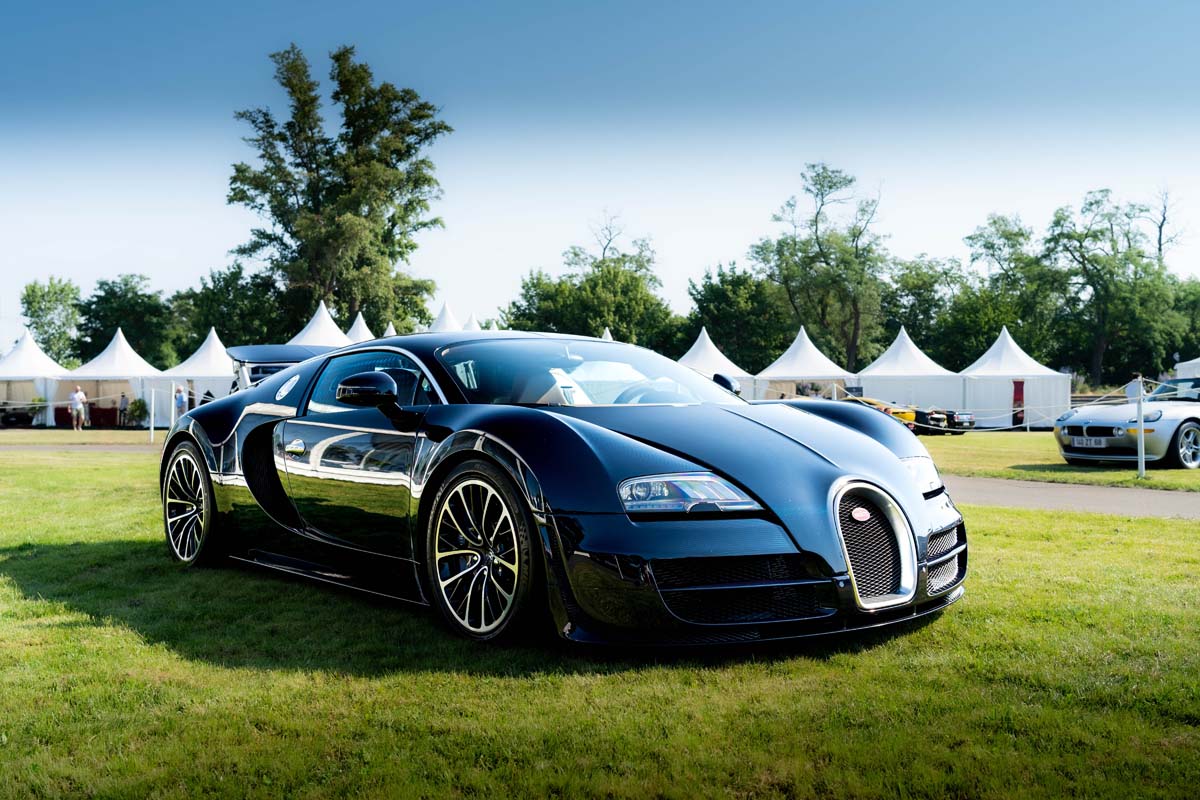
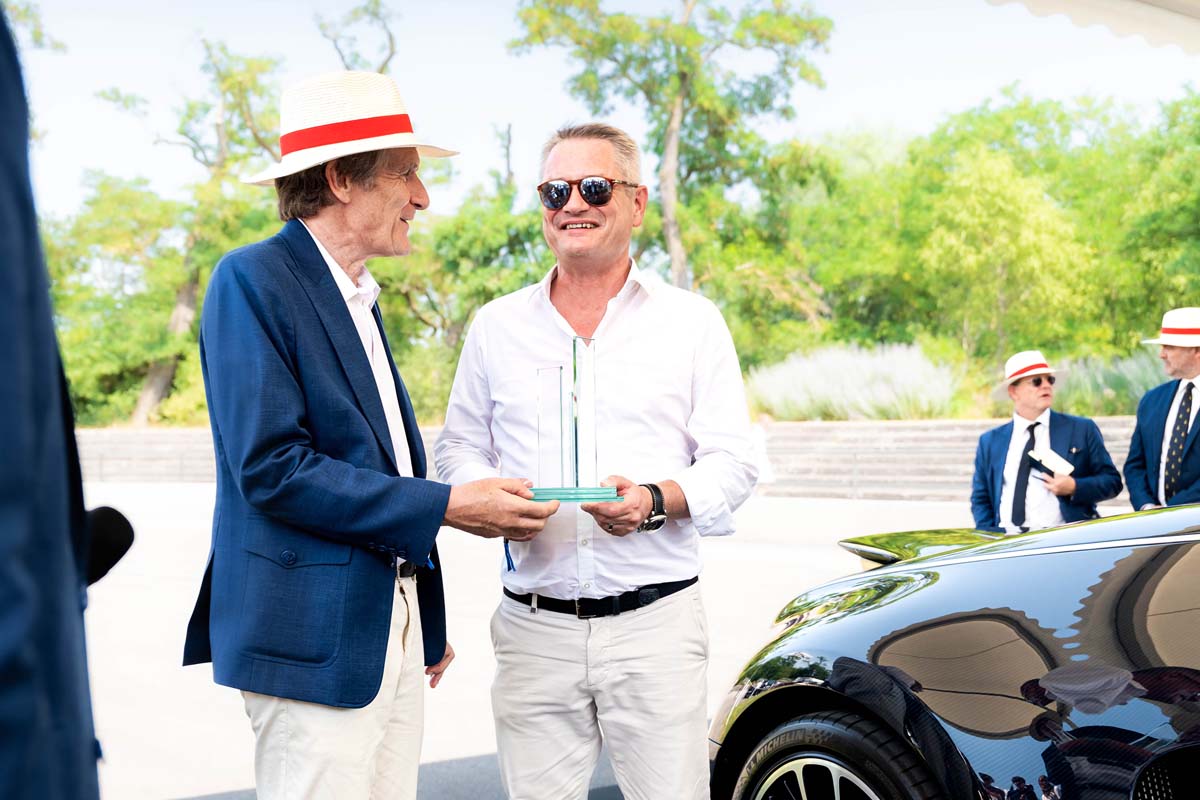
Beyond presenting and celebrating elements from their history at the concours, Bugatti also entered the event. A Veyron Super Sport – a proud representative for the marque – was driven by Christophe Piochon on the museum’s autodrome, rewarded with first place in the Supercars category.
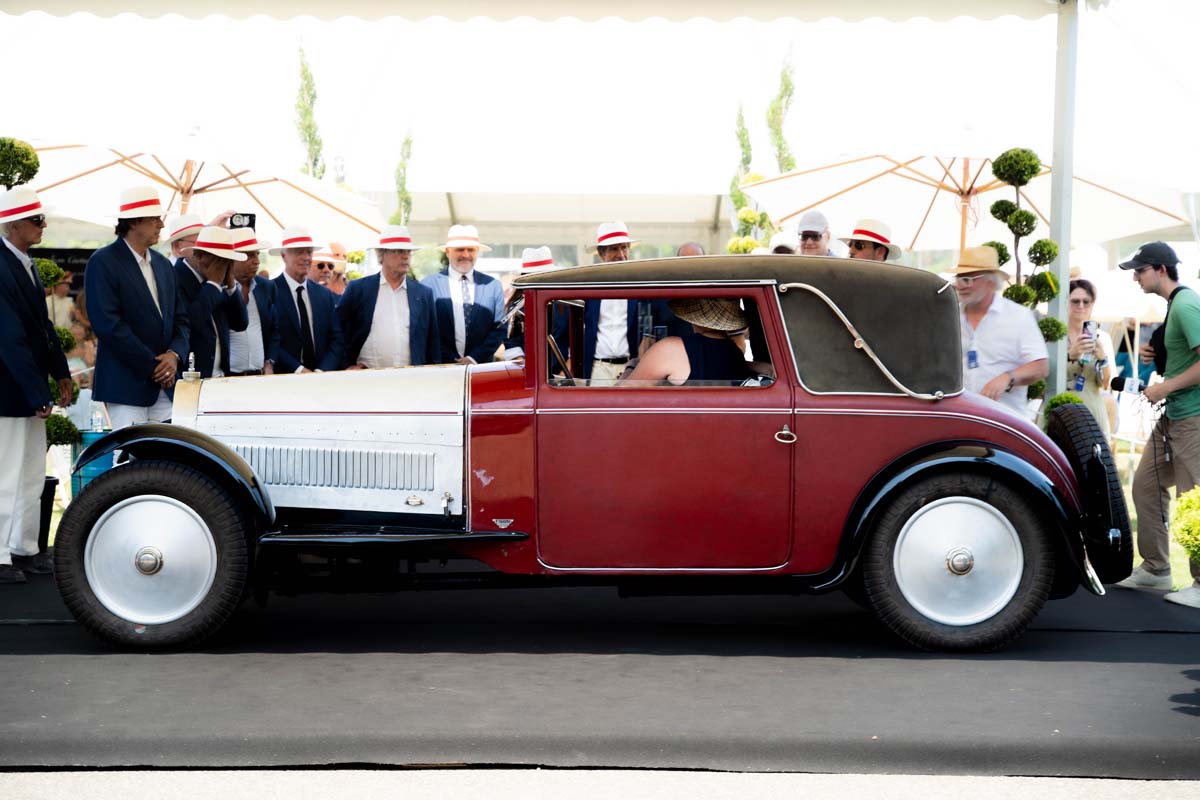
Bugatti also scored in the Pre-1930 category with a Type 38 bodied by Parisian coachbuilder Figoni – before the Figoni et Falaschi era. Although recently restored, the Type 38 was still wearing some of its original patina.
Other class winners at the inaugural Concours d’Elegance International Schlumpf included a Jaguar SS100 (1931-50), Ferrari 250 GT Lusso (1951-70), and a Peugeot 205 Turbo 16 (1971-95). The Elegance Award went to a Facel-Vega HK500 coupe and the Museum Award to a Cord 812, while Best in Show was awarded to an Hispano-Suiza H6C with a Salamanca limousine body by H.J. Mulliner.
A Natural Fit
“Taking part in the first Concours d’Élégance International Schlumpf was a natural choice for Bugatti,” said Christophe Piochon. “Mulhouse is a place of extraordinary significance for the brand, where some of the most precious expressions of Ettore Bugatti’s vision are preserved and celebrated.
“Driving the Veyron Super Sport to first place in its category made this occasion even more meaningful. It was a reminder that Bugatti’s heritage lives through the cars, through the people who care for them, and through the passion that continues to carry the brand forward.”