Reviewed by: Mike Ryan
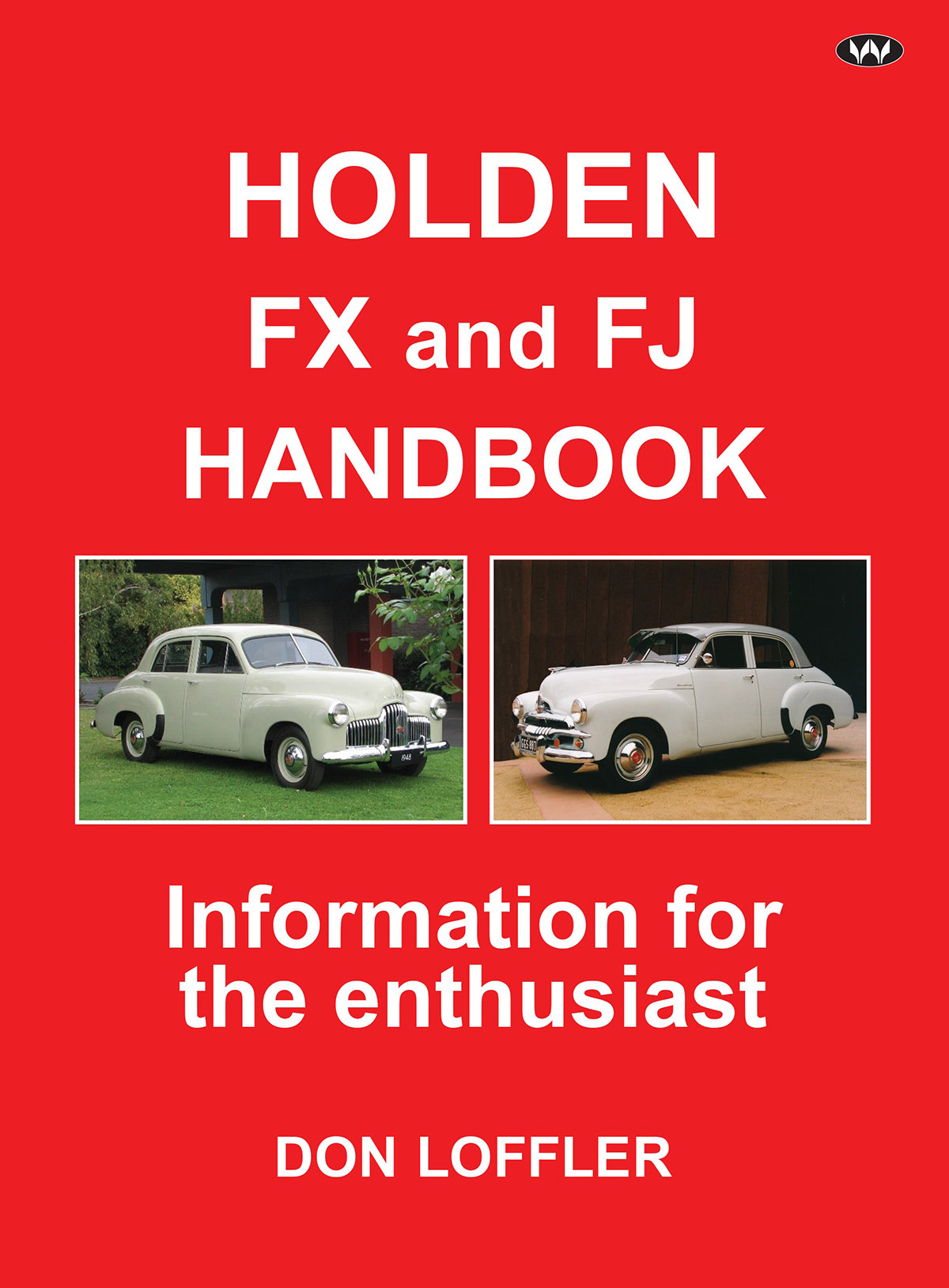
The latest book from Don Loffler, the prolific author of early Holden history, will be an invaluable research tool for existing and prospective owners of FX (48-215) and FJ Holdens.
The Holden FX and FJ Handbook is packed with data to help identify the original build specification and factory features of FX and FJ Holden vehicles.
As the subtitle - Information for the enthusiast - makes clear, this book is not a history of the FX and FJ Holdens (Loffler has done that already with She’s A Beauty!, Holden Treasures, etc). Rather, it’s a “decoder” that breaks down all the factory data and features for the first Holden sedans and their variants, like the Business Sedan and Taxi, as well as utes and panel vans, across both series.
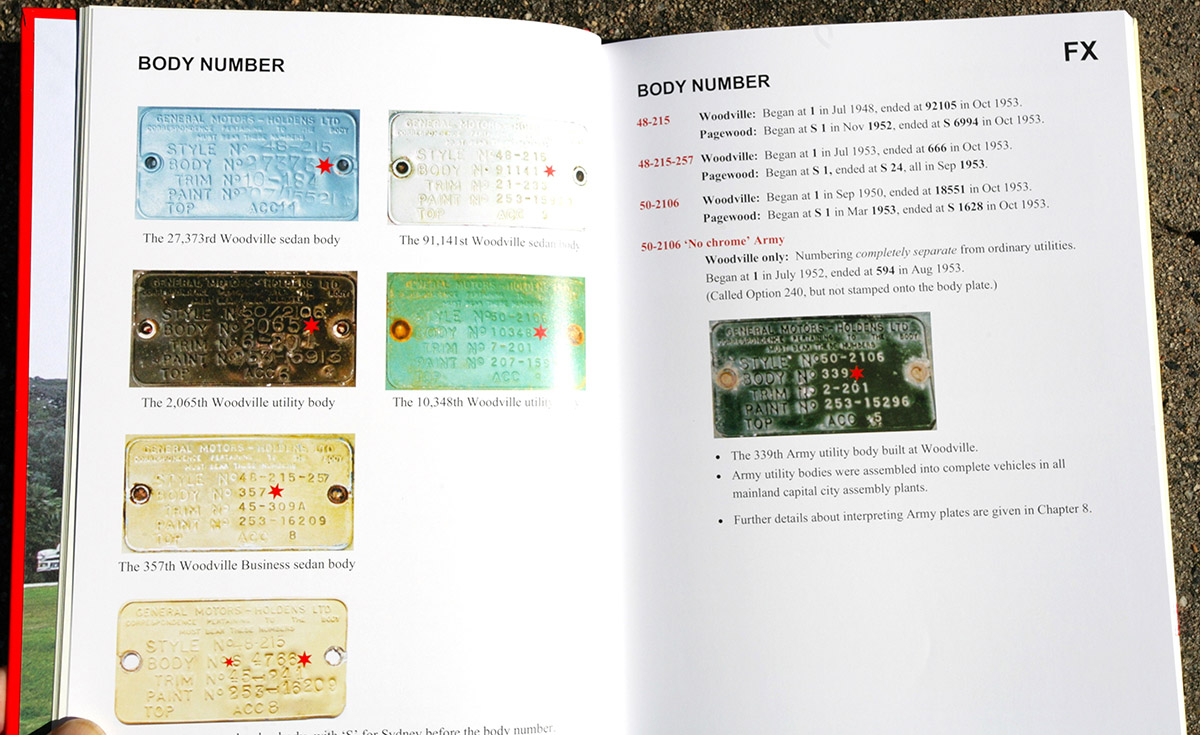
Split into two sections – for FX and FJ – the chapters for each model take the reader on a deep dive into details. Starting with decoding body identification plates (aka VIN tags), the book explains what all these factory codes mean, from style (body type), body number and where it was built, to paint number (with a list of factory colours) and trim number. Supported by colour images of several different plates, this data alone makes the book invaluable, as accurate information decoding ID tags can be hard to find.
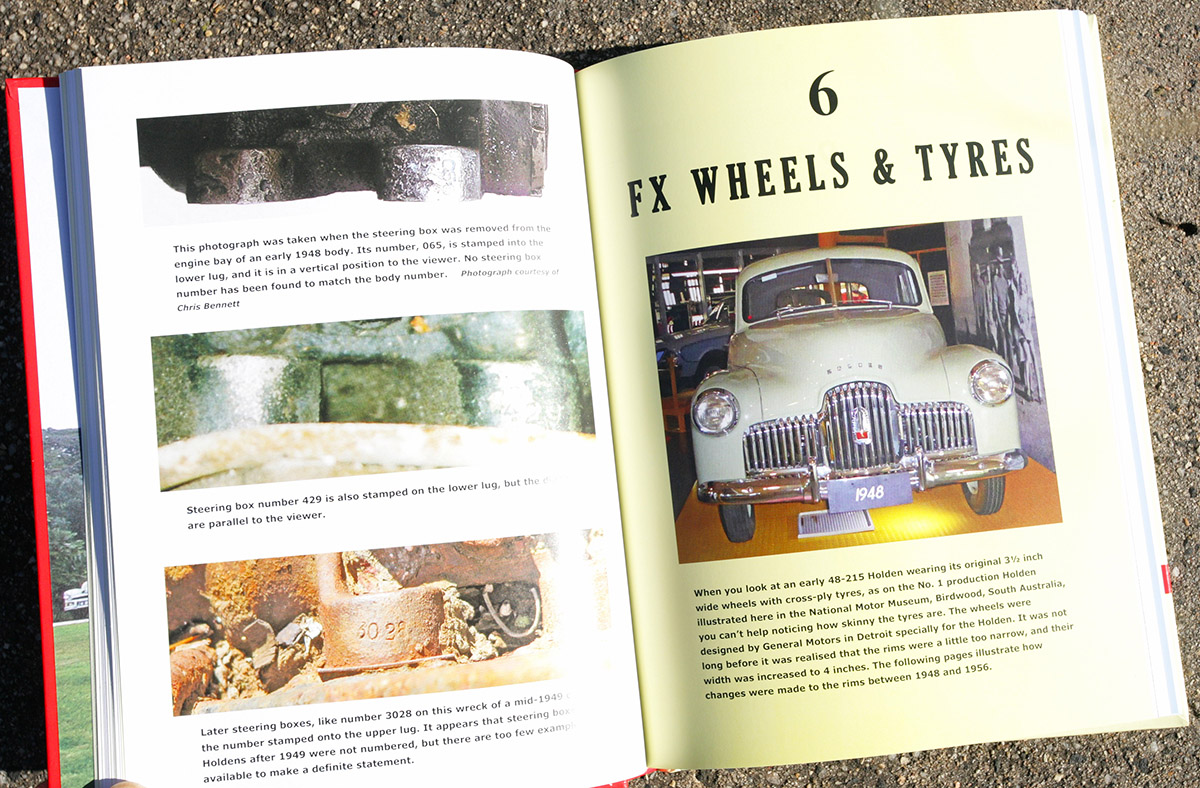
Subsequent chapters explain engine numbers and wheel types (for the FX), as well as minutiae like window glass date codes and even steering box numbers.
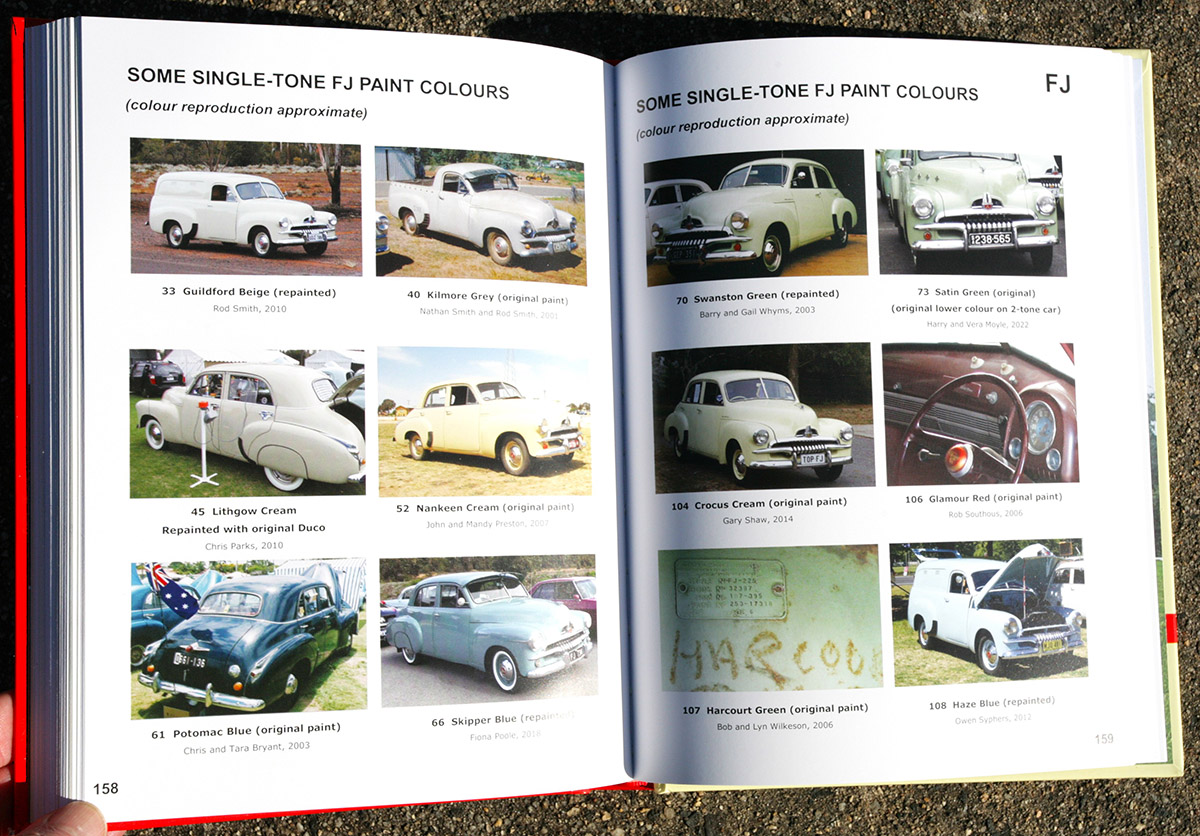
From there, paint colours are covered in more detail, with photos (either of an actual car or paint chip) of each, as well as clarification around things like the separate paint codes for FX sedans and utes – something this reviewer wasn’t aware of - and interior colours. Fascinating addenda to the paint section includes photos of where the colour was written in crayon on the vehicle’s firewall prior to painting, showing that the build of these early Holdens was still very much a hands-on process.
Identification of factory trim options in leather, cloth and vinyl that were available in period comes next, again supported with colour images.
Loffler also details running changes that were made throughout each model’s production lifespan, like the relocation of rear door locks, changes to the bonnet locking plate and redesign of the diff housing on FX sedans. Similarly, FJ changes, like redesigned tail lights on FJ utes and panel vans, and repositioned cigarette lighters, are covered. In some instances, these changes are illustrated with ‘before and after’ photos.
Finally, this book explains colours, fittings and deleted (or additional) equipment that defined FX and FJ vehicles built by GM-H for government fleets. These include the dechroming, canvas canopies and jerrycan holders for Australian Army FX utes, cabin dividers for Department of Works FJ vans, single-door versions of PMG FJ postal vans, and the unique colours for these fleet vehicles.
If you’re a newcomer to early Holdens, restoring an FX/FJ, or looking to identify the bona fides of a vehicle you’re intending to buy, this book will be an invaluable resource. As important as the identifying data are the hundreds of colour photographs that provide examples of paint and trim colours, running changes and VIN tags.
Holden FX and FJ Handbook: Information for the Enthusiast is a a Holden Official Licensed Product, published by Wakefield Press. Available from specialty automotive booksellers, or the Wakefield Press online store at www.wakefieldpress.com.au
Hardcover, 224 pages, fully illustrated
$69.95 RRP
ISBN: 978-1-92304-275-9