Words: Mike Ryan
Photos: Waimak Classic Cars, NZ
Think early post-war Jaguars and the XK120, Mark 2 and E-type usually come to mind. That’s understandable, really, as these were popular, attention-grabbing cars when new and have become collector favourites today. But alongside these sports cars and ‘compact’ saloons, Jaguar’s big saloons were just as important to the marque’s post-war success and development.
Before the arrival of the long and wide Mark X in 1962, Jaguar offered a line of large saloons that had heritage dating back to the pre-war years. This range is usually grouped together as the Mark VII, Mark VIIM, Mark VIII and Mark IX. All featured inline six engines of the same DOHC type as fitted to the XK sports cars. That made them quick vehicles for their day, despite their weight, with success in touring car and rally competition, including an outright win in the 1956 Monte Carlo Rally.
Produced from 1950 to 1961, the Mk VII to Mk IX saloons were overshadowed by Jaguar’s “hero” cars then, just as they are now. As such, it’s nice to be able to bring these stylish, fast and luxuriously-appointed large saloons to light via the example featured – a 1958 Mark VIII.
Before the ‘Mark’
As most will know, Jaguar started out building sidecars, under the Swallow Sidecar Company (SS) name in 1922, before transitioning into bodying cars later that decade. That saw the company move from Blackpool to the heart of Britan’s automotive industry - Coventry - in the English midlands. The initial premises at Foleshill, a northern suburb of Coventry, sufficed until the late 1940s, after which the growing company needed more space. That led to operations being moved to a former Daimler ‘shadow factory’ (used to produce aircraft engines in World War II) in nearby Allesley. This site became better known by its ‘Browns Lane’ address and would be the home for Jaguar production until 2005.
Going back in the 1920s, the initial cars bodied by SS were Austin Sevens, with stylish designs created by SS co-founder William Lyons. The first SS-badged car came in 1931, using chassis and running gear supplied by Standard, who were also based in Coventry. The growing importance of the car bodying business saw ‘SS Cars Limited’ established as a separate entity to the sidecar operation in 1934.
The first SS car to wear the ‘Jaguar’ name came a year later. This stylish, two-door saloon used an OHV version of the Standard 2 ½-litre six-cylinder engine, with a 1 ½-litre four (actually closer to 2 litres at 1,776cc) and 3 ½-litre six following. A low-slung sports roadster variant, badged as the SS100, was the best-known pre-war Jaguar and previewed what was to come with the XK120.
Following the outbreak of World War II, SS Cars turned their resources to military production, with the last civilian cars built in 1940. After the war, the “SS” name’s connection to Nazi Germany saw the company rebranded as ‘Jaguar Cars Limited’. Initial post-war production was a continuation of the 1 ½, 2 ½ and 3 ½-litre pre-war cars, but with the engines now built in-house, rather than supplied by Standard.
Five, then Seven
While the XK120 would be the first all-new post-war Jaguar, launched in 1948, the Mark V saloon followed a year later. Apparently, Lyons had intended to bring the Mark VII to market first, but the XK120 took priority, so the Mk V was released as a stop-gap model. While the visual link to the old 2 ½ and 3 ½-litre cars (retrospectively known as the ‘Mk IV’) was obvious, the Mk V featured a new body, designed by Lyons, with semi-recessed headlights, rear wheel spats and a distinctive curved treatment of the rear side glass that would be seen on Jaguar saloons for the next two decades. The Mk V also featured a new chassis, independent front suspension (using longitudinal torsion bars) and hydraulic drum brakes, but engines and transmissions were carried over from the old models.
The Mk VII that replaced the Mk V in 1950 was much more modern in look and feel. While the new car’s body was noticeably different to the Mk V, visual links between the two remained. The design increased interior space, which was lined with leather and genuine timber, but the move from the Mk V’s one-piece windscreen to a two-piece vee’d screen seemed like a backward step. There was no ‘Mk VI,’ as Bentley had been using that model name since 1946.
More important than the Mk VII’s refreshed styling and improved passenger room was its engine, which was now the same 3.4-litre DOHC six as used in the XK120. Producing 160bp (119kW), the XK engine made the Mk VII the fastest saloon of its day, explaining why it was a popular choice for motorsport outside the sports car realm.
In 1954, when the XK140 sports car was released with a more powerful 190hp (141kW) version of the XK engine, the Mk VII received that powerplant, too, with these models referred to as ‘Mark VIIM’. Defined against the Mk VII by subtle front-end styling changes and the adoption of conventional flashing indicators instead of semaphores, the Mk VIIM remained in production until 1957.
Enter the Eight
As the next evolution of Jaguar’s large saloon, the Mk VIII that launched in 1956 also gained the next evolution of the XK engine, this time producing 210hp (156kW) and introducing a dual exhaust system. Braking was unchanged, though, with drums on all four wheels. Automatic transmissions, first available in 1953, were now fitted to the bulk of these saloons, with manual and overdrive-equipped cars a rarity. A new feature on the Mk VIII was an ‘Intermediate Speed Hold’ device that allowed second gear in the three-speed auto to be held indefinitely via a dash-mounted switch. The merits of this device were to maintain torque and reduce the auto’s tendency to hunt for gears under certain driving conditions, like hillclimbing or towing.
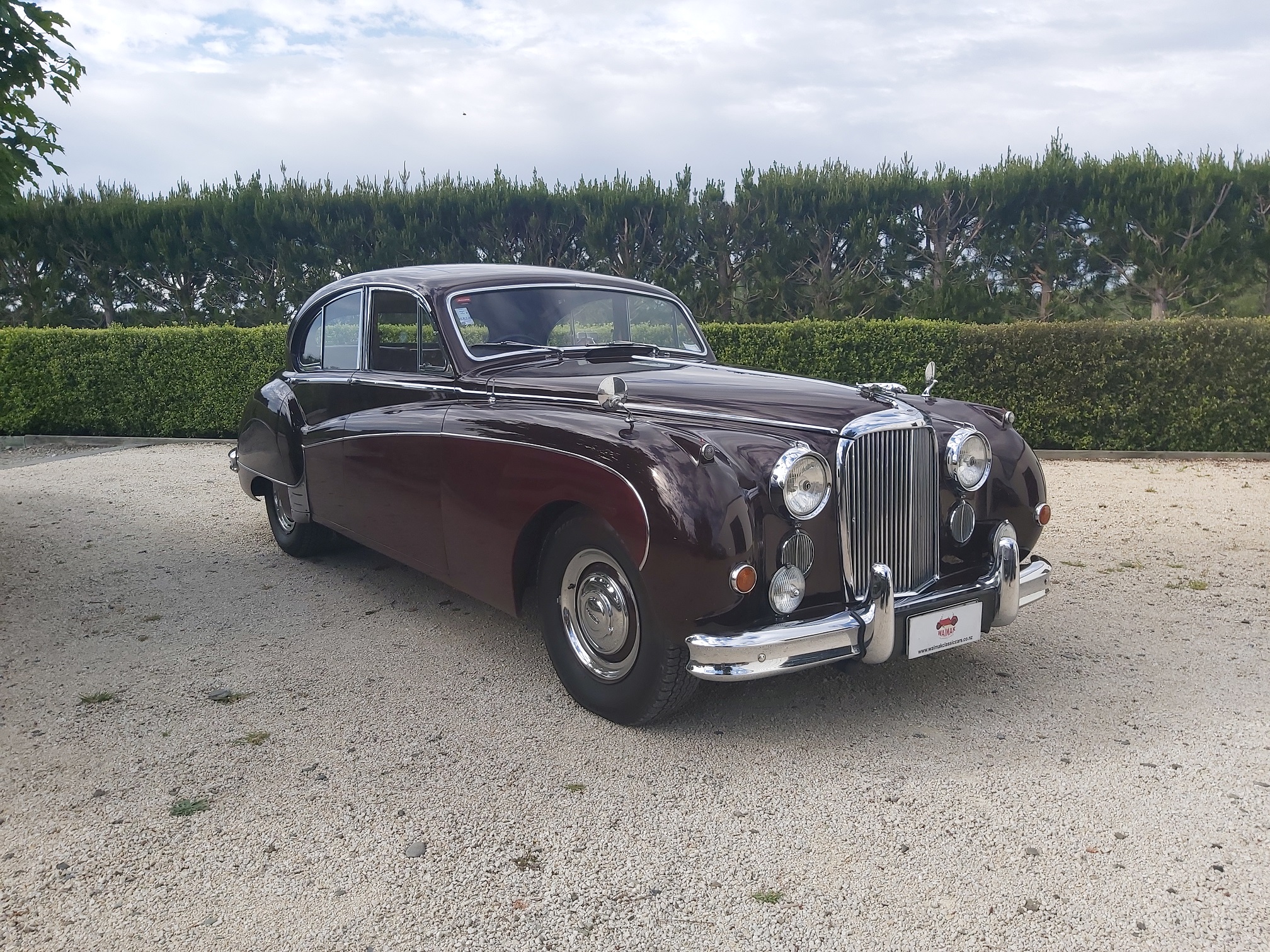
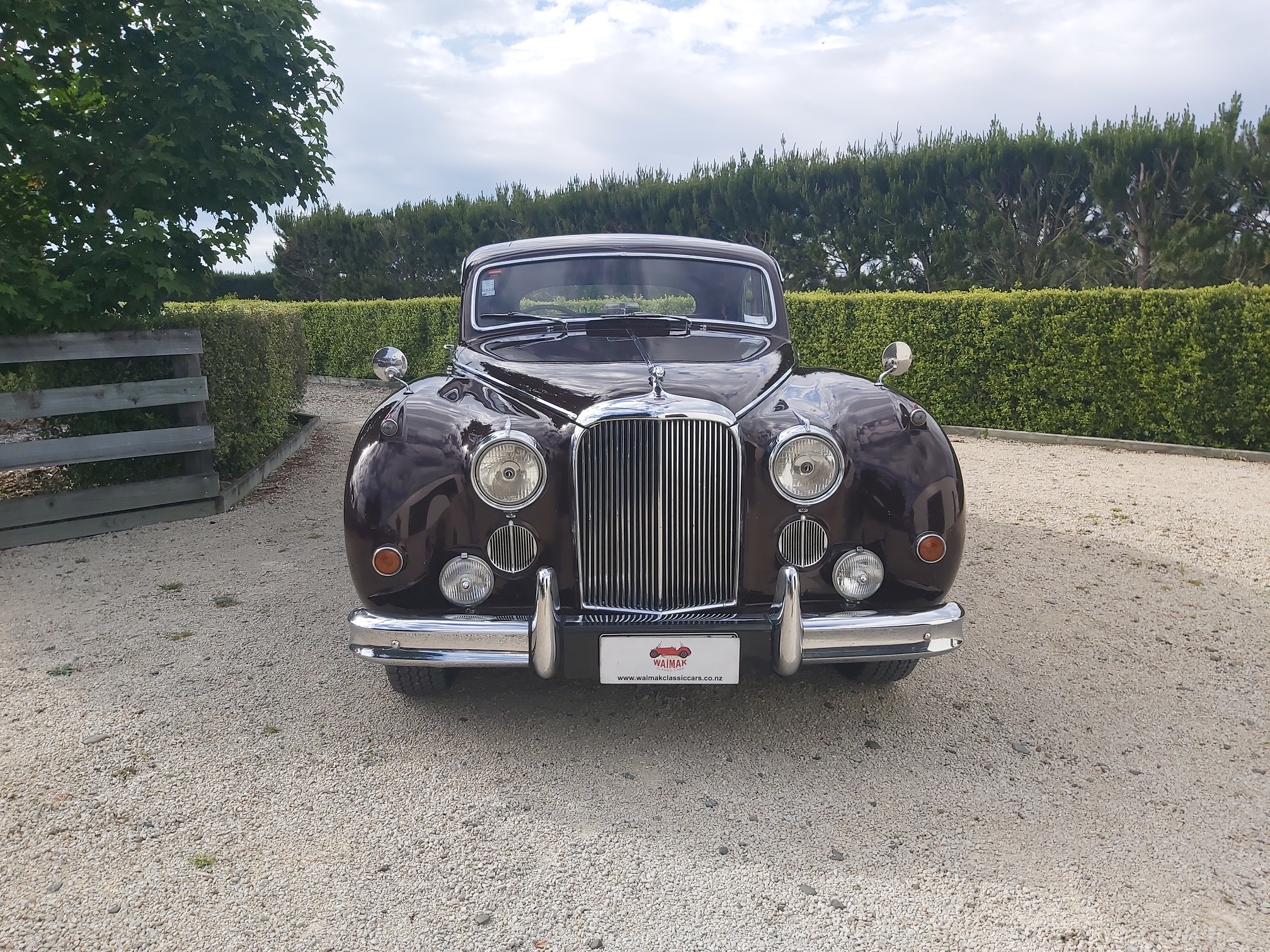
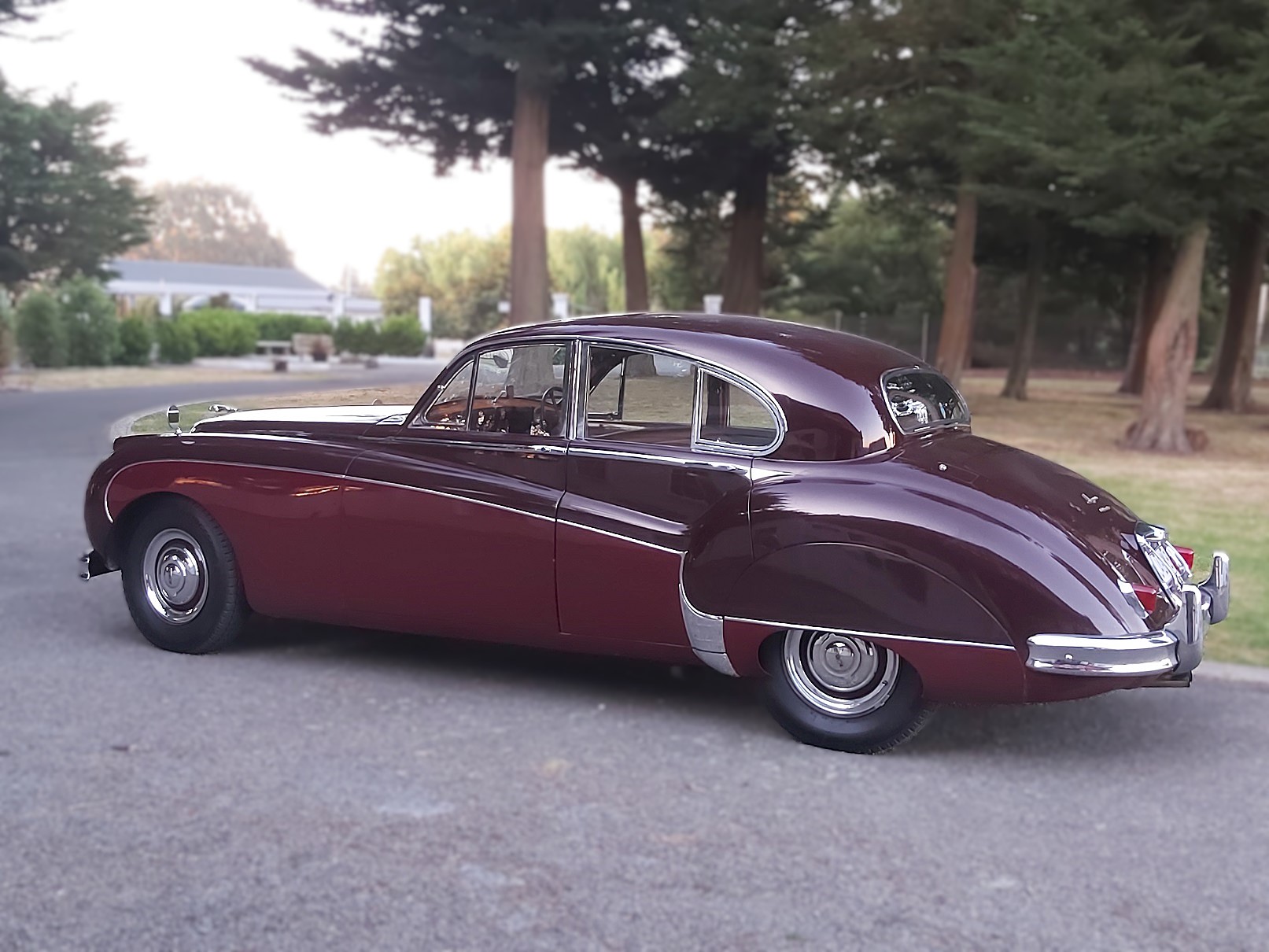
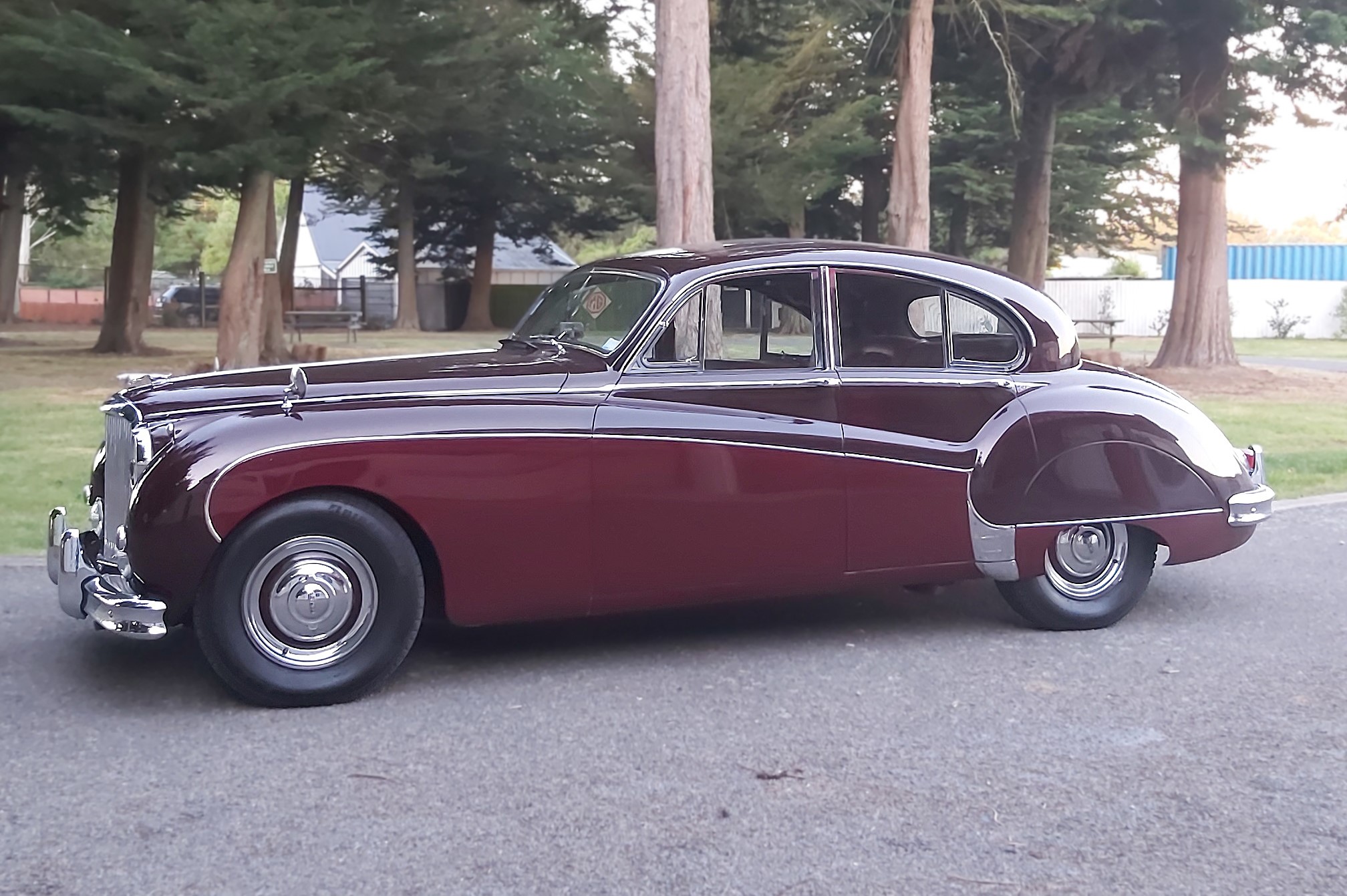
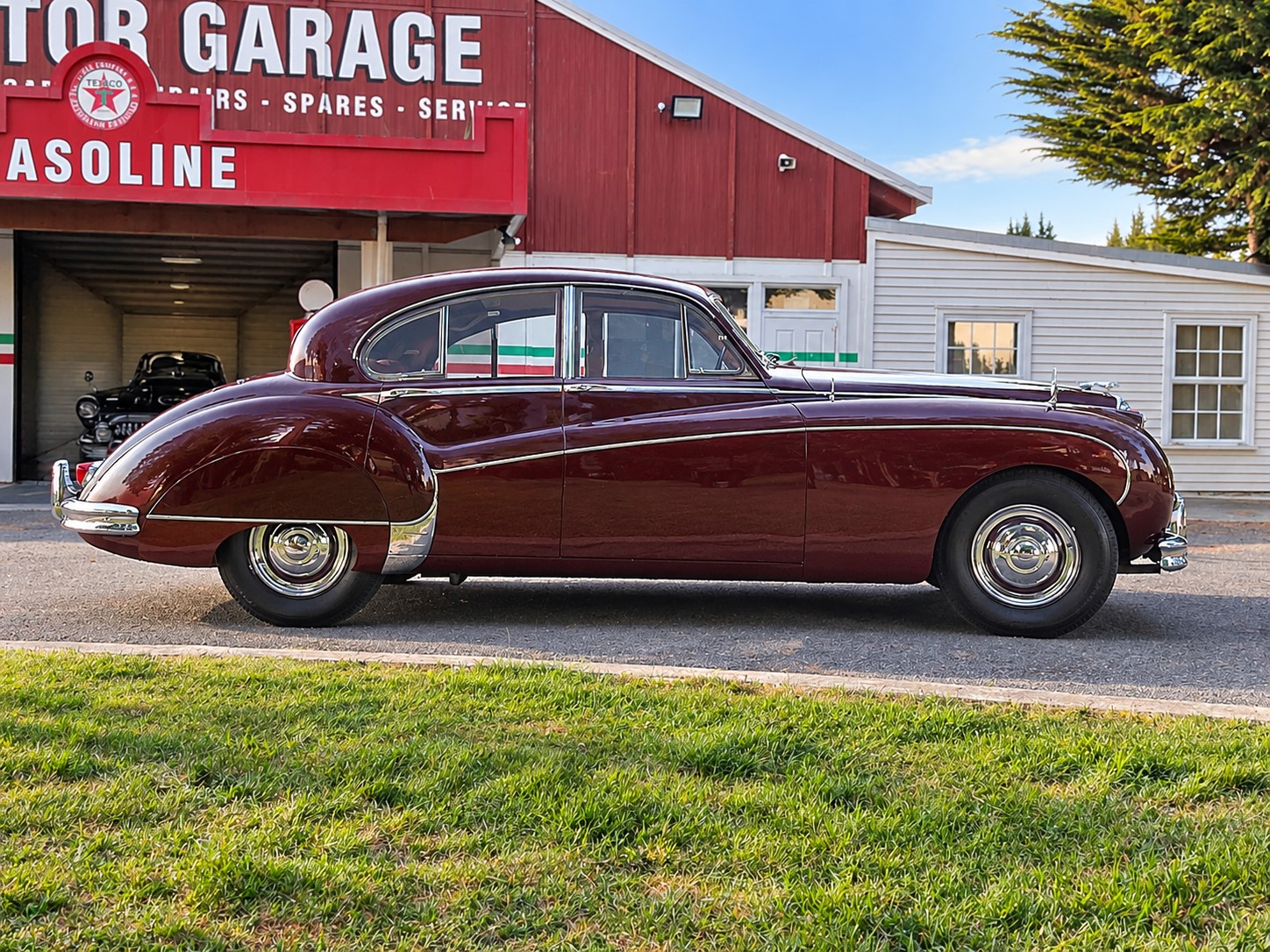
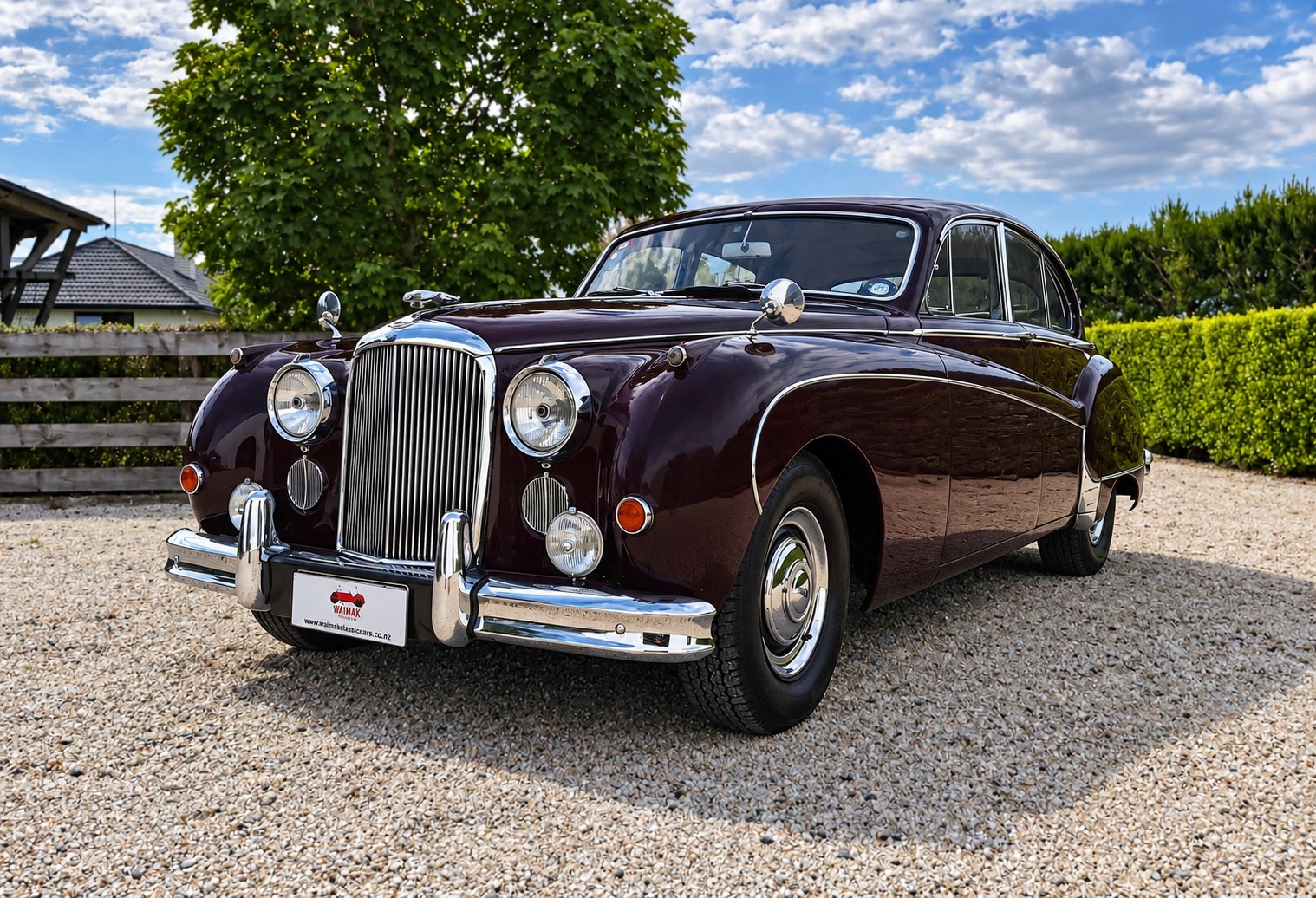
Visually, the Mk VIII introduced a broader grille with a bolder chrome surround, and was the first large Jaguar saloon to be equipped with the now famous ‘leaping cat’ bonnet mascot as standard. A one-piece curved windscreen and cut-away spats (apparently to help cool the brakes) were new, but the easiest way to pick the Mk VIII over its predecessor was the narrow chrome strip on the flanks. Curving gracefully along the line of the front guards, then running horizontally over the rear guards, this allowed two-tone paint finishes to be offered. Sober complementary colours (Claret and Imperial Maroon, Cornish Grey and Mist Grey, for example) were the norm from the factory, but some restorers have applied much bolder combinations since.
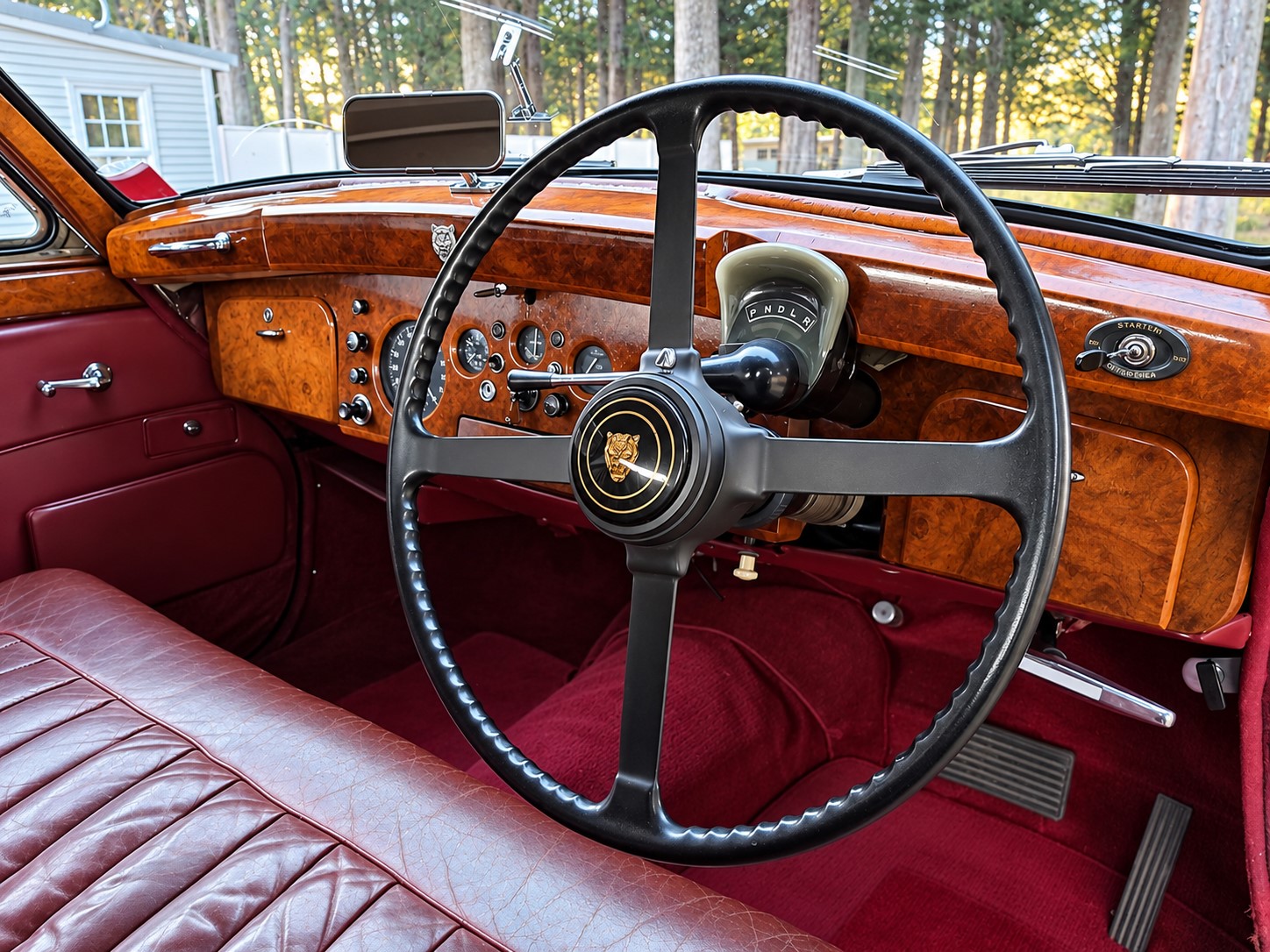
Inside, the Mk VIII added deeper foam padding to the leather-trimmed front and rear seats, the dashboard was redesigned, there was a new rear-view mirror, and fold-down writing tables were fitted to the back of the front seats. In Mk VIIIs with a bench front seat, a magazine rack and clock were also added for rear seat passengers. As a sign of the times, there were three separate cigarette lighters, with ashtrays in all four doors.
In October, 1958, Jaguar introduced the Mk IX saloon as a replacement for the Mk VIII, but as with the Mk VIIM and Mk VIII crossover, the two models would be sold alongside each other for several months. Aside from an identifying badge on the tail, the Mk IX looked identical to the Mk VIII. All the changes were under the skin, including a 3.8-litre XK engine producing 220hp (164kW), but more importantly, the Mk IX gained disc brakes all round, with power steering fitted as standard.
The Mk IX would be Jaguar’s last body-on-chassis large saloon, with the all-new Mk X of 1962 using a monocoque structure.
Of the Mk VII-VIII-IX triumvirate, the Mk VIII had the lowest production total. Just 6,212 examples rolled out of Browns Lane (some sources say 6,247), compared to 47,190 of the Mk VII/VIIM, and 10,009 units of the Mk IX. While well-built and luxuriously appointed, these saloons were also built to a price, so rust prevention was minimal and many cars have succumbed to rot over the years, or been cannibalised to keep XK sports cars on the road.
Today, survivors are more likely to be found in dry US states, Australia, or as per the feature car, New Zealand, than in the UK. According to the International Mk VIII Registry, there are just 180 known survivors worldwide.
Kiwi Star
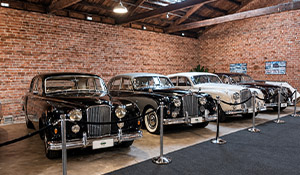
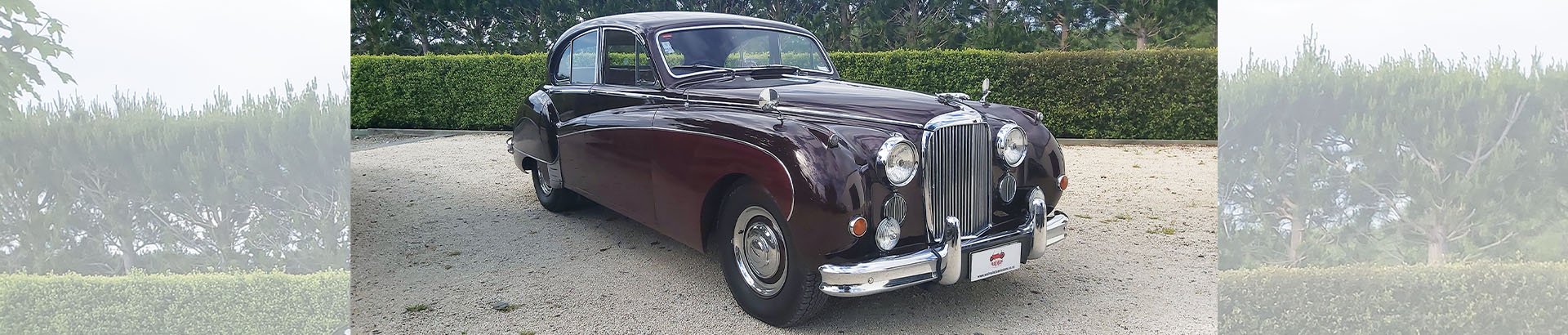
The 1958 Jaguar Mk VIII saloon featured is available from Waimak Classic Cars in New Zealand (see breakout). Described as mostly original, this car has had just three owners from new, including 18 years with the most recent owner.
Striking two-tone paint appears to be the factory Claret and Imperial Maroon (or a close approximation), with only minor stone chips and touch-ups visible. The chrome is mostly original, although the hubcaps, trim rings and a few other pieces have been recently re-plated. Chrome stone shields on the rear guards are a rare addition.
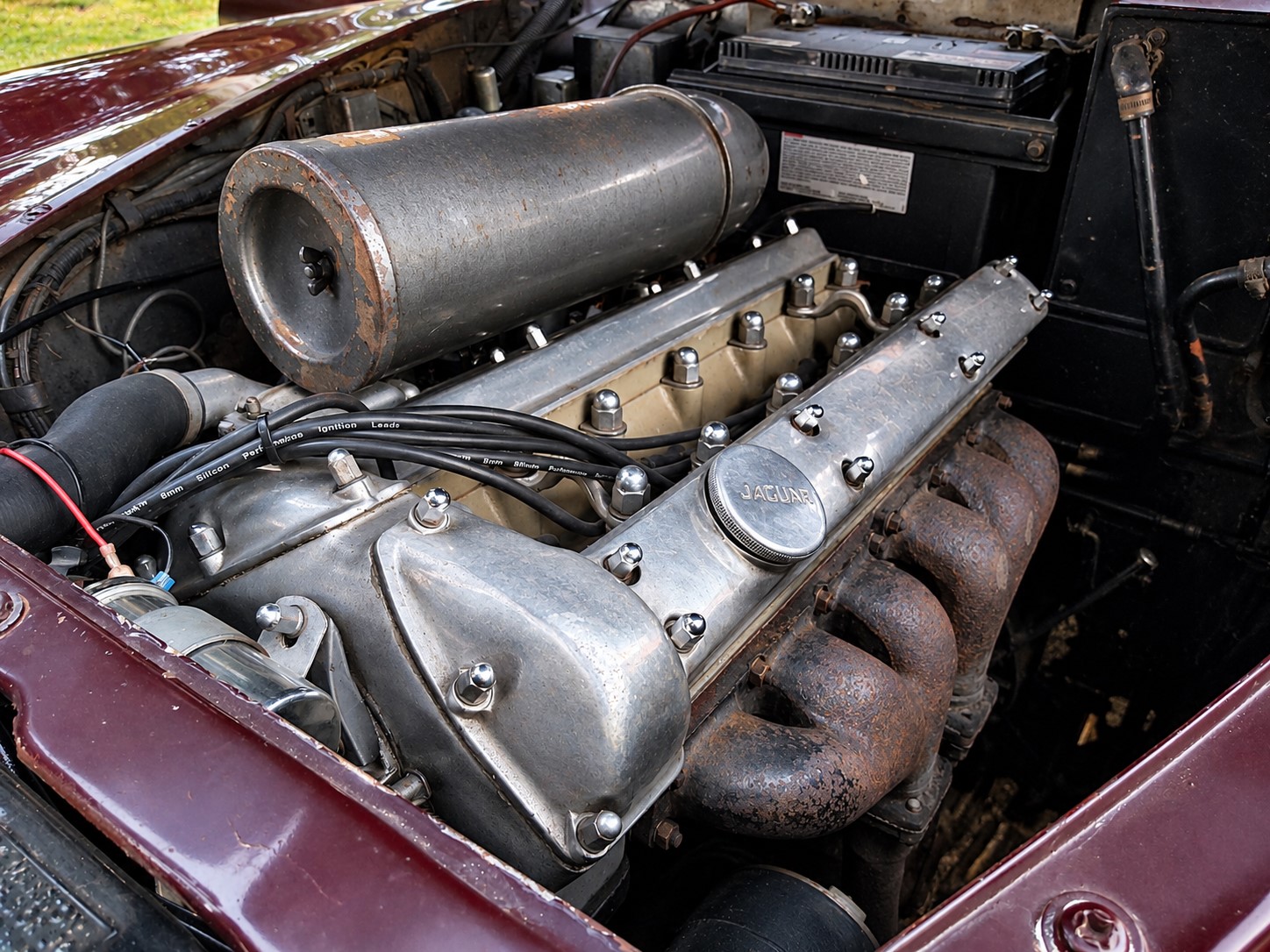
The correct 3.4-litre XK DOHC six for this car was reconditioned in 2013, with the Borg Warner automatic transmission refurbished in 2021. The aforementioned Intermediate Speed Hold Control is operational. Patina in the engine bay reflects this car’s age, but no leaks or damage are evident.
Other work on this car includes a replacement fuel tank (2013), re-cored radiator and new front shock absorbers (2017), new fuel pumps (2022), new battery and a new engine mount (2023), new tyres (2024), a brake overhaul and carburettor overhaul (2025). As proof of the durability and usability of this classic Jag following all this work, it recently completed a 1,300km trip from Russell to Canterbury. The odometer reading of 118,840 miles is most likely genuine.
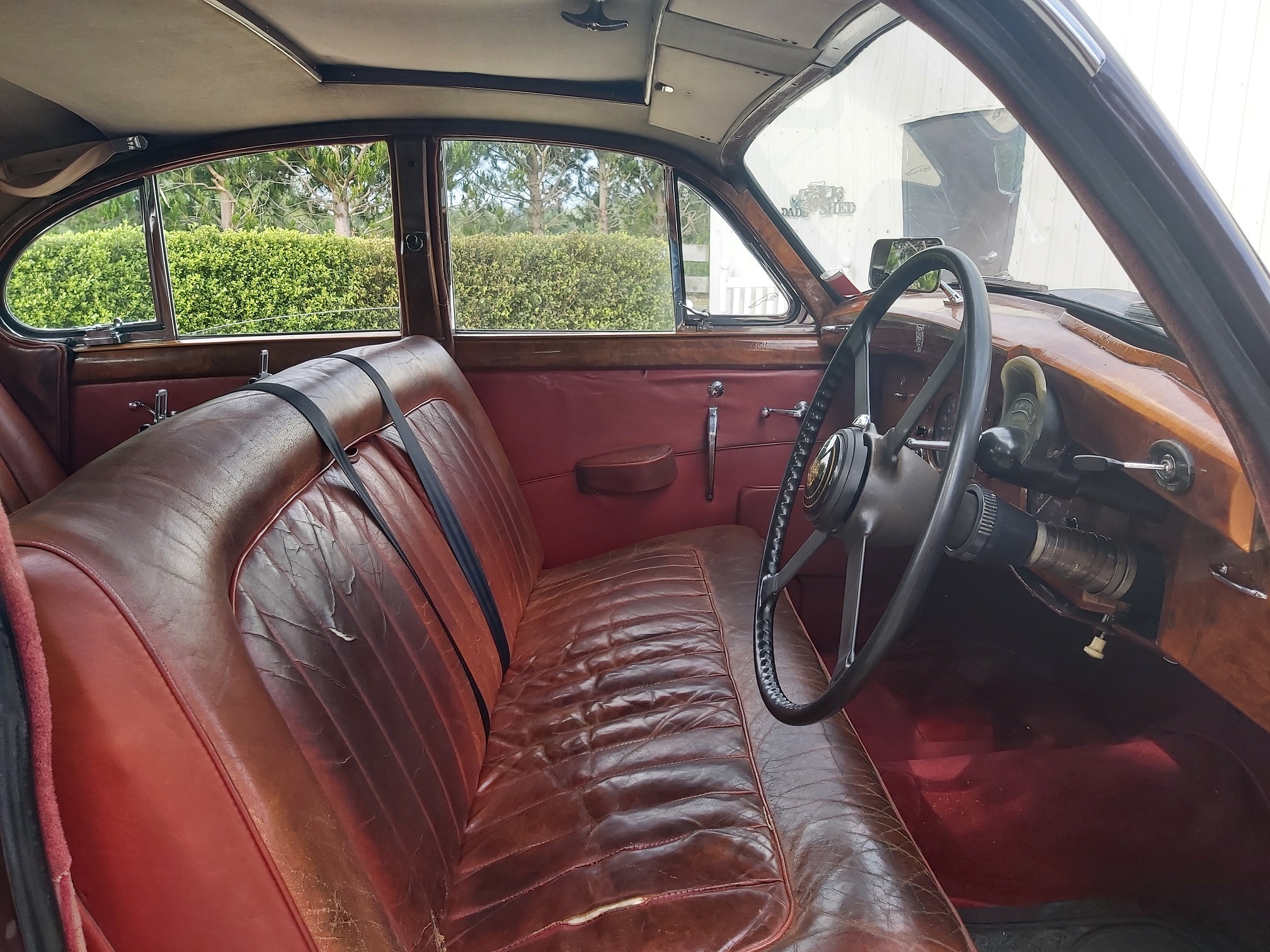
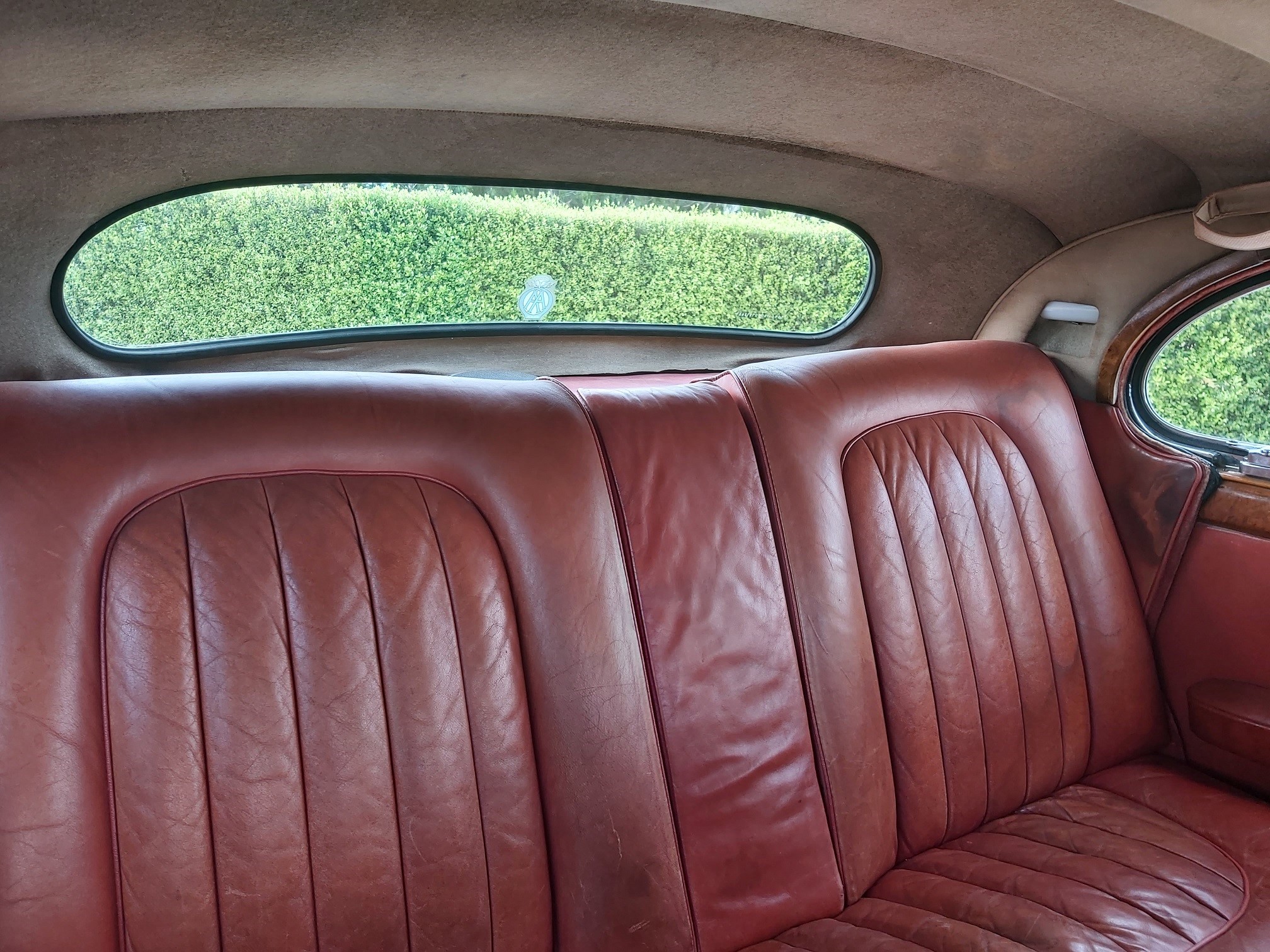
Inside, the red leather seat upholstery is original and well patinated. Same goes for the timber dash and door trims, with visible wear and cracking of the varnish in some areas. For safety, modern seat belts have been added for the front bench seat.
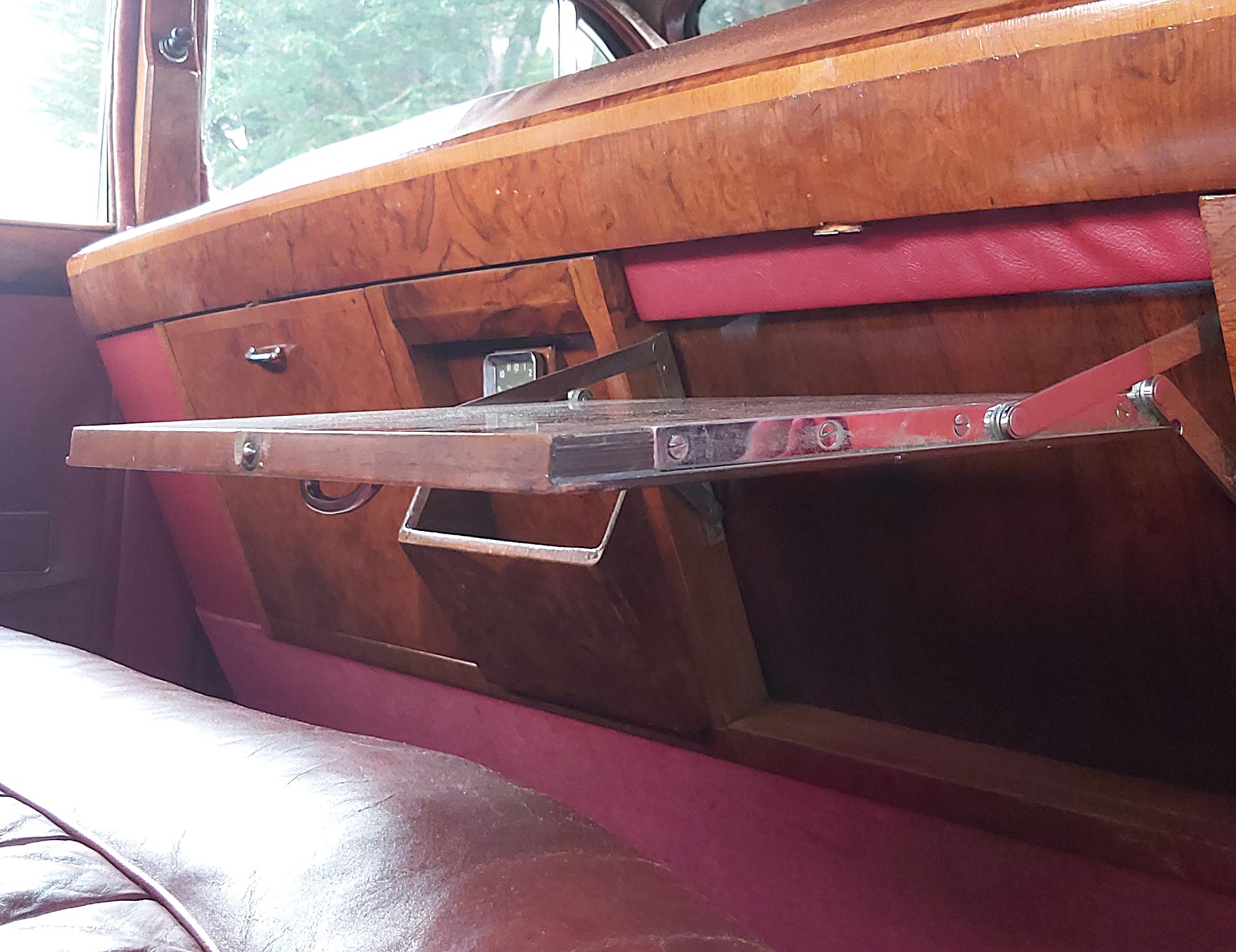
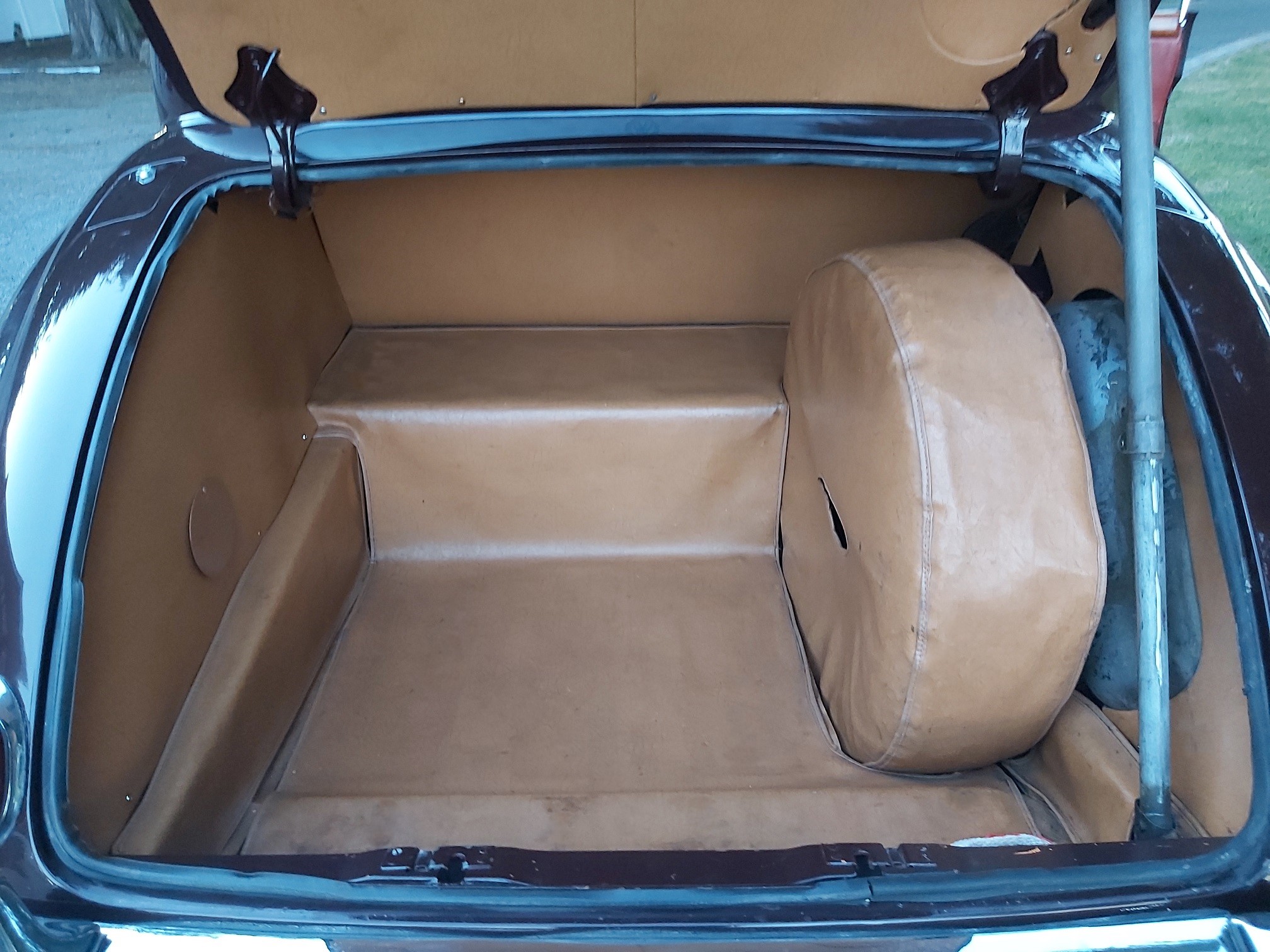
New maroon carpets were fitted in 2024, but the headlining is original. The boot is lined, while the sunroof adds to the appeal of this car.
For New Zealand buyers, this vehicle comes with the assurance of a Warranty of Fitness certificate and 12 months’ registration. For buyers in Australia or elsewhere overseas, Waimak can assist with shipping and other relevant requirements.
With Waimak’s Jesmond Micallef recently opening a new, Jaguar-specific business – Browns Lane NZ (see separate article) – now’s the right time to give the Mk VIII a second look. Browns Lane NZ is all about the collating, preserving and sharing of knowledge amongst Jaguar owners and enthusiasts in NZ, as well as welcoming newcomers to the marque. If you’re a newcomer, this mechanically sound Mk VIII could be the ideal introduction to classic Jaguar ownership.
FOR SALE
Available from Waimak Classic Cars in Leithfield, New Zealand, this 1958 Mk VIII saloon is a genuine, and mostly unrestored example that combines the potent 3.4-litre XK engine with the ease of automatic transmission.
With just three NZ owners from new, this car has been used regularly, with restorative work to keep it on the road including engine and transmission reconditioning, a new fuel tank and brake overhaul.
Sold with a WOF and 12 months’ registration for NZ buyers, Waimak can assist with shipping for international buyers.
Ready to enjoy, the listed mileage on this classic is 118,840 (miles) and the asking price is NZ$49,500.
For more details, contact Waimak Classic Cars on (0064) 3 310 6485. See more photos and details at justcars.com.au using the ad code JACFD5363196.