Words: Mike Ryan
Photos: Joe’s Golden Gasoline
Ask most performance enthusiasts and they’ll tell you the muscle car era peaked in 1970, with the decade that followed being all downhill. Federal mandates around reduced emissions, better fuel economy and improved safety saw some muscle car icons became shadows of their former selves in the 1970s, while others disappeared entirely. Chevrolet’s Corvette hung on, though, continuing to offer performance, even if it was less than what some wanted.
A Decade of Change
While Corvette performance did reach a nadir in the late-1970s, it managed to avoid the malaise that afflicted the rest of the muscle and pony car market at the time. Perversely, the Corvette would set numerous production records during this decade, despite emasculated performance and ever-increasing prices.
In 1970, the list price of a new Corvette coupe breached the US$5,000 mark for the first time. By the end of the decade, buyers needed to stump up more than US$10,000. Over the same period, the convertible, big block V8s, high-performance and race-spec options would be discontinued. By 1979, only one engine, the venerable 350 small block, would be available. This produced a meagre 195hp in standard spec in 1979, although a 225hp version was optional.
Compare that to 1970, when 300hp was the norm from the same engine capacity, with 350hp and 370hp options available. On top of that, a 454 big block delivered 390hp and bags of torque. The difference in outputs from the early and late 1970s seems stark on paper, but needs some explanation. Yes, horsepower was decreased in order to reduce emissions, but another factor was how that power was measured.
From 1972 onwards, the measuring criteria that had previously used “gross” ratings changed to “net”. Applied industry-wide, this made the numbers look bad, but was more realistic, as it factored in air cleaners, exhaust systems and accessories driven off the engine that the previous criteria hadn’t. To compare, a Corvette equipped with a 350 small block rated at 270hp in 1971 was re-rated at 200hp for 1972, despite the engine being essentially unchanged. The ‘LT-1’ performance version of the 350 V8 dropped from 330hp to 255hp, while the 454 big block, as fitted to the Corvette featured, saw its listed output change from 360hp in 1971 to 270hp for 1972 under the new measuring.
Beyond this, the 1972 Corvette changed little compared to the ’71 model, perhaps reflecting how “right” the third-generation sports car had been since its launch four years earlier.
Sharks and Rays
The third gen (C3) Corvette arrived for the 1968 model year, replacing the previous generation that had been offered from 1963 to 1967. Swoopy styling, drawn heavily from the 1965 ‘Mako Shark II’ concept, defined the new Corvette and was a hit with buyers, but the chassis and most of the running gear carried over unchanged from the second gen (C2) car, at least initially. The path to production for the C3 had been a little torturous, and like the previous Corvette, launched later than intended.
A targa top had been planned for the C3 Corvette from the outset. However, problems with body flexing meant the removable top couldn’t be effectively secured or made watertight, so a brace was added, creating a T-top design. This required two roof panels, which along with the removable rear windscreen, offered the next best thing to a convertible (the Corvette convertible would be discontinued after 1975).
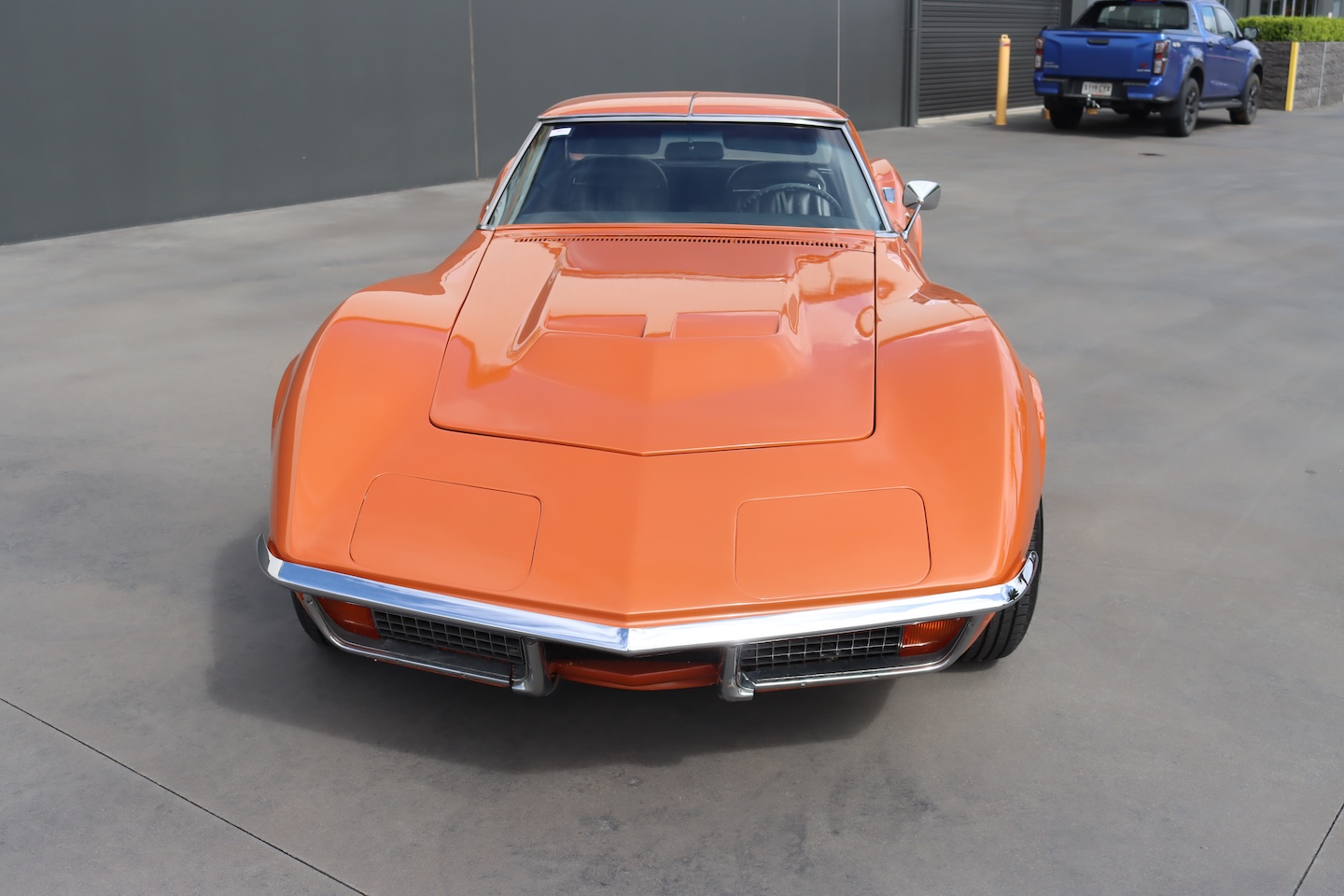
Styling of the fibreglass body had to be modified to improve visibility and reduce problem areas regarding cooling and aerodynamics. Reshaping the nose reduced front-end lift at speed that had been an incurable problem for the C2 Corvette. More importantly, it allowed more air to reach the radiator, while vents in the front guards that had been mostly decorative on the Mako Shark II became functional on the C3 Corvette, extracting hot air from the engine bay.
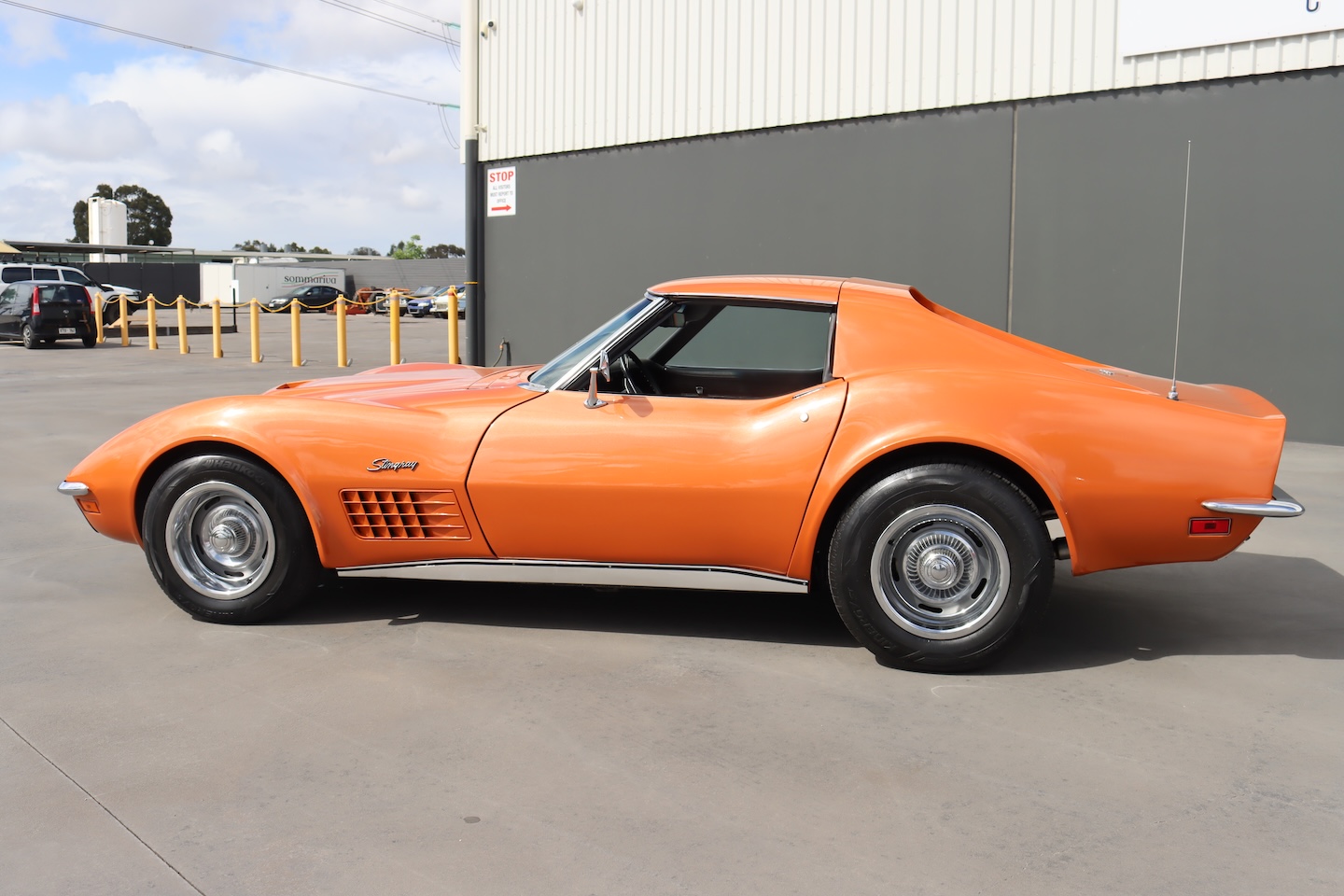
Demand for the new-look Corvette saw it set a production record of 28,566 in 1968, with output steadily increasing in the years that followed. As an aside, the previous ‘Sting Ray’ name was changed to ‘Stingray’ for 1968 and would remain throughout C3 production.
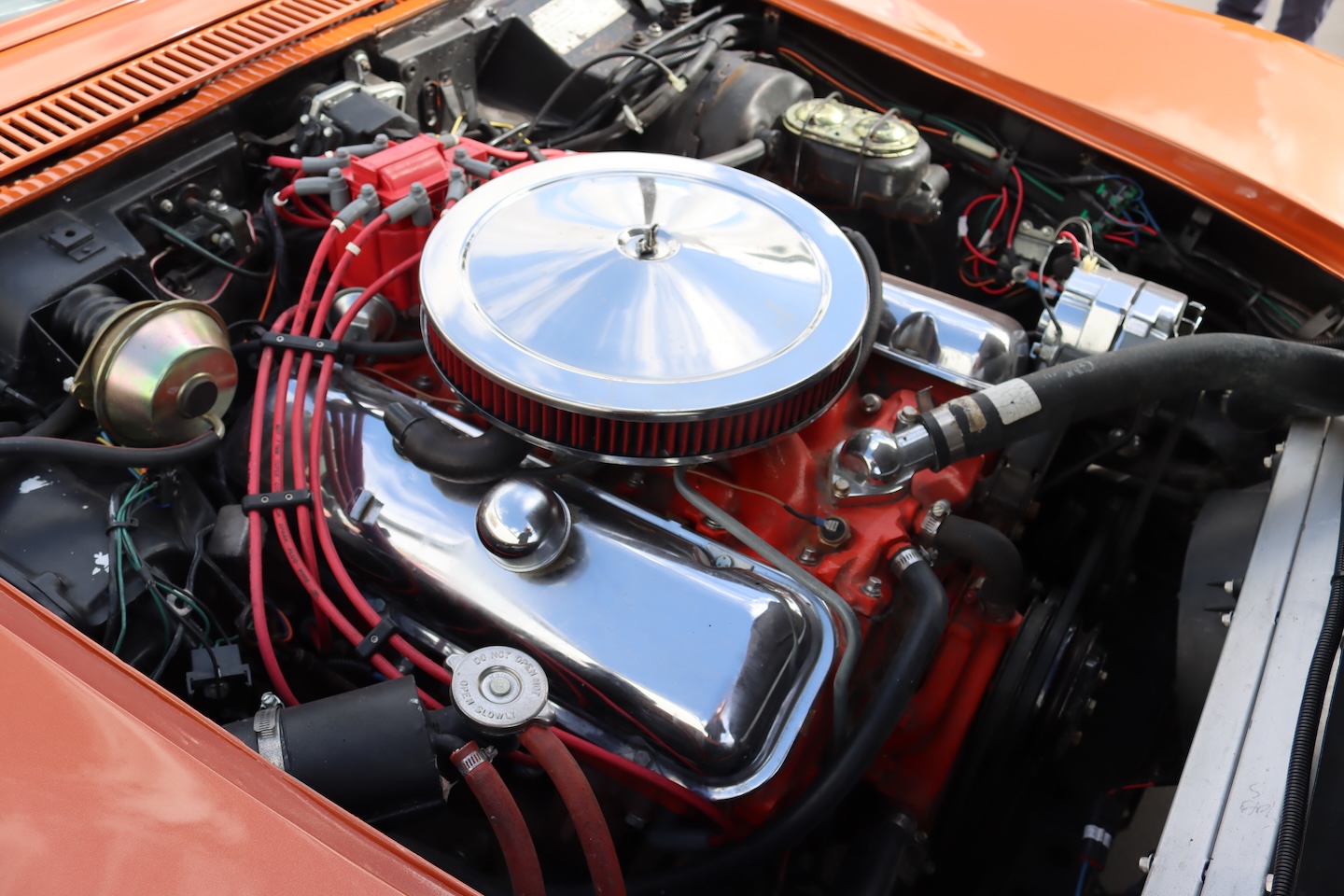
Engine offerings for 1968 consisted of 327 small block and 427 big block V8s; the former producing as much as 350hp, and the latter up to 435hp, but as noted earlier, this was using gross horsepower measuring.
Flow-through ventilation (“Astro” ventilation in Chev-speak) allowed one-piece door glass to be used for the first time on a Corvette, while novel features seen on the Mako Shark II that made it into the ’68 Stingray included wipers that sat under a vacuum-operated panel at the leading edge of the windscreen, and a fibre-optic warning light system. Applicable to the headlights, front indicators, tail and brake lights, this used fibre-optic filaments connected to a display on the centre console that advised if a bulb had blown or the light was otherwise inoperative.
More, then Less
For the 1969 Corvette, the 350 V8 was introduced, with engine outputs increasing across the board and a new option, coded 'ZL-1,' making its debut. This combined an all-alloy 427 V8 listed at 430hp (but actually 500+hp) with a heavy-duty four-speed manual transmission, heavy-duty brakes, stiffer suspension and a Posi-Traction diff. Created solely for racing, and only known to Chev insiders, just two ZL-1 Corvettes were built in '69. The following year, a ‘ZR1’ option was introduced, built to the same formula as the ZL-1, but based around the 350 V8.
Styling changes to the Corvette for 1970 included rectangular exhaust tips, a new cross-hatch design for the front guard vents, and flares on the trailing edge of the wheelarches. These minimised body damage caused by stones being thrown up by the tyres. The 350 V8 remained, but the 427 was replaced by a 454 big block. Carrying an ‘LS5’ code, this was essentially a stroked version of the 427 and produced the same power at 390hp, but significantly more torque – 500ft/lb instead to 460ft/lb.
Tinted glass became standard, while inside, the seats were redesigned to improve headroom and allow easier access to the storage compartments and battery that sat behind them. A ‘Custom Interior Trim’ option was introduced, adding leather-faced seats, faux woodgrain applique to the dash and doors, and plush, cut-pile carpeting.
Emissions reductions required following introduction of the Clean Air Act of 1970 made their first impact on the Corvette range for 1971. Output from the base 350 V8 was cut from 300hp to 270hp, with the LT-1 option losing 40 horses, down to 330hp. For the LS5 454, output dropped from 390hp to 365hp. There was a 425hp ‘LS6’ version of the 454 offered in 1971, but at US$1,221 on top of the Corvette’s list price, there were few takers. A ‘Special Purpose’ package based around this engine, coded ZR2, attracted just 12 buyers with its US$1,747 additional price.
The Shift for 1972
While the Corvette carried over largely unchanged for 1972, the change in horsepower ratings mentioned earlier left buyers feeling like they were getting less for their money. That wasn’t true. Actual horsepower reductions would be implemented in the years that followed, but outputs from the 1972 Corvette engine lineup were really the same as ’71.
Buyers now had just three powerplants to choose from – a 200hp 350 small block, 255hp 350 small block (LT-1) and 270hp 454 big block (LS5). The 454 was fitted to less than 15 per cent of Corvettes in 1972. If you lived in California, the choice was cut to two, with the big block unavailable due to the state’s more stringent emissions rules. A four-speed manual was the standard transmission, with alternate ratios for this gearbox, as well as a three-speed automatic, optional. Diff ratio options varied from 3.06 for the 350 with auto to 3.77 for the 454 with a heavy-duty manual.
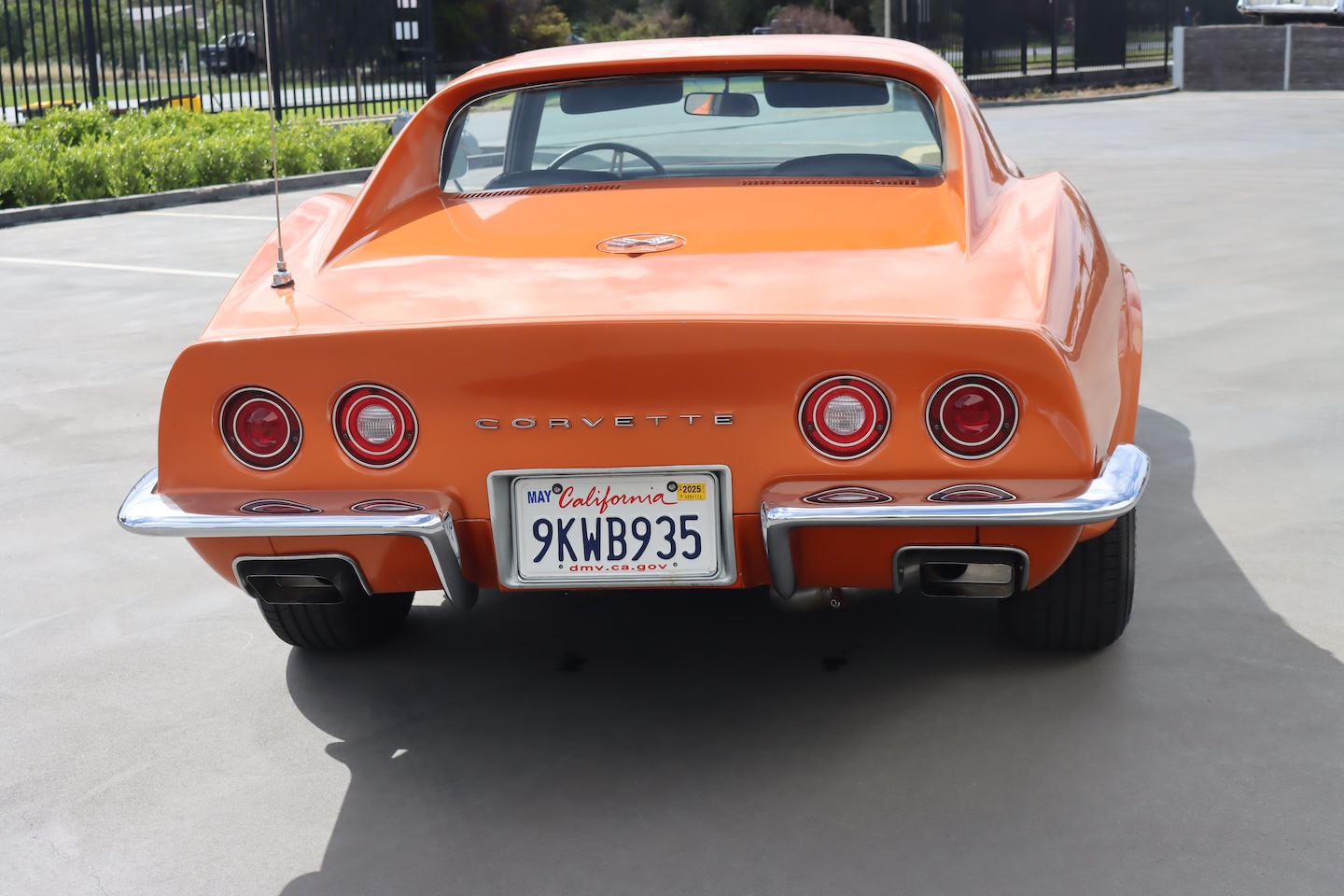
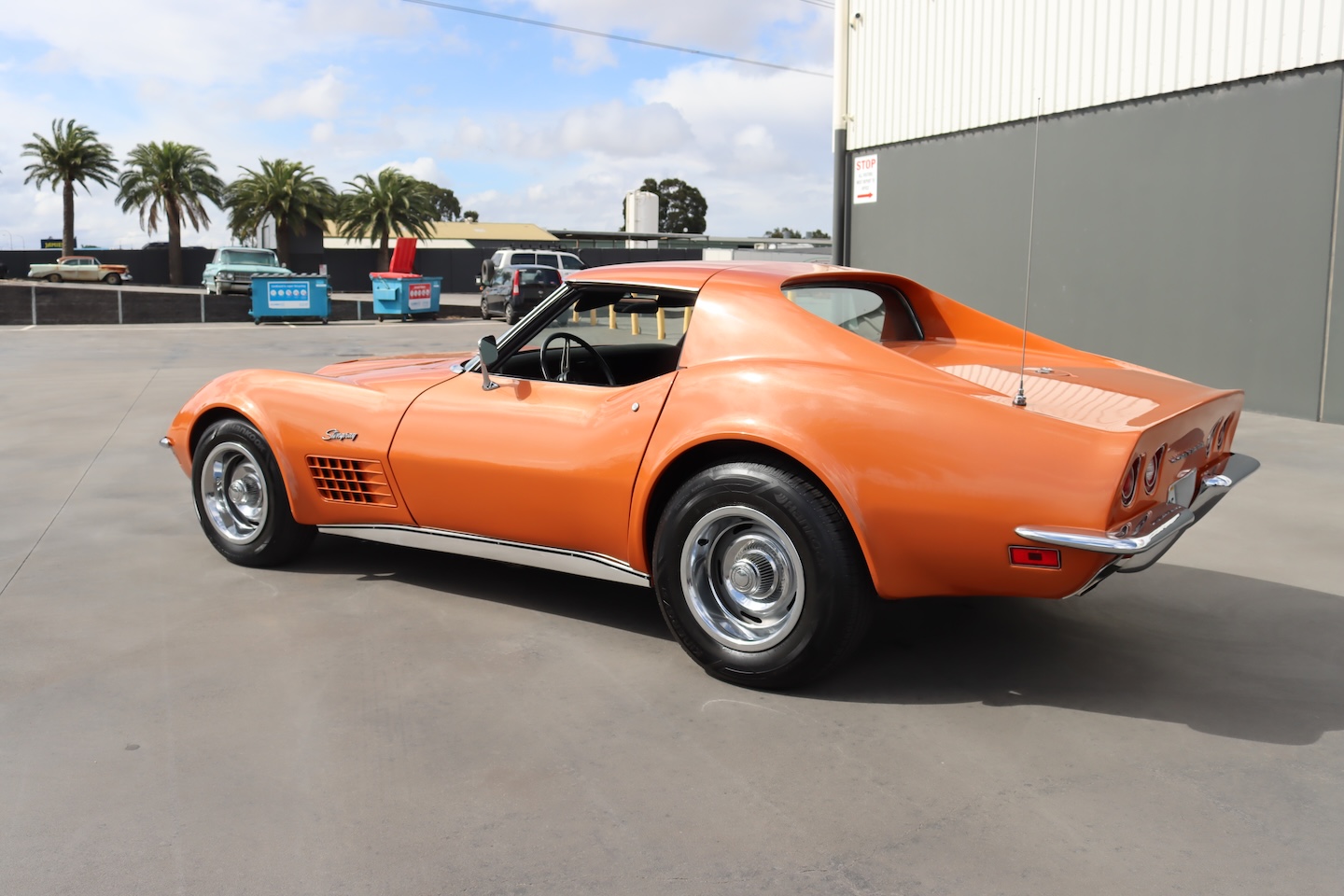
Externally, the 1972 Corvette Stingray looked identical to the ’71 model. One differentiator was a lock in the tail panel for an anti-theft alarm. Activated by a key, this sounded the horn if an attempt was made to force open the doors or bonnet. Previously an option, this alarm became standard for 1972, with the fibre-optic warning light system deleted.
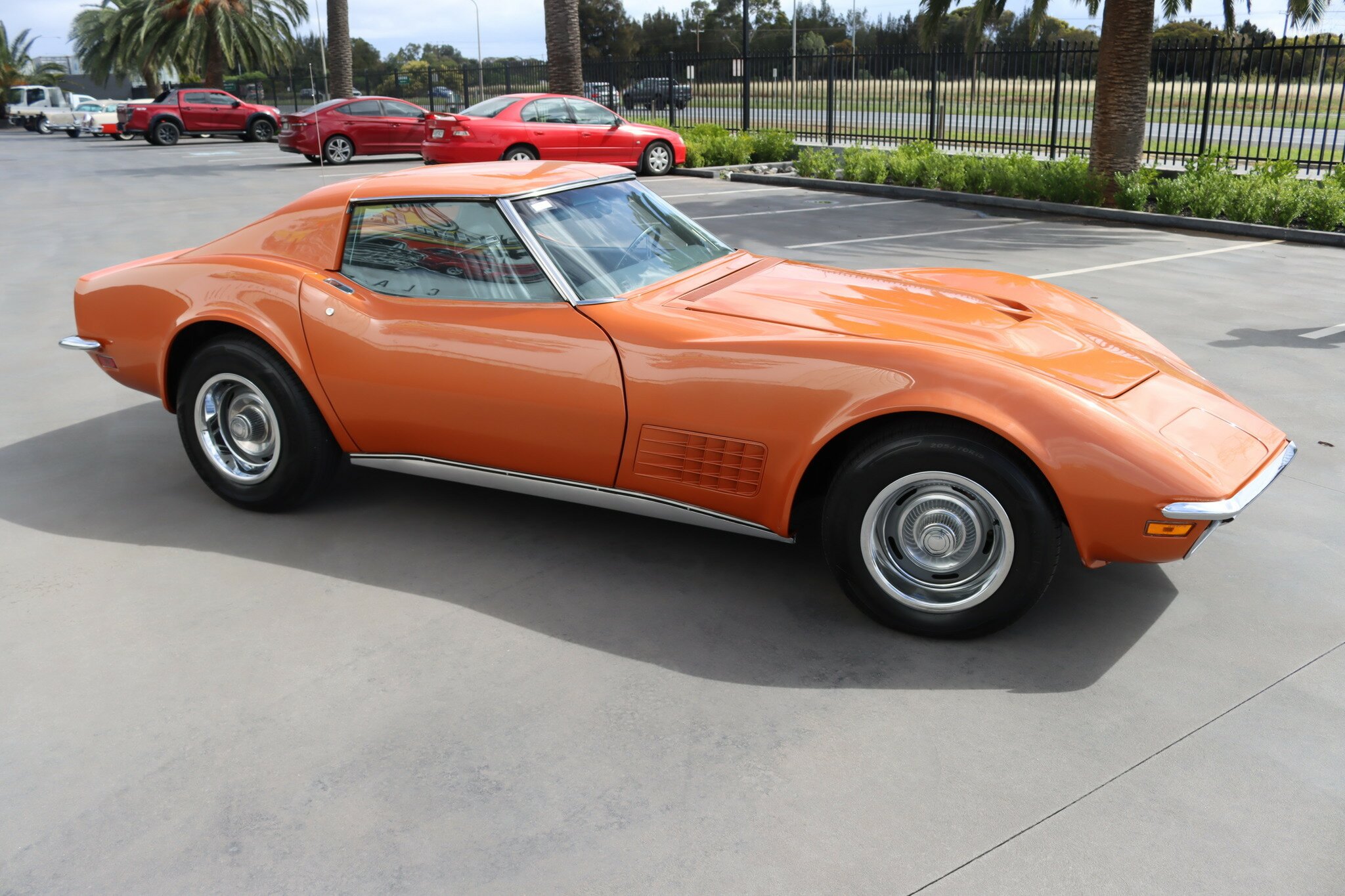
The 1972 Corvette would be the last to feature a removable rear window and the vacuum-operated wiper panel, along with chrome front and rear bumpers. Another federal mandate, this time around crash protection, required all new cars be able to survive a 5mph (8km/h) impact without damage. This saw 1973-model Corvette coupes and convertibles receive an impact-absorbing urethane nosecone, followed by a similar treatment at the back end for 1974 models. As such, the 1972 Corvettes are special as the ‘last of the chrome bumpers’.
Orange Delight
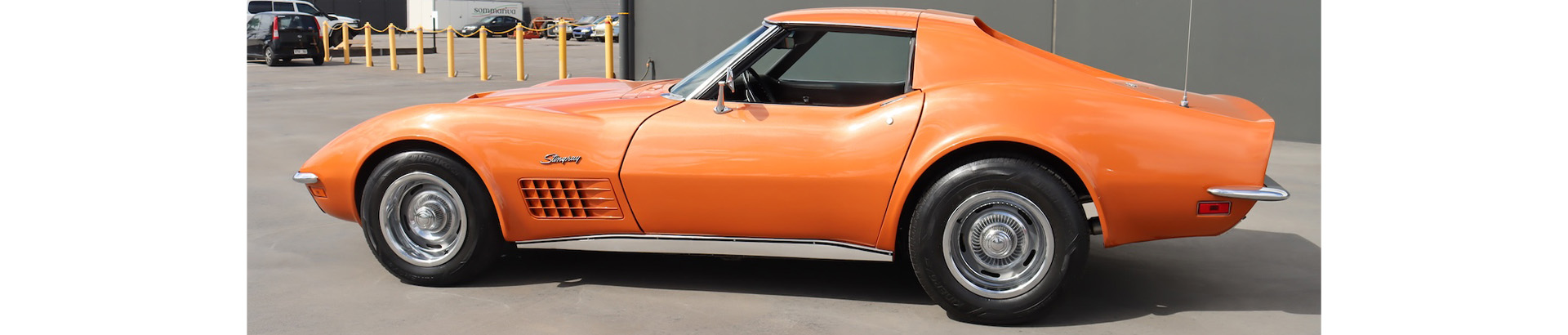
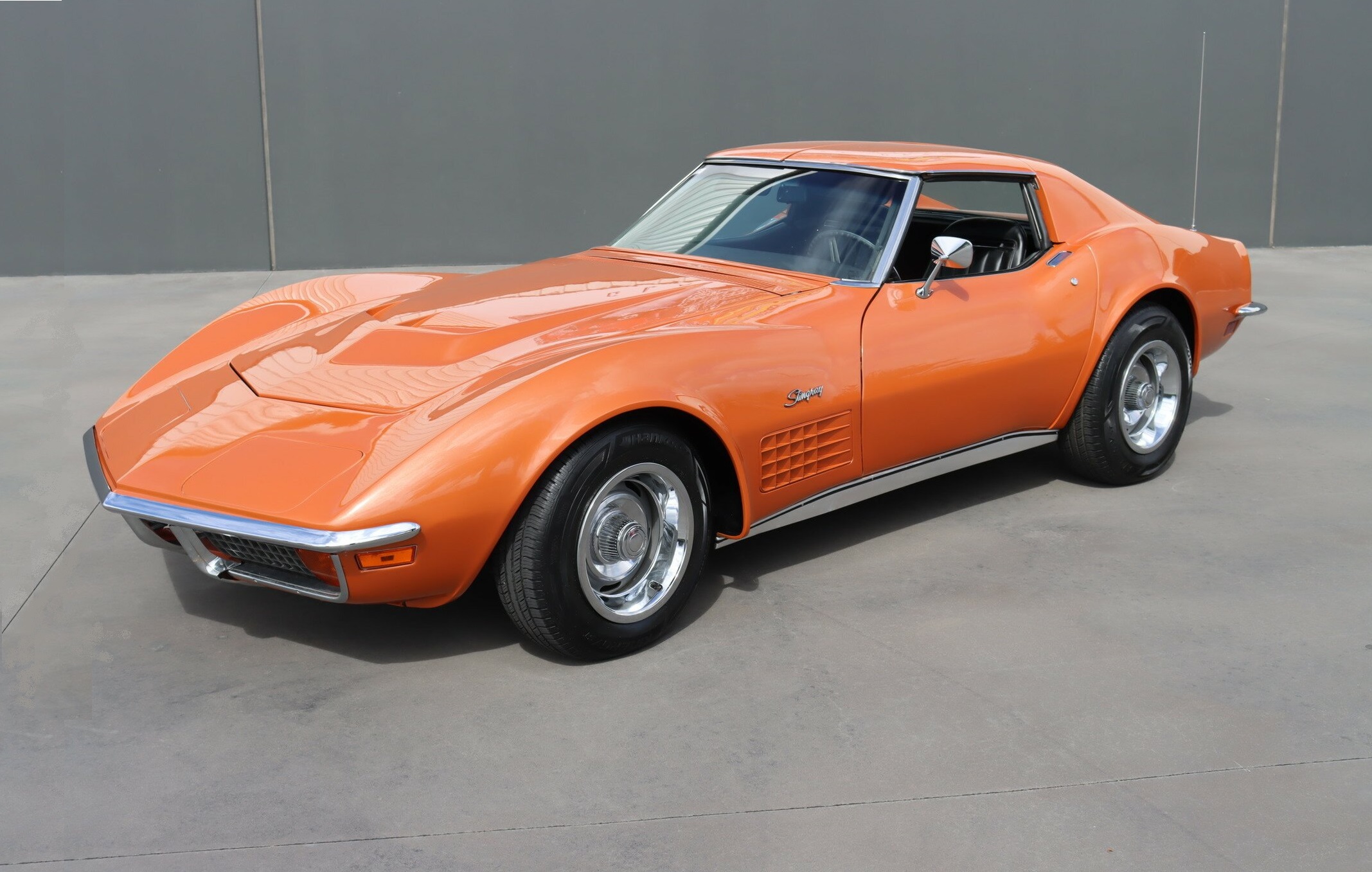
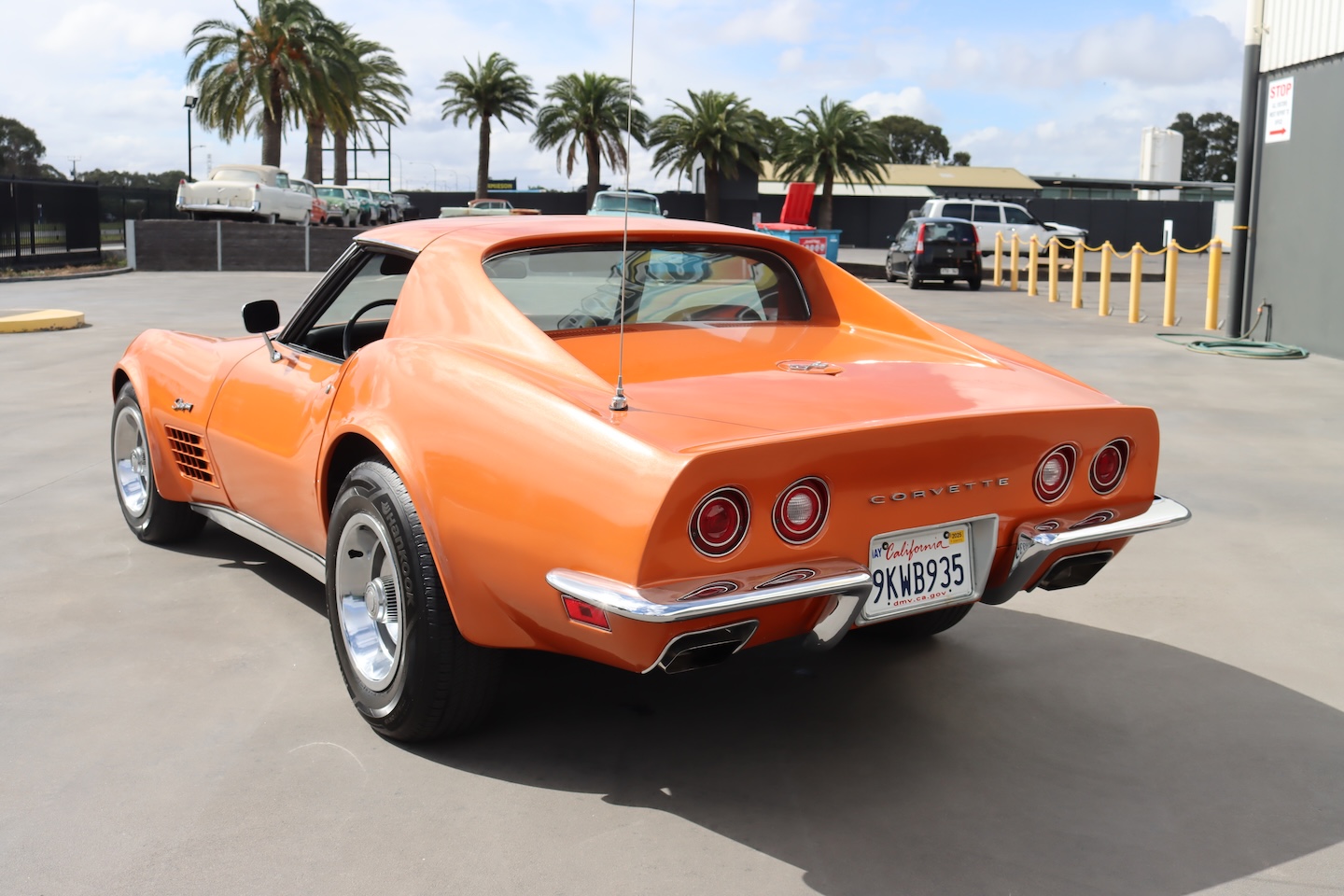
The Corvette Stingray coupe featured comes from that important 1972 model year and is currently for sale through Joe’s Golden Gasoline in Parafield Gardens, South Australia (see breakout).
One of 27,004 Corvettes produced for the 1972 model year (20,496 coupes, 6,508 convertibles), this one features the desirable 454 big block, paired with a three-speed auto. While Corvette VINs aren’t particularly illuminating, decoding this one shows it was factory-fitted with a 454 and rolled off the line at St. Louis in April, 1972 (Corvette production moved to Bowling Green, Kentucky, in 1981).
Sourced from California by Joe’s Golden Gasoline, and wearing Californian plates, this car was actually sold new in Arizona. That makes sense when you remember a 454-equipped Corvette wasn’t available to Californian buyers in 1972. The full history of this car is unknown, but the engine has been rebuilt, and the plates show it was registered in California as recently as 2025.
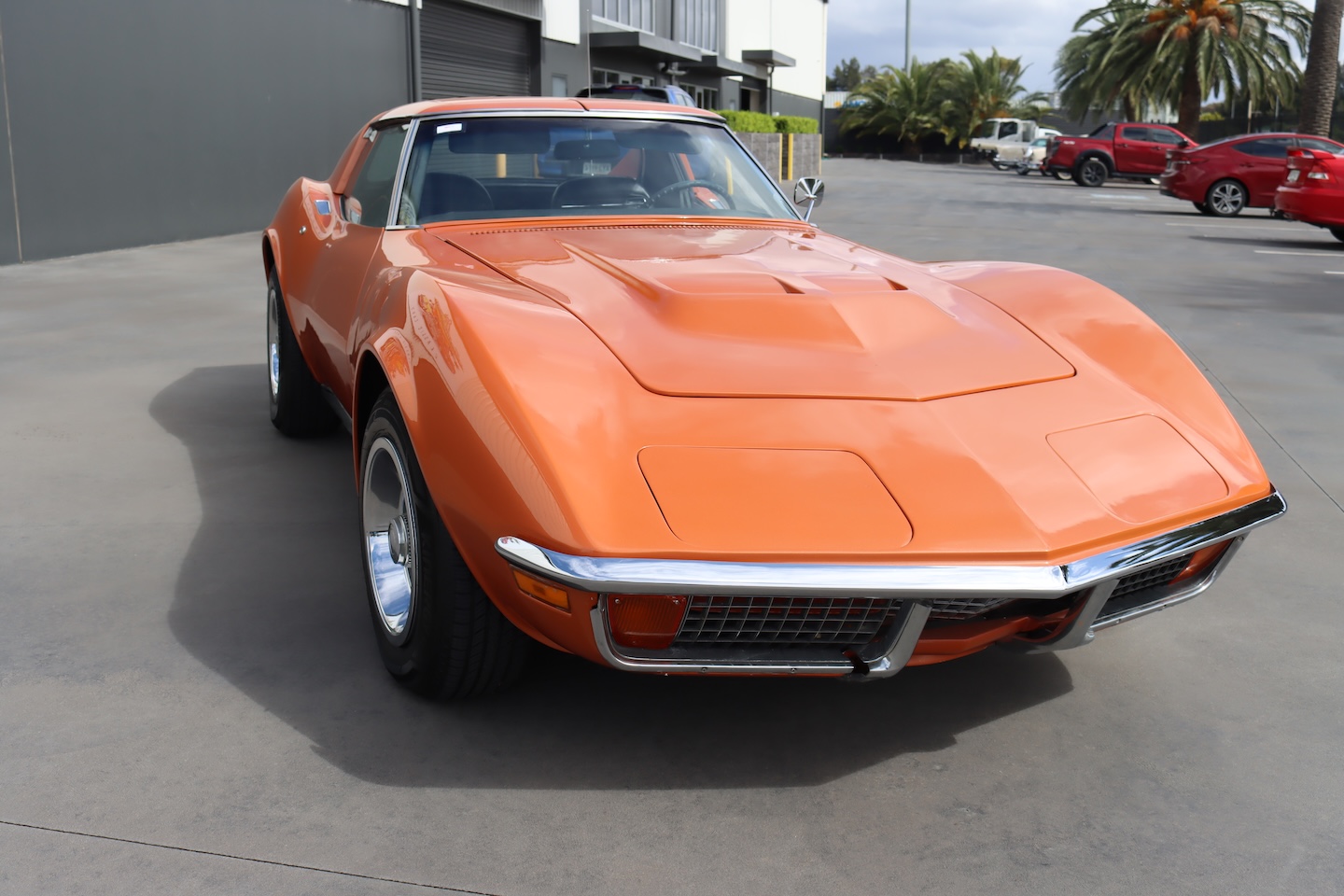
Finished in Ontario Orange firemist (metallic) paint - the most popular colour in 1972 - this car wears the standard 15x8 five-slot ‘Rally’ wheels and presents very well externally, with the chrome bumpers and other brightwork outstanding for their age. It has had a respray at some point, but the rest of exterior is said to be original. The alarm lock in the tail is absent, suggesting it may have been removed and glassed over prior to the respray, or possibly deleted from the original order sheet.
Under the bonnet, the factory twin-snout air cleaner for the 454 V8 has been replaced with an open element filter, with aftermarket valve covers also fitted. The distributor has been updated to a modern unit, as has the radiator. Most hoses and leads appear to be relatively fresh, with the actuator for the vacuum-operated wiper panel looking like it’s been recently replaced, too.
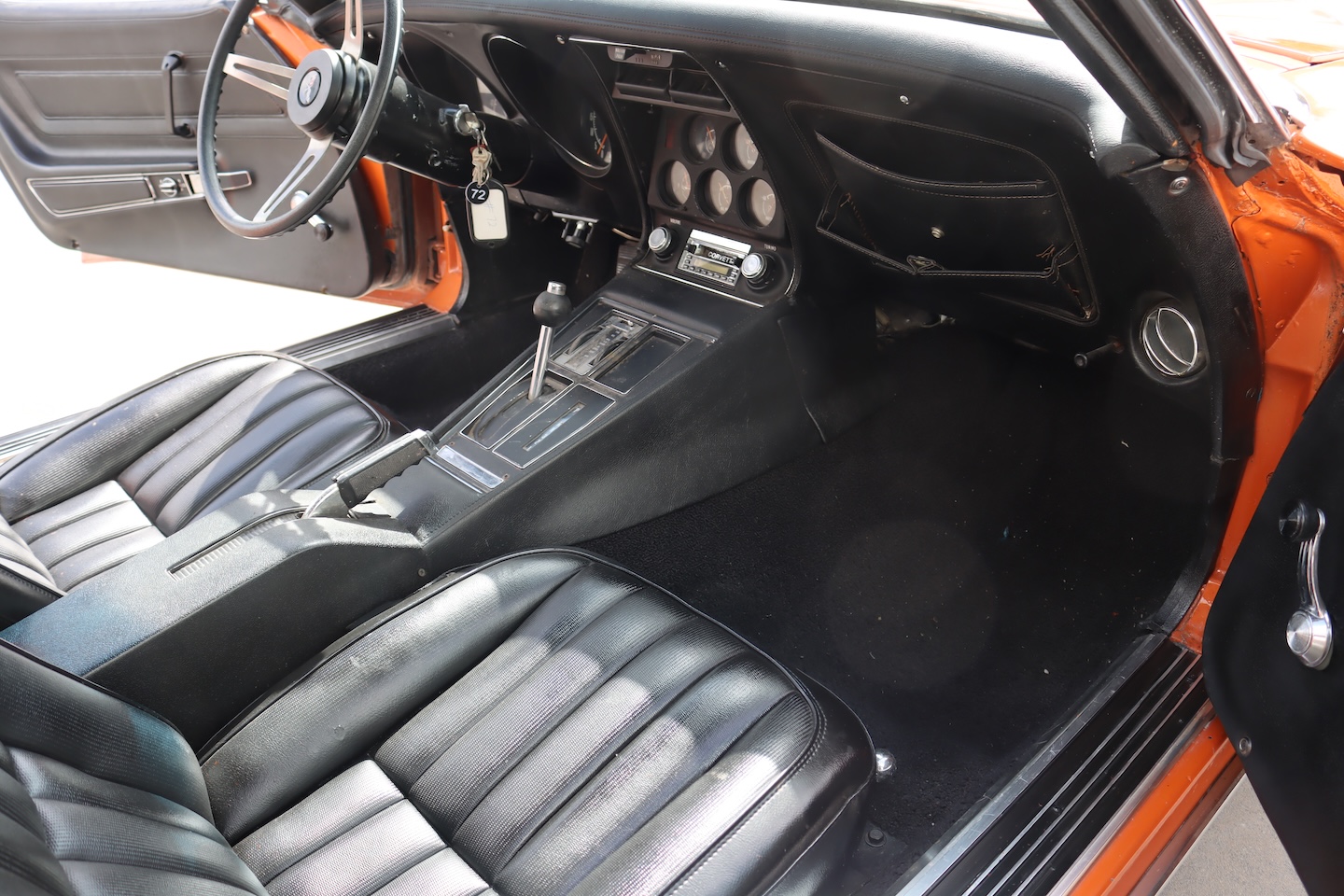
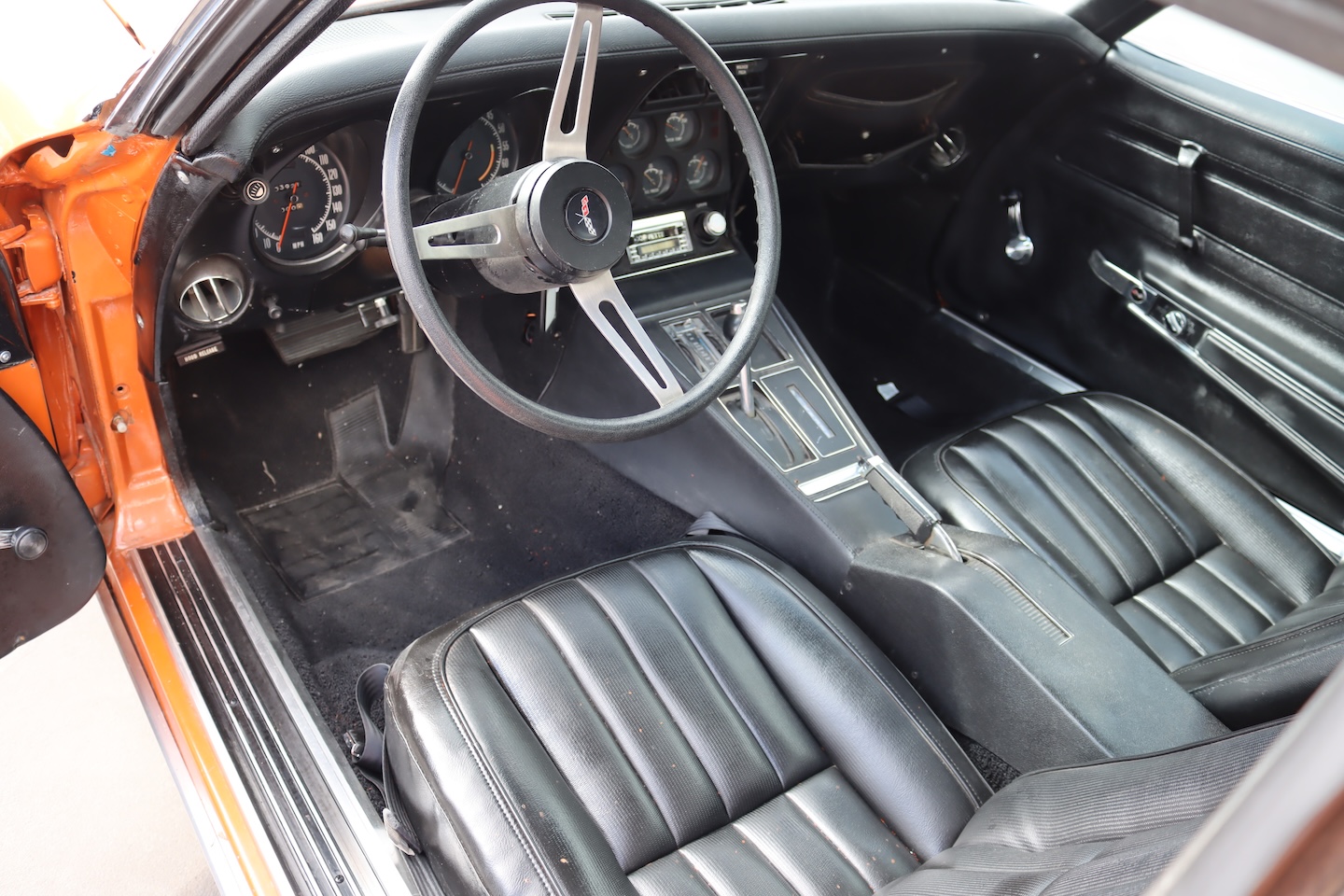
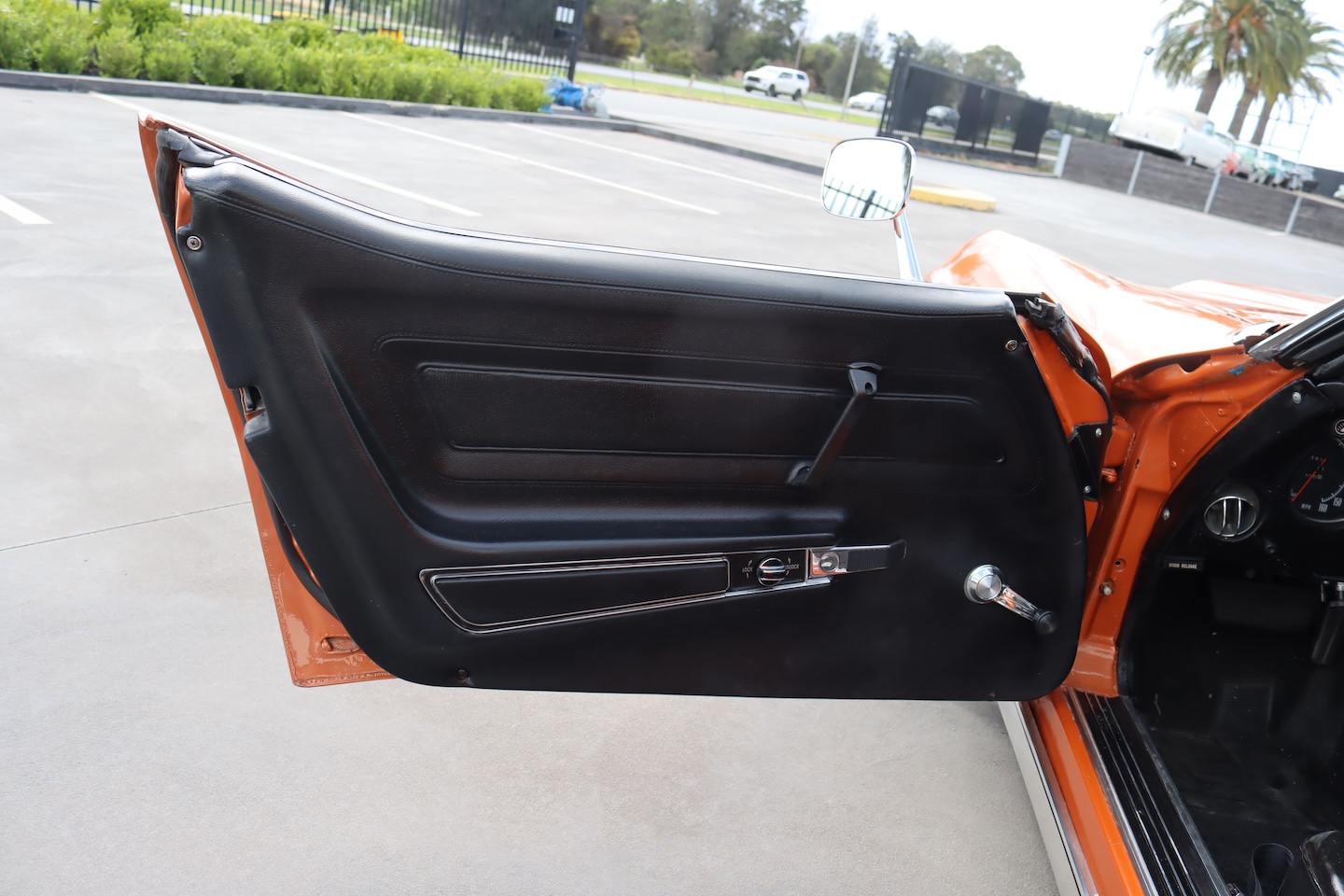
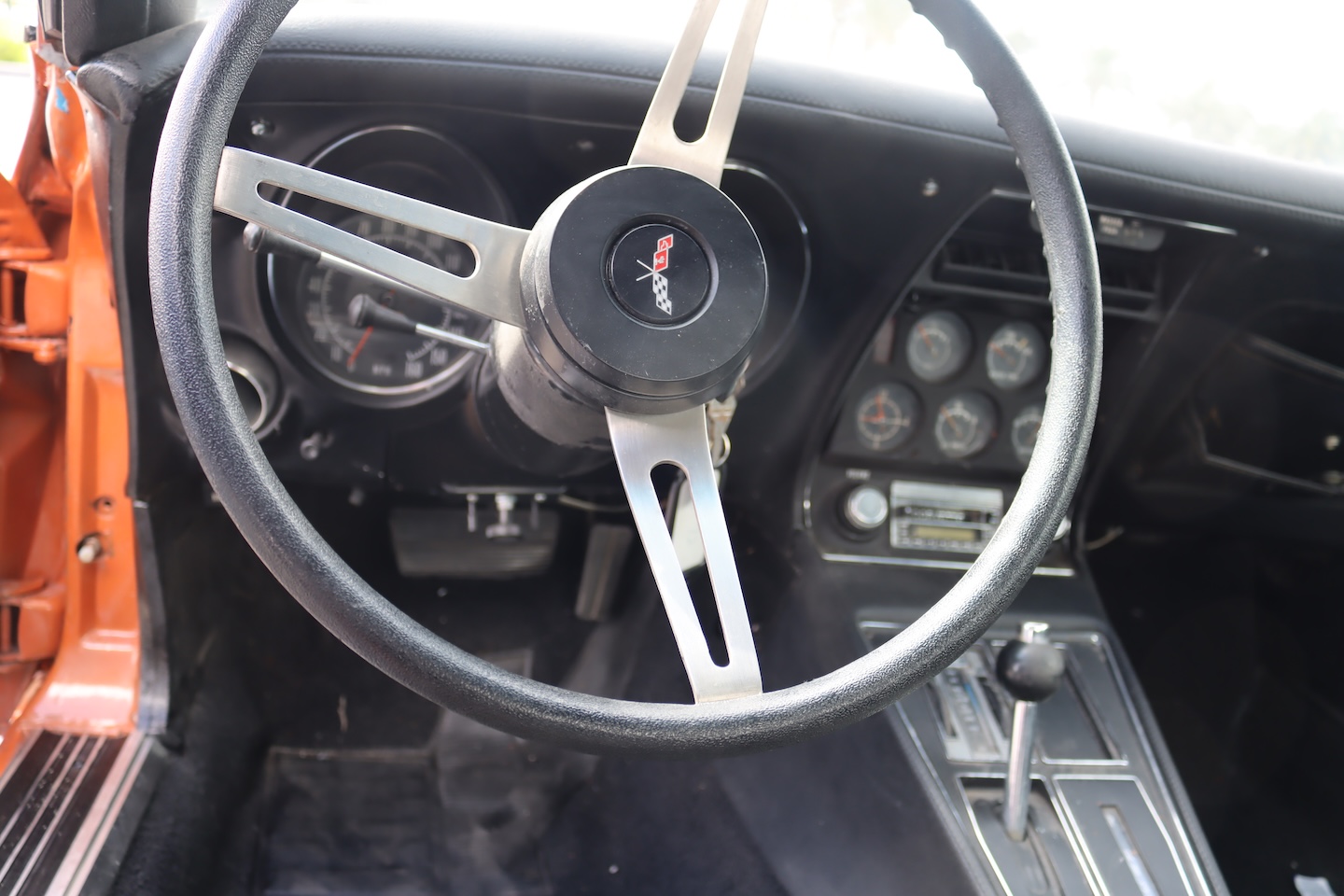
Inside, the black vinyl seats, door trims and carpeting all present well and look original, with the only visible deviation from 1972 spec being a newer, push-button radio-cassette (possibly a Custom Autosound unit) and absence of the engine/torque data plaque on the centre console. Some refurbishment and detailing would enhance the interior, but it’s perfectly usable as is.
Ready to Roll
One of several Corvettes in stock with Joe’s Golden Gasoline at time of writing (including C4 and C5 examples), this one is described as a good, tight unit that they inspected at auction in the US before shipping it here. Subjected to their own detailed mechanical assessment once landed, this Corvette is ready to enjoy as a brawny, eye-catching weekend cruiser.
While nothing is needed mechanically, Joe’s Golden Gasoline do advise that the exhaust system could be a little too loud to comply with some states’ licensing requirements - buyers may need to invest in a replacement exhaust to meet decibel levels. A little time and money devoted to refreshing the interior would be well spent, too.
Aside from its cool looks, the appeal of this car lies in its tough and torquey 454 V8, as well as being the last to feature chrome bumpers. More than a piece of Chevrolet history, this Corvette marks a pivot point in American automobile design and manufacturing.
FOR SALE
This 1972 Chevrolet Corvette Stingray coupe is finished in Ontario Orange with a black vinyl interior, both of which are in very good condition.
Rebuilt in the US, the desirable 454 V8 is matched to a three-speed automatic and has received some upgrades, mainly to improve reliability and suit unleaded fuel. The odometer reads 3,921 miles, which most likely refers to miles covered since the engine rebuild.
Recently reduced to $74,850 (+ORCs), this Corvette is ready to enjoy, with inspections welcome.
For more details, call Joe’s Golden Gasoline on 0412 815 759. See more online at justcars.com.au with the ad code JACFD5360196.