Words: Mike Ryan
Photos: Bonhams Auctions
Along with George Barris, Darryl Starbird and Dean Jeffries, Ed ‘Big Daddy’ Roth was one of the pioneers of the “Kustom Kulture” movement of the 1960s. Roth’s ‘Rat Fink’ character, along with his Outlaw, Beatnik Bandit and Orbitron hot rods are world famous, but the prolific artist, cartoonist, pinstriper, sculptor and custom car builder turned his hand to some smaller creations, too.
This past June, the National Automobile Museum in Reno, Nevada, announced the sale of 110 cars from their collection, via an auction conducted by Bonhams. Most of the lots offered were originally in the famous ‘Harrah Collection’ created by successful casino and hotel operator, William ‘Bill’ Harrah, in the 1960s and ‘70s.
As diverse as it was large, the Harrah Collection at one point numbered more than 1,400 vehicles. Following Harrah’s death in 1978, the collection was broken up and sold off via a series of auctions in the mid-1980s, with cars going to individuals and organisations all over the USA.
As Harrah’s collection had been based in Nevada, some efforts were made by authorities to keep the entire collection within the state as a tourist attraction. Those efforts failed, but the company that acquired Harrah’s business after his passing would ultimately donate 175 cars from the collection to a non-profit organisation based in Reno. These cars, along with 60 more from other donors, would form the basis of the National Automobile Museum, that opened in November, 1989.
One of those other donors to the National Automobile Museum was Ed ‘Big Daddy’ Roth.
Big Man, Big Impact
Ed Roth was born in 1932 in California, where his passion for art and cars would be established at a young age. Studying engineering at college gave Roth the technical skills to build hot rods, not just draw them, which he would pursue more earnestly after serving in the US Air Force.
A part-time business pinstriping and custom painting cars (flames, scallops, etc.) became full-time when the custom car scene started ramping up in California. A heavily flamed ’56 Ford F100 became a rolling billboard for Roth’s business, with a near-new ’57 Chev Bel Air two-door hardtop replacing it soon after. A brief business partnership with another automotive painter, Bud ‘The Baron’ Crozier, followed, but Roth was soon working solo again under the ‘Roth Studios’ banner.
By the way, Roth’s ‘Big Daddy’ nickname was in reference to his 6’4” height. While not of his making, the Big Daddy persona was something Roth would lean into at car shows and promotional appearances by wearing a top hat and tails.
Roth’s talents saw him straddle two worlds. His technical skill at building cars rivalled that of the aforementioned Barris and Jeffries, while his artistic ability made him a contemporary to Von Dutch and Robert Williams in the art scene that paralleled the kustom kulture movement.
The ‘Rat Fink’ character that propelled Roth into fame was conceived in the late 1950s as an anti-establishment Mickey Mouse. Trademarked in the 1960s. Rat Fink would appear on tens of thousands of t-shirts, stickers, lunchboxes and other items, while also spawning a series of related “weirdo” characters penned by Roth.
At the same time that Rat Fink was starting to get attention, Roth produced his first signature hot rod – the Outlaw. Based on a ’29 Ford frame and powered by a Cadillac V8, Outlaw saw Roth’s first experiments with fibreglass – formed over hand-shaped plaster moulds - which he would apply to more radical effect on subsequent builds.
Big, then Small
Following the Outlaw, Roth built the Beatnik Bandit in 1961, which featured a clear bubble top and a radical single yoke control that handled steering, acceleration and braking. Tweedy Pie was more of a conventional hot rod, purchased from another builder, that used a Corvette V8 in a modified Model T frame.
Mysterion was inspired by multi-engine dragsters and featured two Ford V8s, mounted side by side. An asymmetrical front end, deeply sculpted rear and bubble top also featured on the Mysterion. The Road Agent from 1964 was of similar style, while the Orbitron that was built in the same year featured an offset red-green-blue light combination in the front that, supposedly, combined to project white light like a conventional headlight.
Plastic model kits based on these cars had been hugely popular and a good source of income for Roth, but by the mid-1960s, sales started to decline, with interest in Roth’s full-size creations at car shows beginning to wane, too. Nevertheless, Roth continued to build, with the Surfite (powered by a Mini Cooper engine), VW-powered Wishbone, dragster-inspired Fang, carriage-style Druid Princess, Captain Pepi motorcycle carrier (later renamed as the Mega Cycle) and others built in the 1960s. Roth also expanded into motorcycles and trikes, as well as a “powered” version of his Rat Fink character, which mounted a fibreglass sculpture of the goggle-eyed rat on an electric trolley.
In the 1970s, Roth moved to Utah and converted to Mormonism. While his hot rod builds would be scaled back in the decades that followed, he continued to create and remained engaged with the kustom kulture scene until his death in 2001.
Mini Wagons
The three creations featured – Conestoga Star, Fink Mobile and Yankee Blitz - were all built in the 1990s. By this stage, Roth was lecturing part time at Snow College, a community college in Ephraim, Utah. Access to the college workshops allowed Roth to bring these creations to fruition.
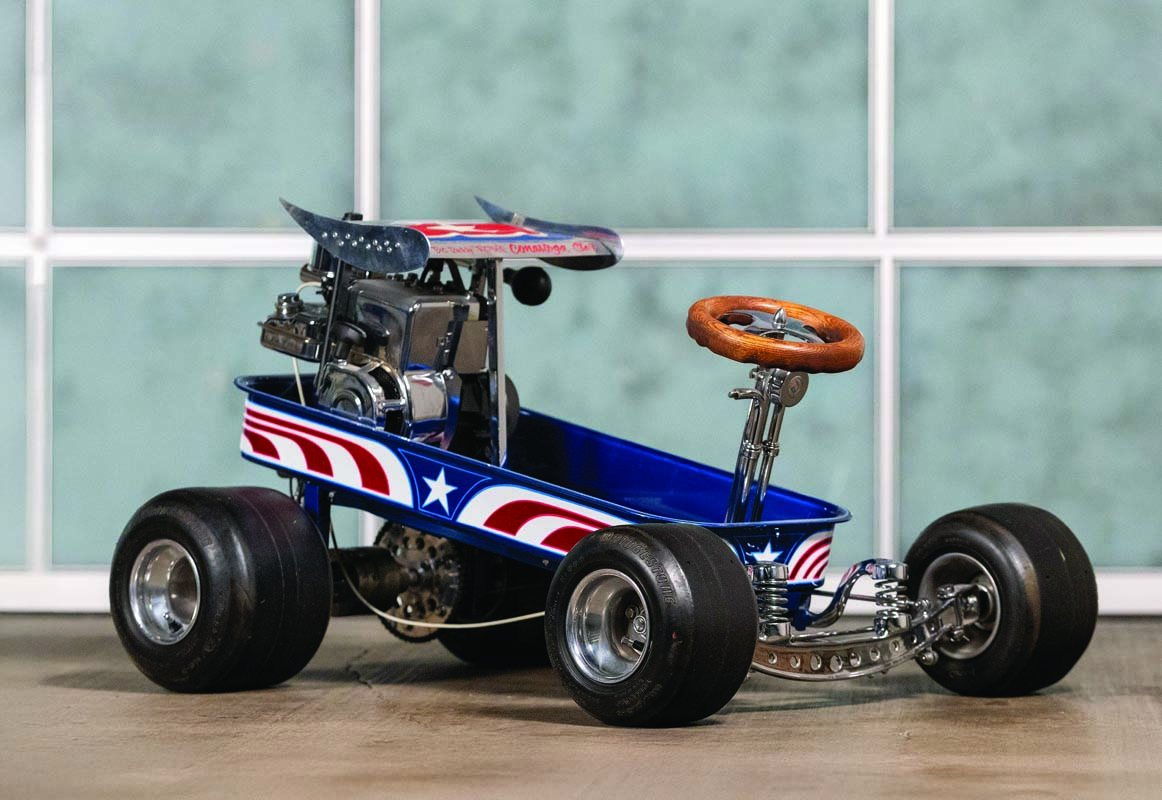
As the man himself tells it, the idea for these compact powered carts came after seeing a ‘Radio Flyer’ cart (a pull-along cart for children) fitted with a small petrol engine and functional steering being used to get around large-scale car meets. Upon trying to buy one and almost fainting at the owner’s asking price, Roth decided to build his own. Subsequent scaled-down creations would use parts from scooters, ride-on mowers, go karts and even a wheelbarrow tub!
Conestoga Star
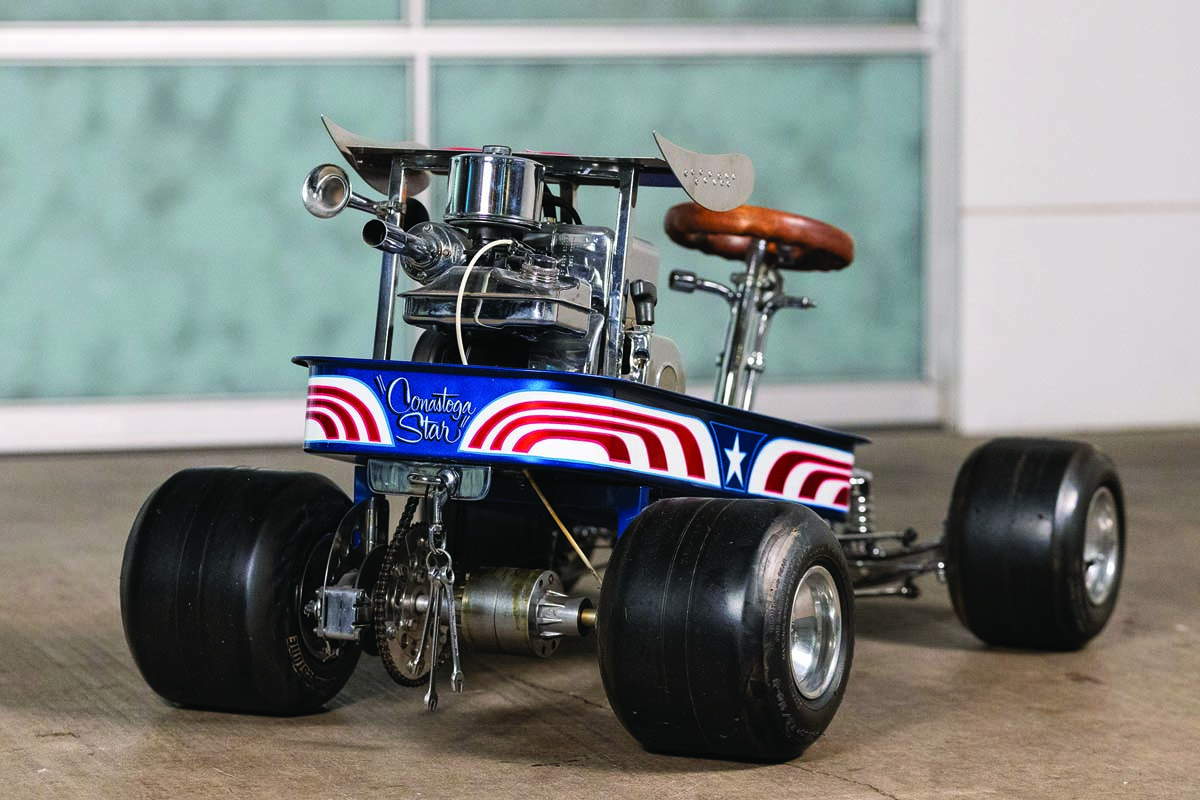
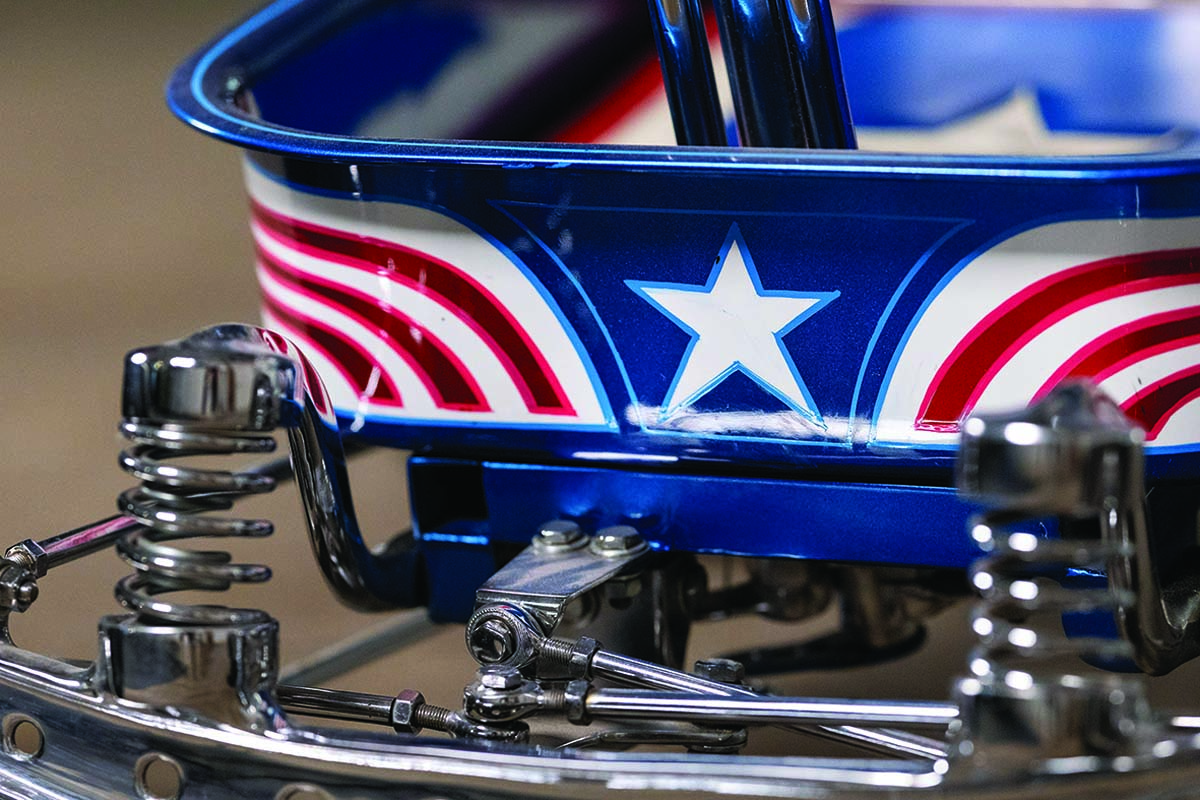
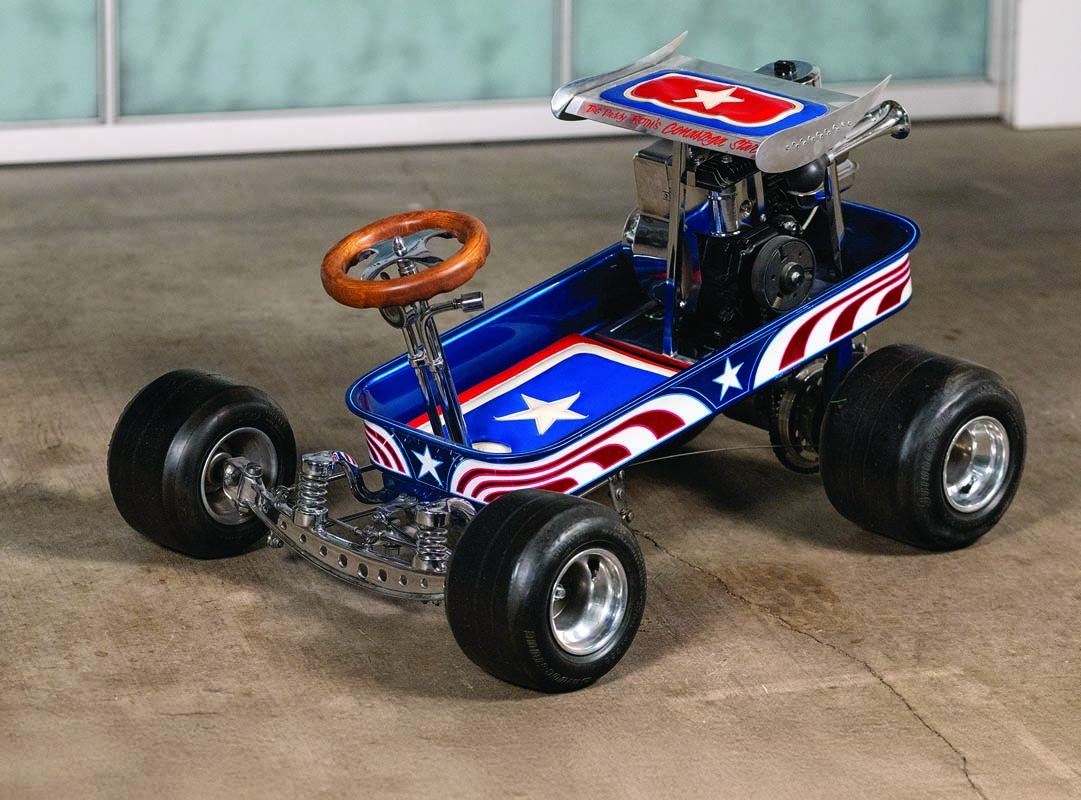
Known as the ‘Conestoga Star’ (misspelled as Conastoga Star on the vehicle itself), the first of these creations to be built by Roth combined a Radio Flyer cart with a Briggs & Stratton single-cylinder lawnmower engine. This air-cooled engine supplied drive directly to the rear axle via a chain. For the axles and steering column, Roth used parts from ride-on mowers, while the wheels came from a go kart. The rest was built from water pipe, steel rod and various pieces of scrap metal, including the stylised wing above the engine that served as this creation's seat, hence the padding. Throttle control was via handles mounted on the steering column, while functional ‘coil spring’ front suspension used the valve springs from a Chevy Big Block V8.
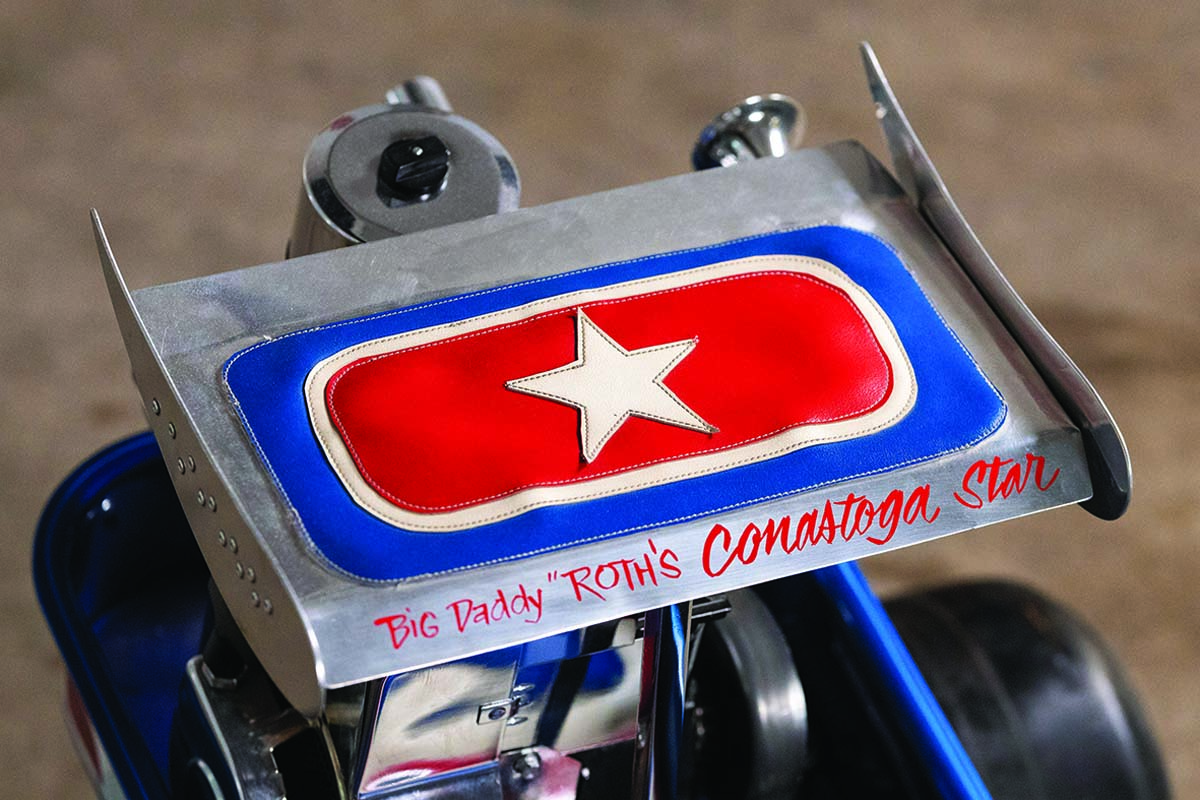
Completed in 1992, the Conestoga Star was awarded the "world's prettiest wagon" at the 1992 Oakland Roadster Show in California. To Roth’s bemusement, this mini wagon created more attention at car shows than his full-sized creations, especially when used to traverse the aisles and walkways! The Conestoga Star was also driven in parades and at other events until Roth donated it to the National Automobile Museum.
Described as “functional art” in Bonhams’ catalogue for the National Automobile Museum auction, the Roth provenance tied to this unique creation saw it sell for US$72,800* (AU$102,650 approx.).
Fink Mobile
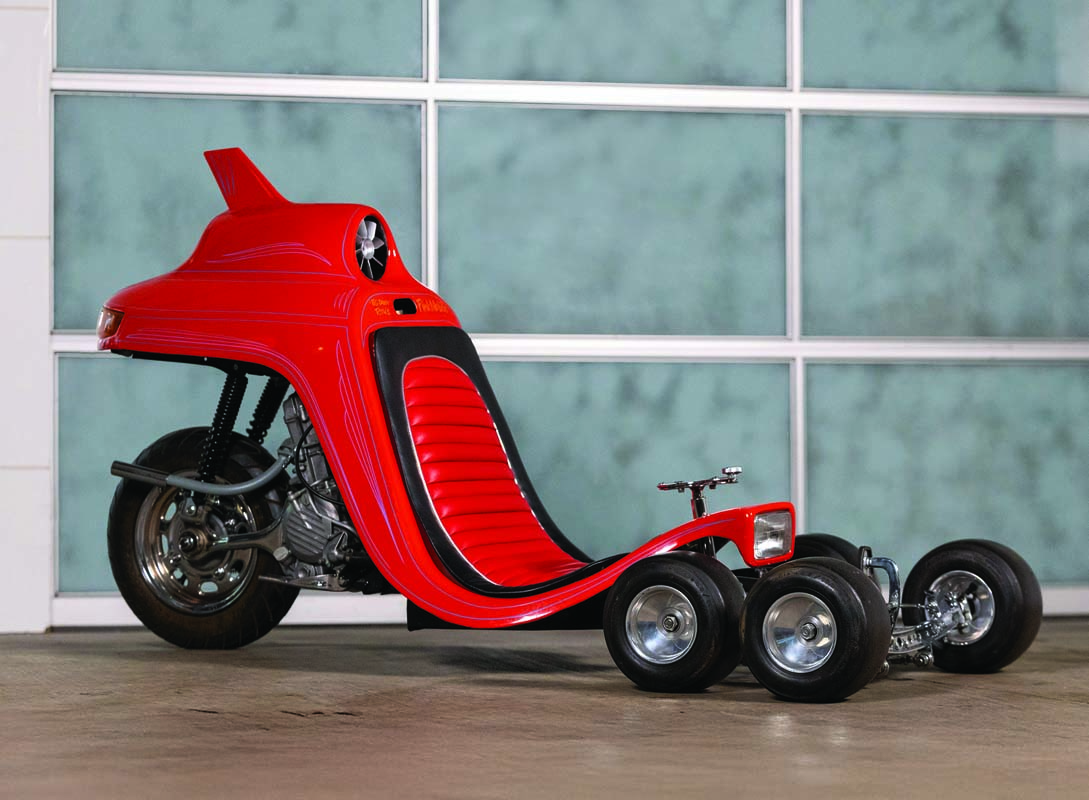
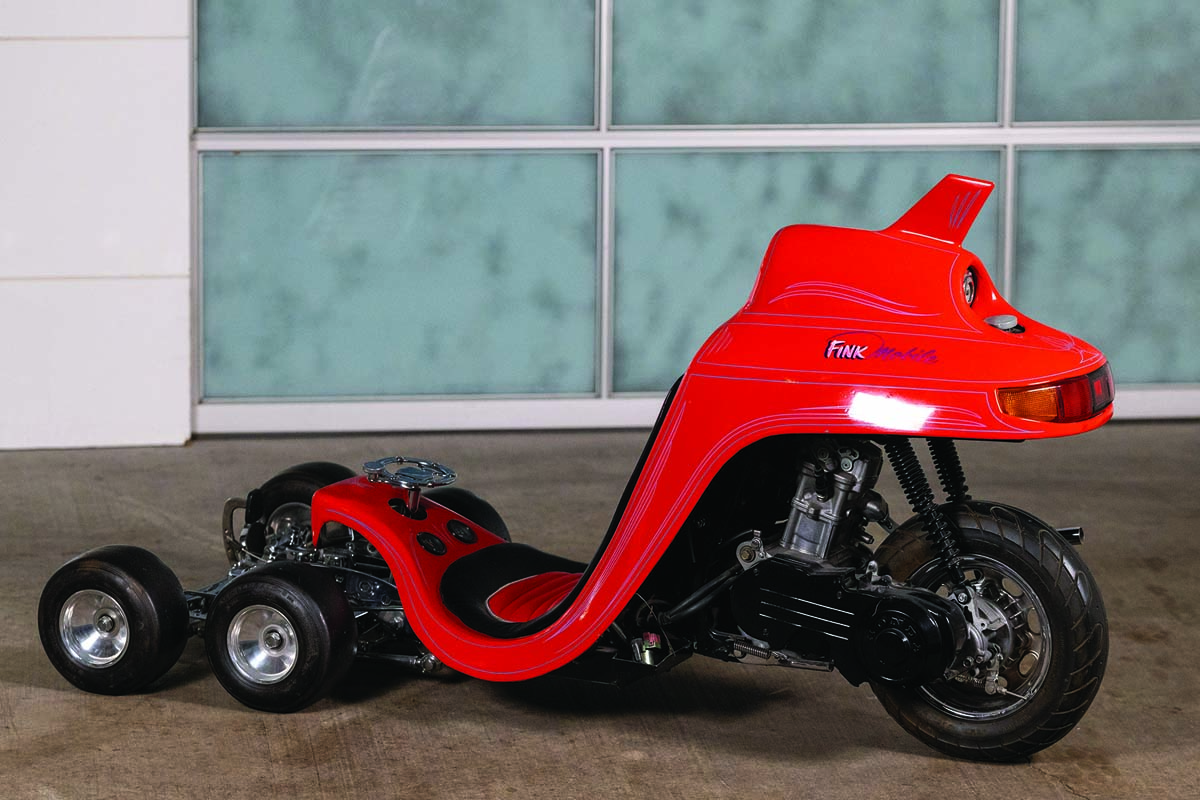
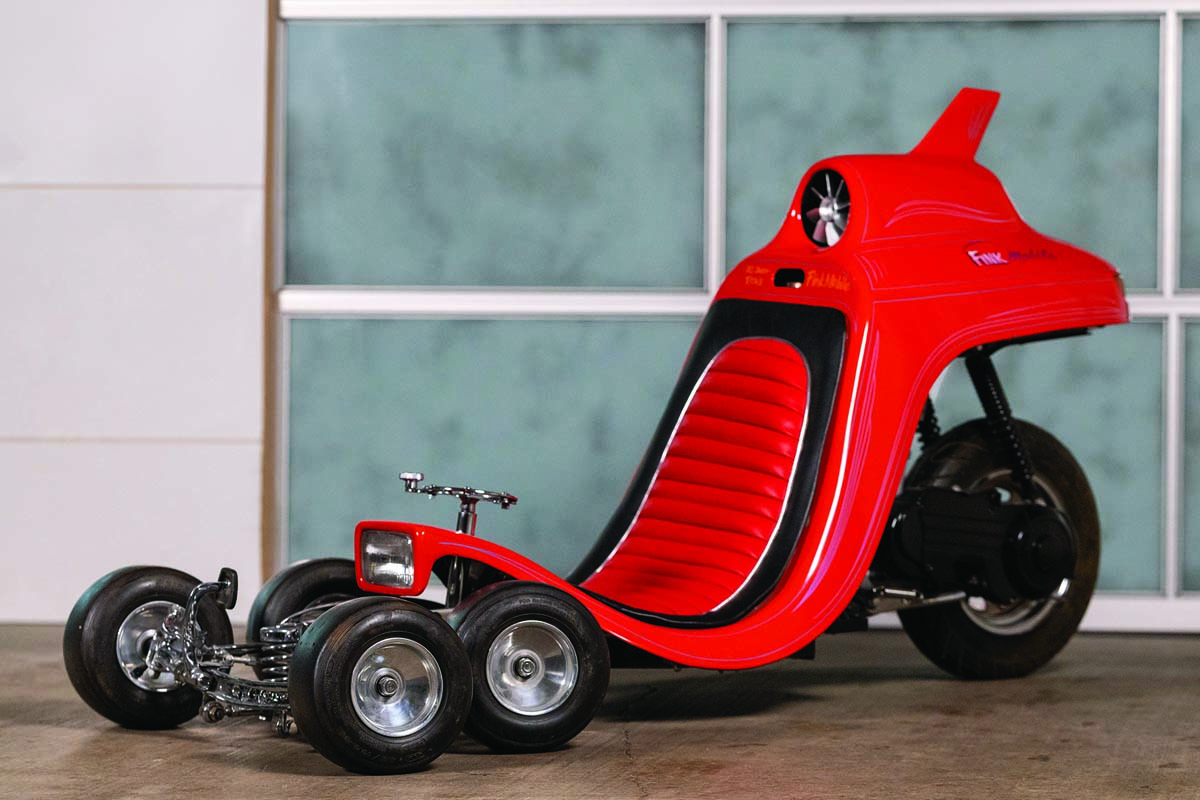
Tapping into the styling of the trike choppers Roth had built two decades earlier, the Fink Mobile used the engine and back end from a Honda ‘Elite’ scooter. Released in 1985, the Elite was Honda’s first modern four-stroke scooter, using a 125cc single-cylinder liquid-cooled engine, matched to a CVT transmission. This engine was later enlarged to 153cc, which is what’s fitted to the Fink Mobile.
While the engine, CVT, belt drive and rear wheel were largely unchanged from the donor Honda, the front end was completely scratch built by Roth. Using a dual front axle of the type most famously deployed on the Tyrrell P34 Formula One car, but also seen on the Panther Six and Covini C6W, the Fink Mobile’s front end also incorporates pedals for the acceleration and braking, along with wheels and suspension of the same type used on the Conestoga Star.
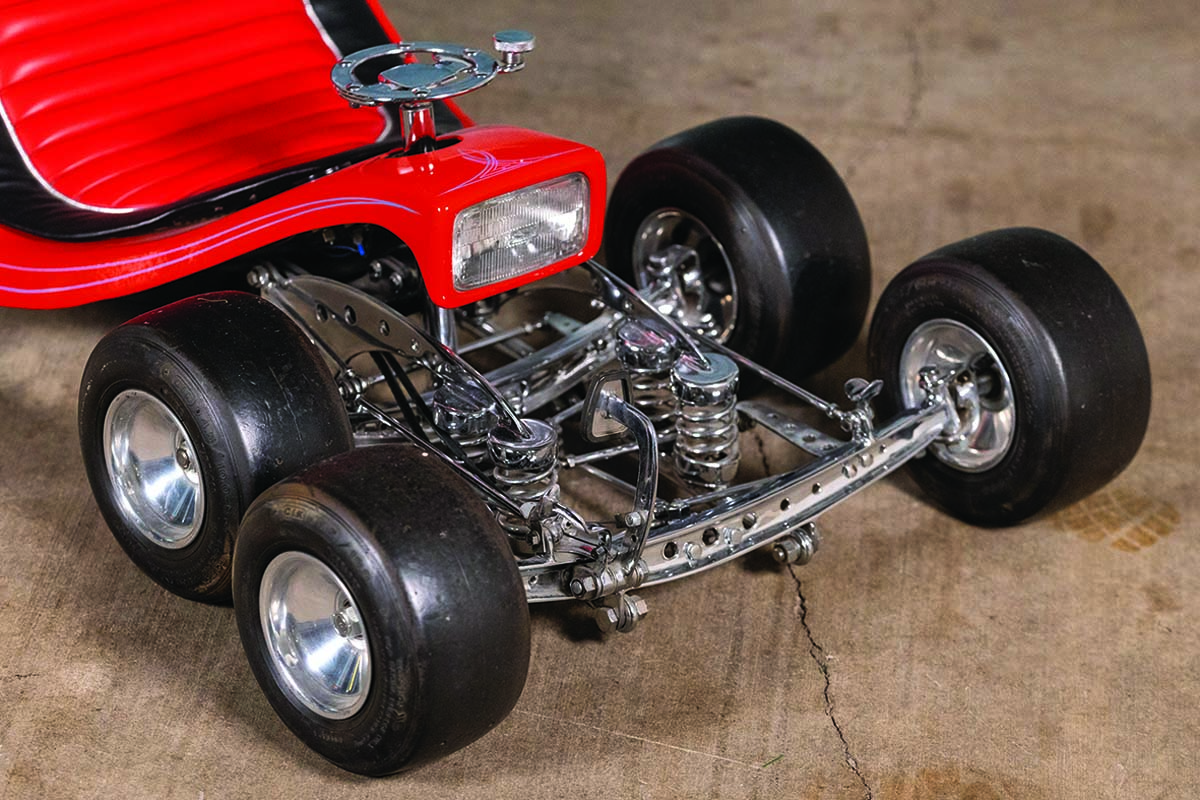
The handcrafted fibreglass body was shaped to incorporate head and tail lights, a low-slung, high-back seat, gauges and access for the radiator and fuel tank. Some clever features in the body included a fan at the front to draw air into the engine bay, and a horn at the rear. A tiller knob on the tiny steering wheel was a practical addition.
Described by Roth as a predictor for the future of personal mobility when he built it in 1992, the Fink Mobile was the top seller of the three Roth creations in the Bonhams’ National Automobile Museum auction. It sold for US$84,000* (AU$119,300 approx.).
Yankee Blitz
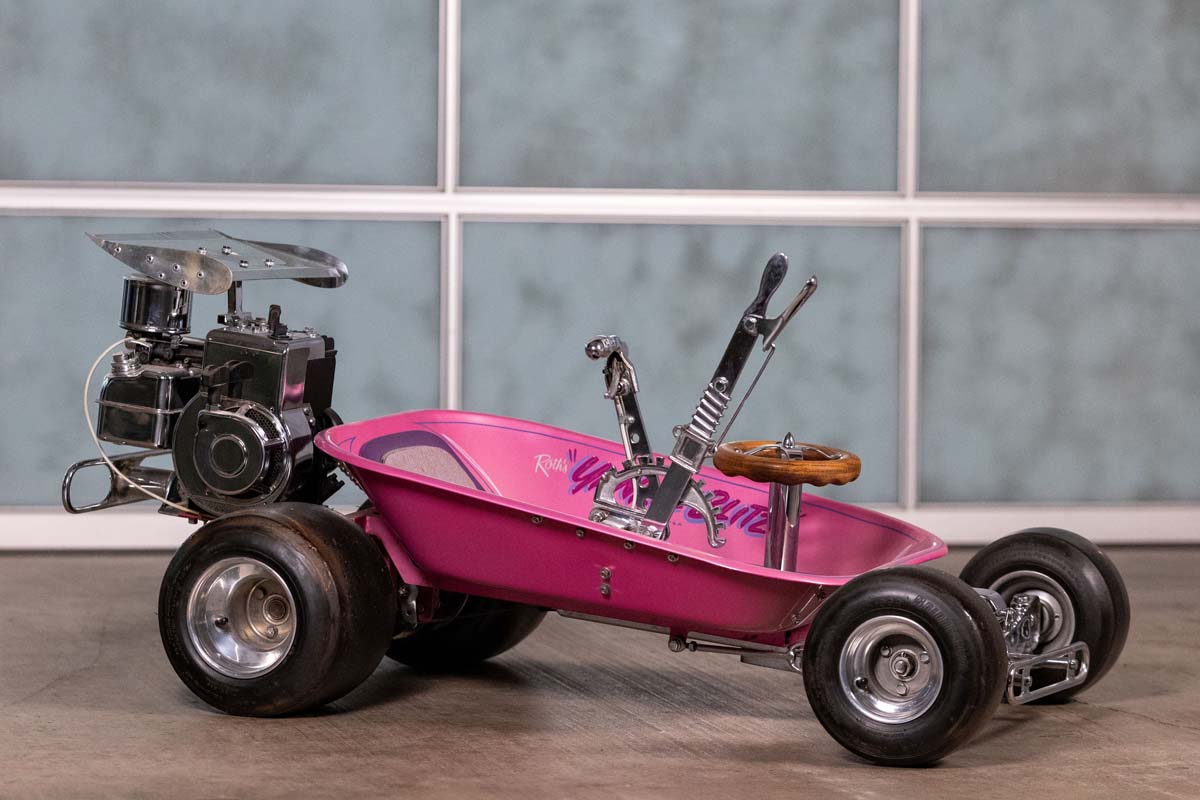
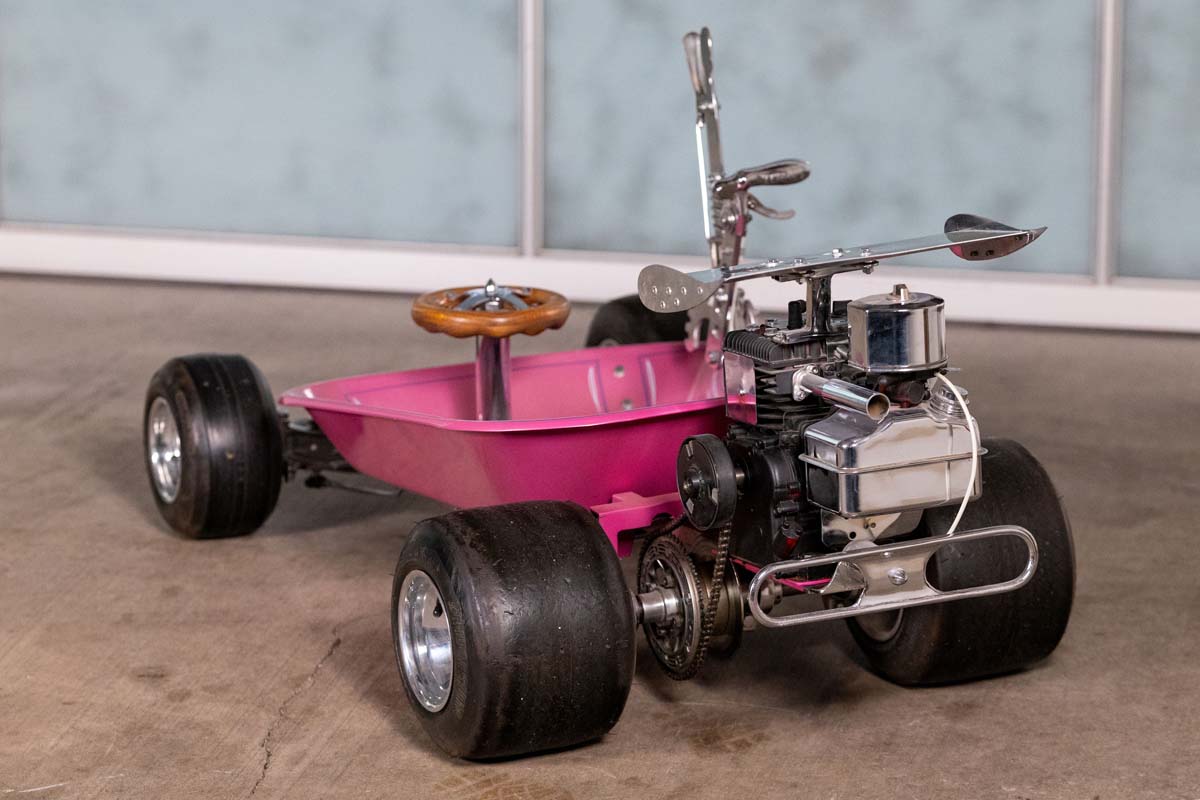
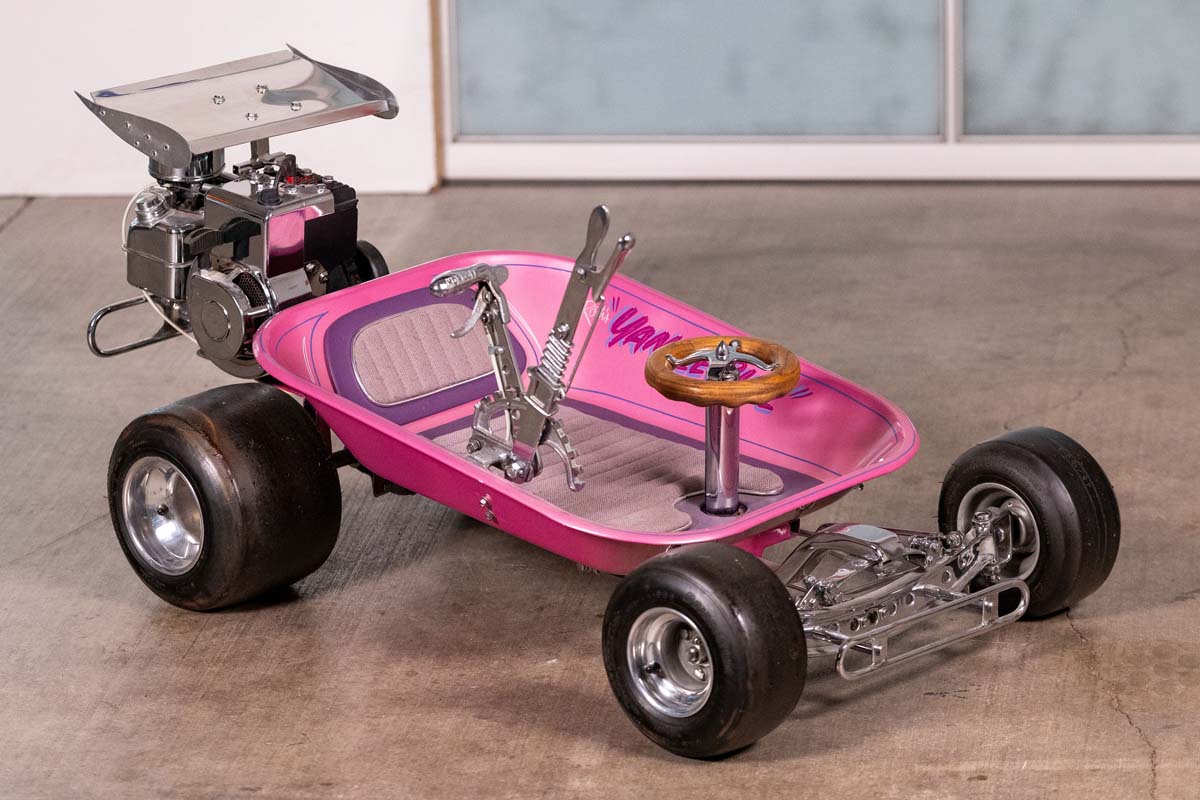
Built in 1993, the name for this creation was supplied by Roth’s friend and artistic contemporary, Robert Williams. But rather than using another child’s cart as the “body” for this creation, Roth chose a wheelbarrow tub.
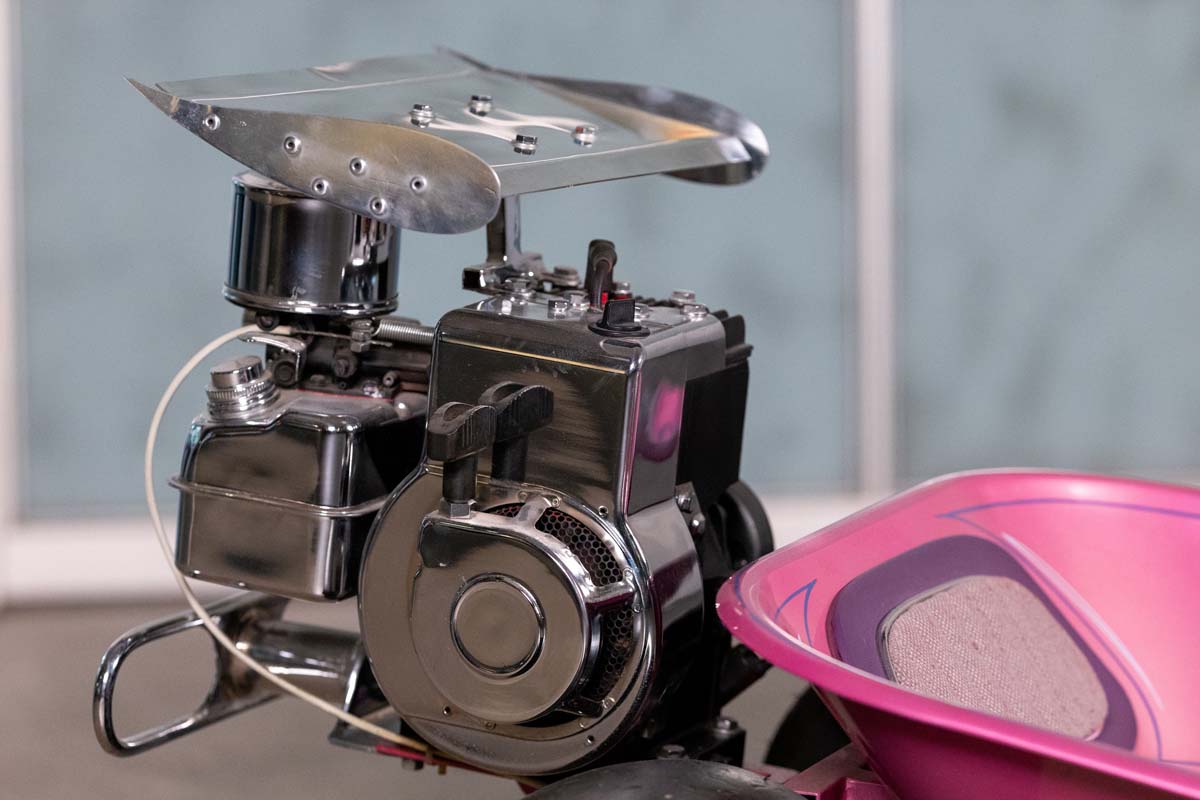
A fabricated chassis to strengthen the tub also served as the mounting point for the axles and a Briggs & Stratton lawnmower engine of the same type as used on the Conestoga Star. With direct chain drive to the rear axle, control for this single-cylinder air-cooled engine was via levers that Roth modified from a John Deere garden tiller. Wheels and tyres are J&P go kart units of the same type used in the other mini wagons.
According to Roth, the hand-made front end on the Yankee Blitz was a scaled-down version of the solid axle and suspension of a Model A Ford. Nerf bars were also fabricated, with the front bar serving as a footrest. A rear spoiler was added to the engine, while the wheelbarrow tub was resprayed in pearl plum paint, accented by Roth’s pinstripes. A genuine timber steering wheel was the finishing touch.
While Roth did most of the work on Yankee Blitz himself, elements like the chrome plating, painting and upholstery were farmed out to specialists in Utah and California. As with the Conestoga Star and Fink Mobile, the Yankee Blitz was donated to the National Automobile Museum sometime in the 1990s and featured in a special Roth-themed display that included the Beatnik Bandit and its successor, the Beatnik Bandit II (aka Beatnik Bomber) that Roth built in 1995.
At the Bonhams auction, Yankee Blitz sold for US$78,400* (AU$111,330 approx.). All three of these unique, functional custom creations were offered without reserve.
Total sales from the Bonhams National Automobile Auction reached US$5.25 million (AU$7.46M approx.). For more details on the Roth vehicles and other cars from this auction, go to: cars.bonhams.com
*price includes buyer’s premium.