Words: Mike Ryan and Lamborghini | Photos: Lamborghini
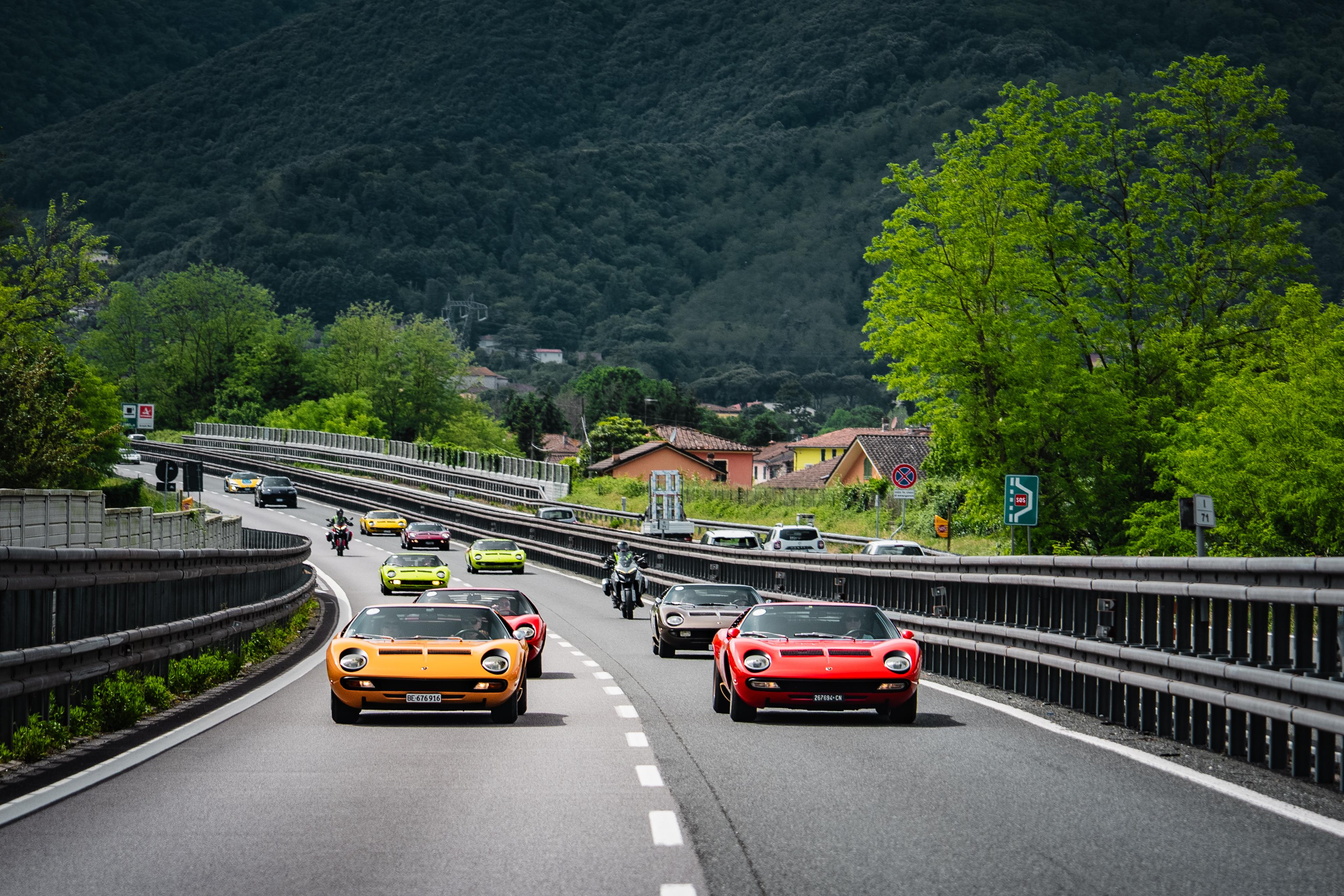
Since 2023, Lamborghini’s annual Polo Historico Giro (Historic Tour) has allowed a select few Lamborghini owners to experience the history and beauty of northern Italy. For the 2026 edition of this multi-day driving event, entry was reserved for owners of the Miura, Lamborghini’s iconic mid-engined super car.
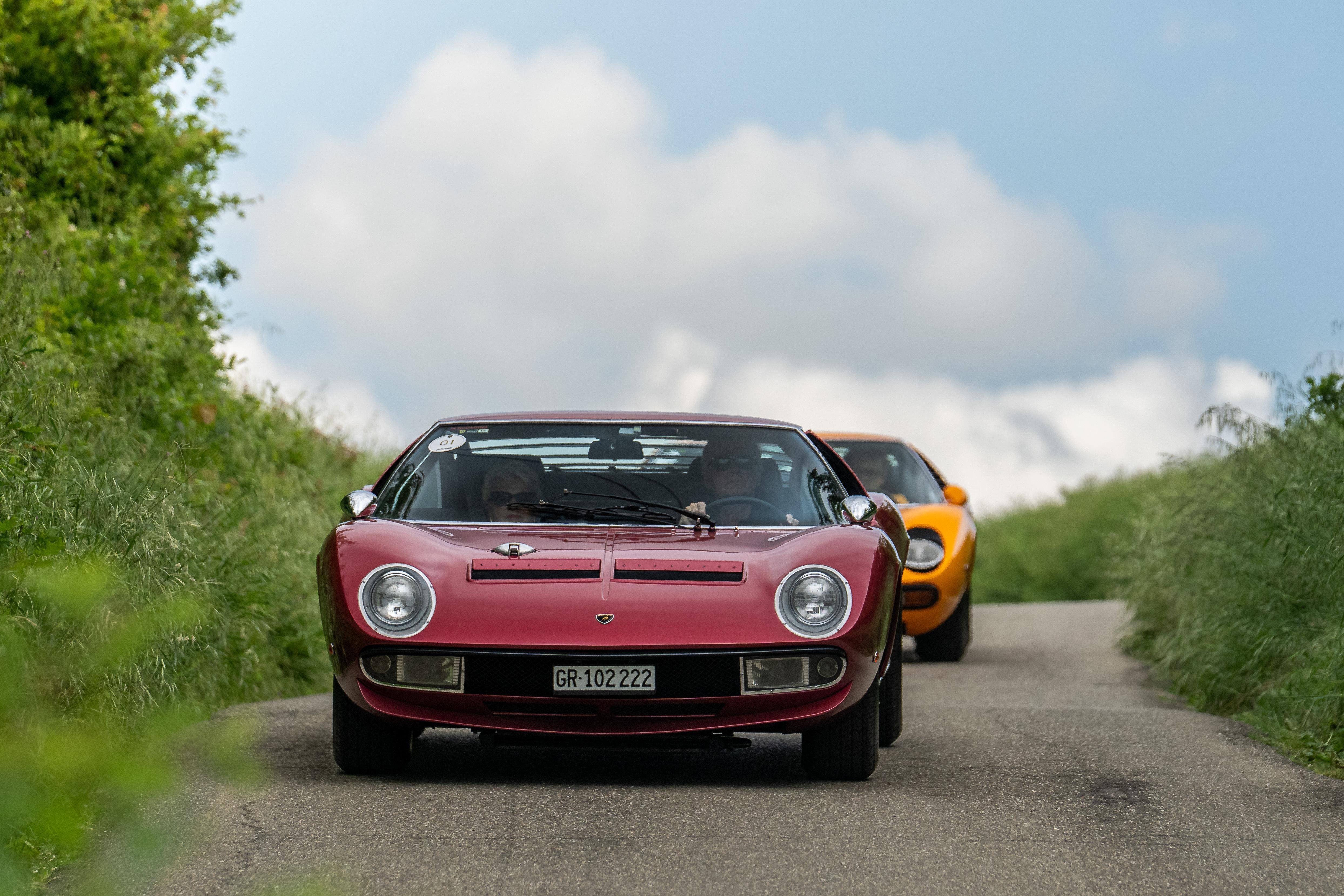
Held from 6-10 May, the 2026 Polo Storico Giro was a factory-supported event that brought together 20 Miura owners from Europe, the USA and Asia to celebrate 60 years since the Miura made its debut – and made history as what many regard as the world’s first super car.
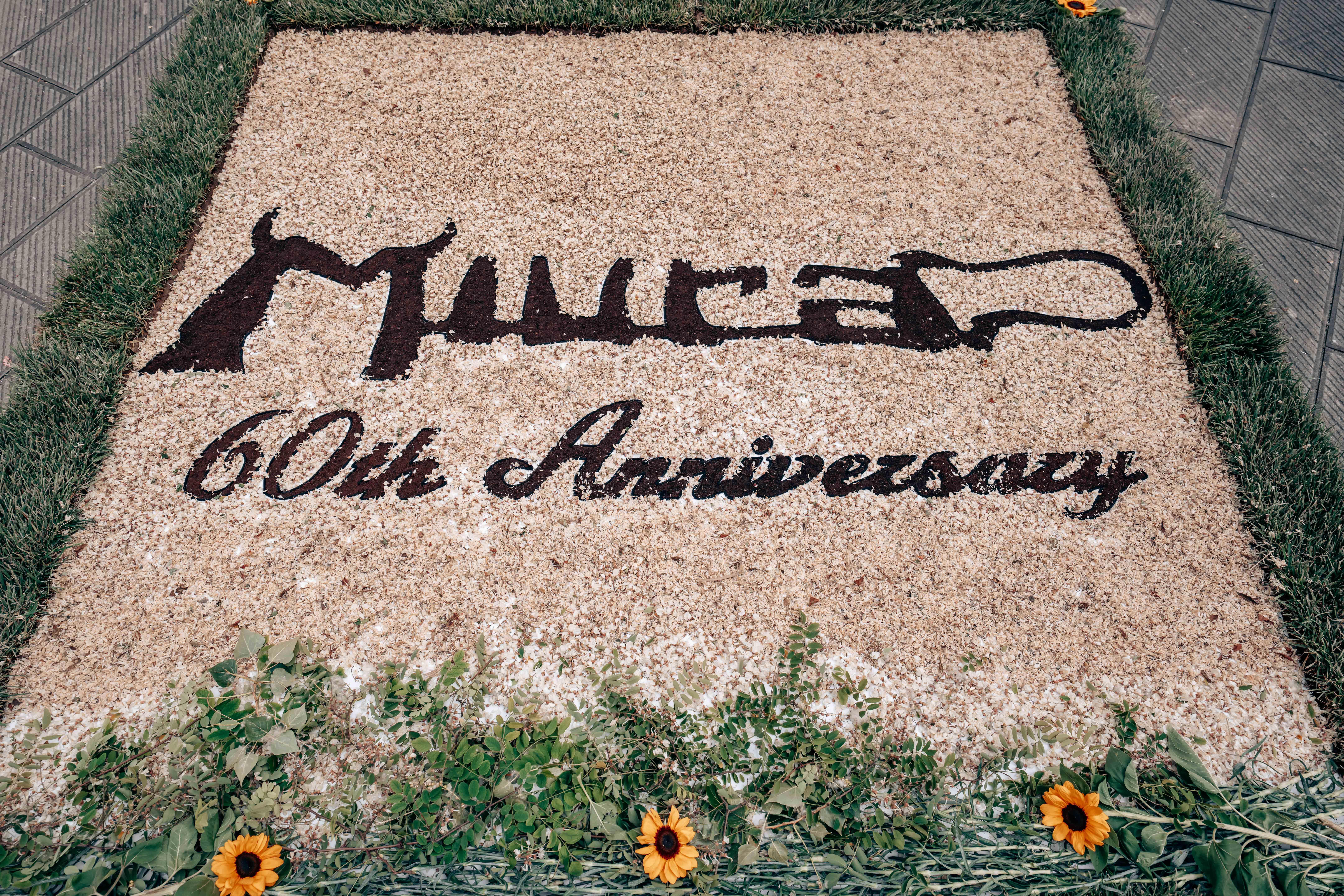
First Bull
What started as the ‘P400’ prototype in 1965, the Miura was defined by a transverse, mid-mounted 3.9-litre V12. This powerplant had been developed from a 3.5-litre unit that was front-mounted in previous Lamborghini models. Following the display of a rolling chassis at the 1965 Turin Motor Show, the first complete Miura, with styling by Marcello Gandini at Bertone (although Giorgetto Giugiaro also contributed) was unveiled at the 1966 Geneva Motor Show. The first mid-engined Lamborghini, the Miura was also the first to reference bullfighting in its name. In this instance, ‘Miura’ referred to a breed of Spanish fighting bulls. New badging reinforced this connection.
Response to the prototype at Geneva convinced Lamborghini to put the Mura into production the following year, with a more powerful and more extensively appointed ‘Miura S’ debuting in late-1968. In the same year, a Miura Roadster was presented but never went into production.
A race-spec Miura ‘Jota’ was another one-off, debuting in 1970. Created for Appendix J Touring Car and GT racing, and with its name taken from the Spanish pronunciation of the letter ‘J’, the Jota’s performance upgrades led to a handful of Miura customers requesting some of the same upgrades from the factory. These versions became known as the ‘SVJ’.
Miura production continued until 1971, according to Lamborghini’s own history, although other sources say 1973. Similarly, a build total of 763 units across all variants is also disputed.
Today, the Miura is a million-dollar car, even in average condition. Outstanding examples sell for double that, with an SV auctioned by Mecum this past May for US$4.67 million.
20 do 500 for 60
For the 2026 Polo Storico Giro, the group of 20 Miura owners covered more than 500km through northern Italy over five days, concluding at the Autodromo Internazionale Enzo e Dino Ferrari (aka Imola) where participants linked up with the ‘Lamborghini Arena’ event.
Combining the pleasure of driving with exclusive activities, the 2026 Polo Storico Giro celebrated the Miura’s heritage and the Italian regions it traversed. Taking in Piedmont, Liguria, Tuscany and Emilia-Romagna, the tour included tailored stops and curated gastronomic experiences, blending culture, territory and innovation.
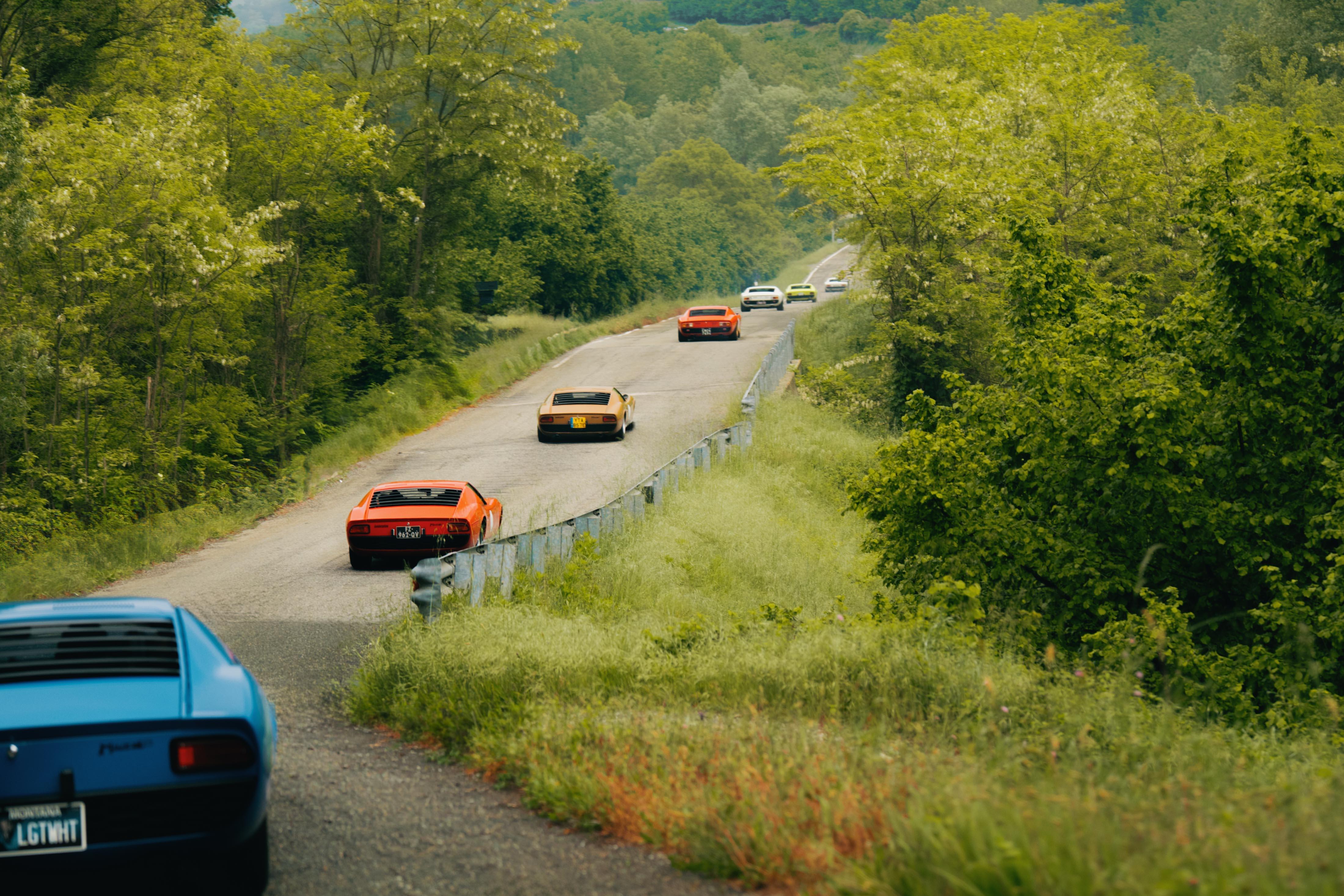
“With the Miura, Lamborghini did not simply create a car, it gave birth to the very idea of the super car,” said Stephan Winkelmann, Chairman and CEO of Automobili Lamborghini
“The 2026 Polo Storico Giro paid tribute to that moment: when courage, beauty and innovation came together to redefine what a Lamborghini could be.
“The Giro offered clients from all over the world the opportunity to drive the first super car in history with the direct support and organisation of the company, while also allowing enthusiasts attending the Lamborghini Arena to witness a unique parade of Miura models.”
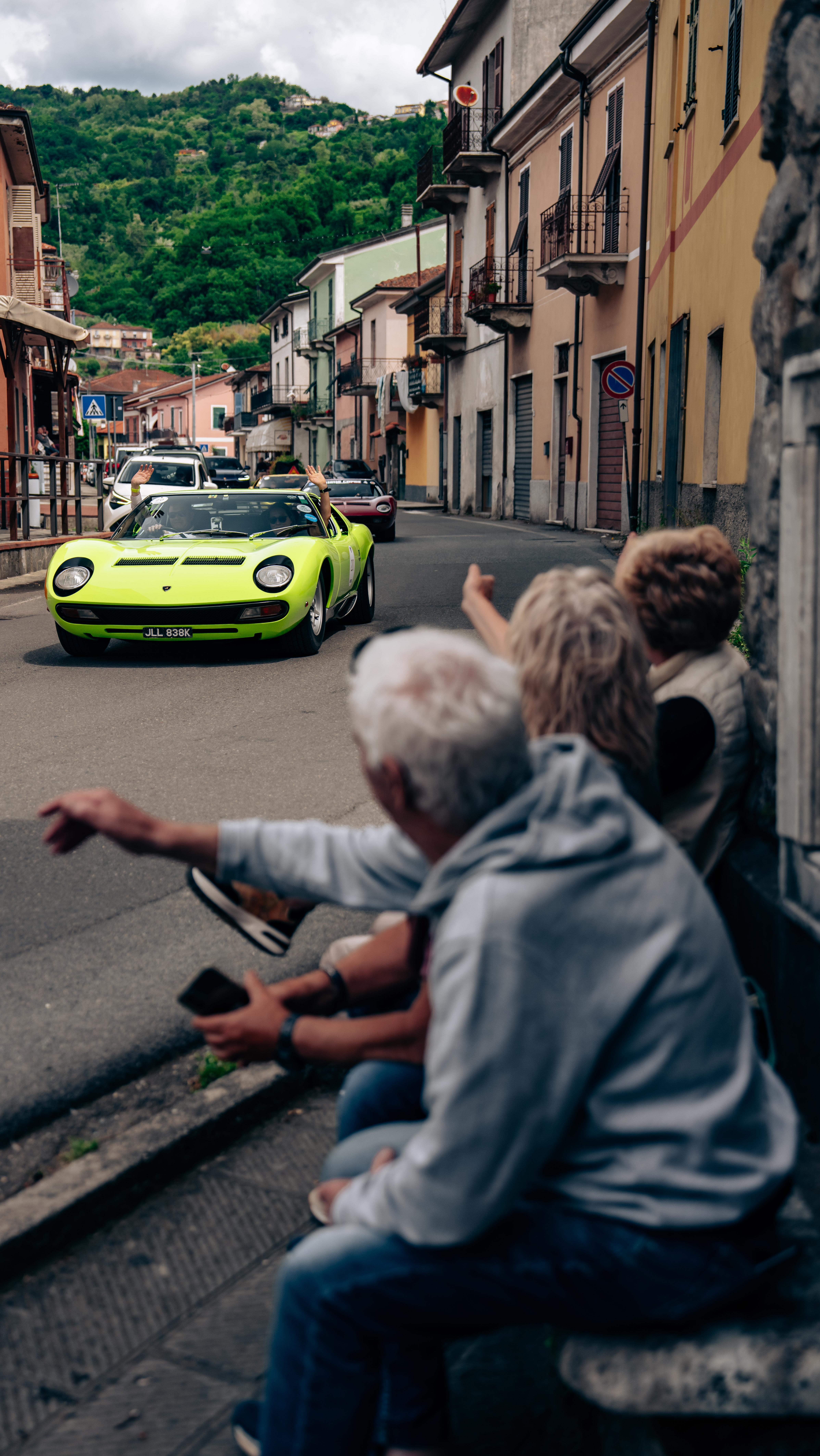
All Aboard
All production variants of the Miura were represented on the Polo Storico Giro - P400, P400 S and SV - offering a complete overview of the model’s development. The 20-car field included one of the two Miura SV prototypes used for the development of the production version, and a Miura SVJ of extraordinary significance. This car, Miura chassis #4934, started out as an SV in Ischia Blue metallic with a white leather interior. Mohammad Pahlavi, the last Shah of Iran, requested that #4934 be converted to SVJ spec before the build was completed, along with a respray in Granada Red metallic. A noted car collector, the Shah had owned three Miuras prior to this one, as well as other Lamborghinis.
When the Shah was deposed in the Iranian Revolution of 1979, his Miura SVJ was seized by Iran’s new Islamic government. It remained in the country until 1995, when it was sold to a UAE businessman. The car went to auction in 1997, when it was purchased by Hollywood actor, Nicolas Cage. In 2004, the Shah’s Miura SVJ was sold to a UK-based collector.
Following its participation in the Polo Storico Giro, chassis #4934, one of only four SVJs officially recognised as being factory-built in period, joined a collection of Miuras displayed at the Museo Lamborghini in Sant’Agata Bolognese. As part of an exhibition, “Miura: Born Incomparable,” this car will remain on display until the end of 2026, alongside other notable examples of the Miura.
“With the 2026 Giro, Lamborghini Polo Storico once again reaffirms its mission,” concluded Giuliano Cassataro, Head of After Sales of Automobili Lamborghini. “Not only does it preserve and enhance the company’s heritage through archive, certification and restoration activities, but Polo Storico also offers these cars the opportunity to be driven, experienced and kept alive through special initiatives such as this tour.
“It is a process that begins with documentation and extends all the way to the road, where historic vehicles, just like the Miura, continue to express their identity and fuel their enduring legend.”
Tour in Detail
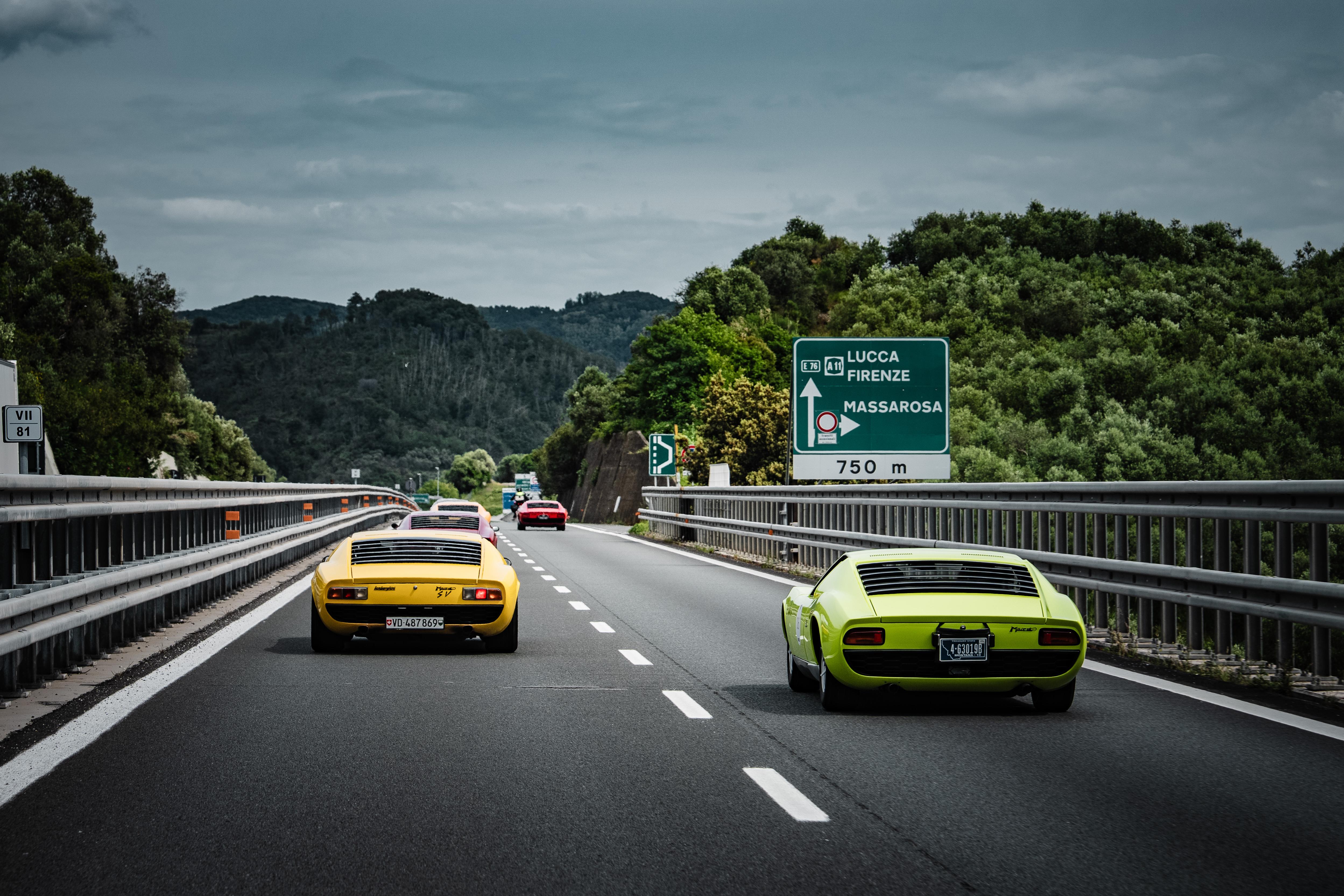
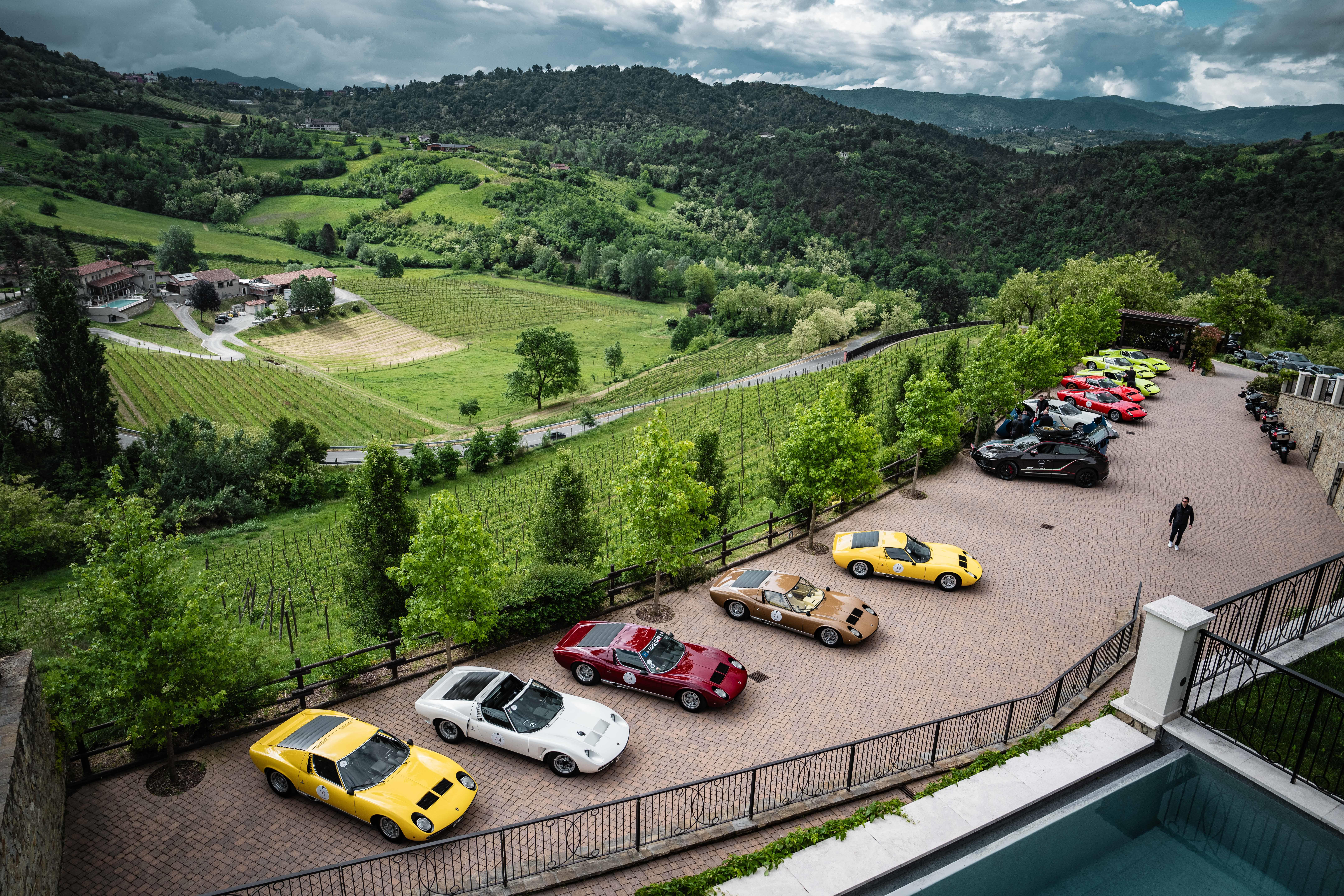
The 2026 Lamborghini Polo Storico Giro began on 6 May, with Miura drivers and guests gathering at the picturesque village of Cerreto Langhe in the heart of Piedmont’s UNESCO-listed Langhe hills. On the following day, the cars left Piedmont, heading south towards the Ligurian coast. Lunch in the hills of Gavi was followed by a conclusion 195 kilometres later at Rapallo, where crews transferred by sea to nearby Portofino for a Michelin-starred dinner.
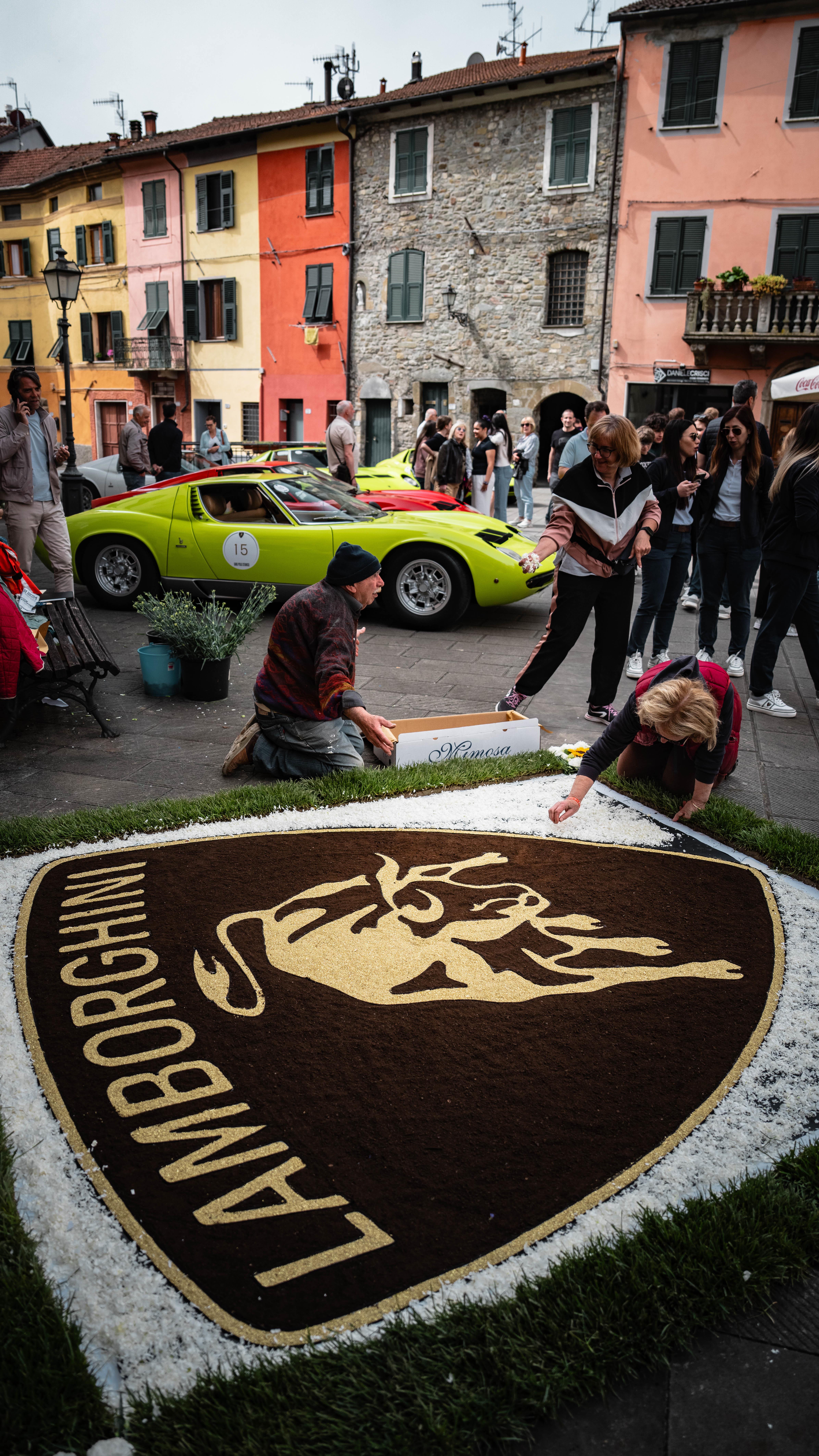
On 8 May, the tour continued towards Florence, with approximately 220 kilometres of driving from the coast to the hills. The first stop was in Brugnato, which opened its historic centre for the occasion and created two traditional infiorate (traditional floral carpets) in its main squares. The journey then continued to Robot City Carrara, where the centuries-old tradition of marble extraction meets advanced robotic technologies, providing a unique setting for lunch.
That afternoon, the Miura convoy arrived in Florence, drawing an abundance of public attention. The second day of the Giro concluded with dinner at Palazzo Borghese, one of the most significant examples of Florentine Baroque architecture.
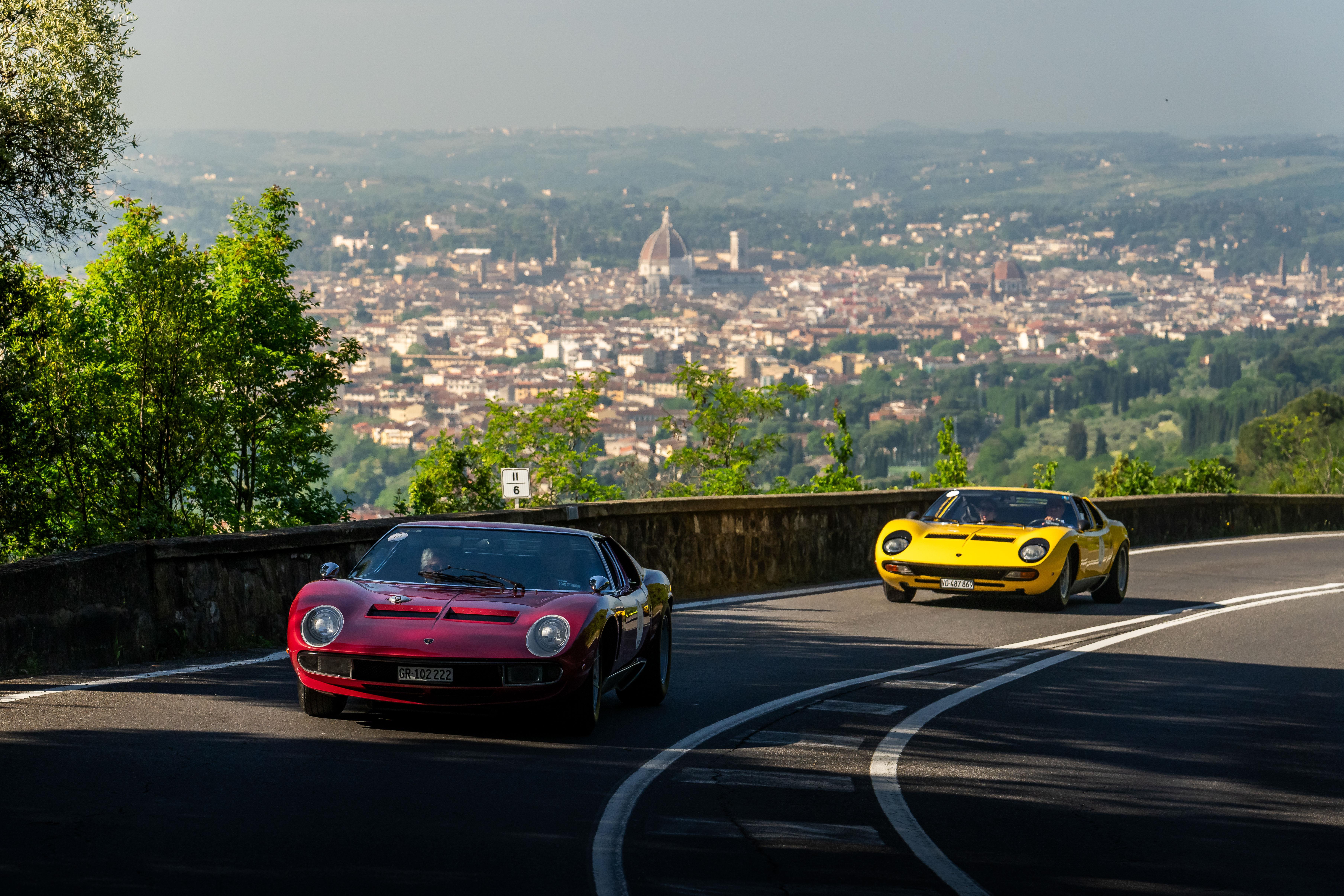
On 9 May, the tour headed into Tuscany towards Imola, with a brief stop in Scarperia near the famous Mugello circuit. From there, the Miura convoy crossed the Futa and Raticosa passes, which have a long connection to Italy’s automotive industry. These iconic roads are still used today for vehicle development and testing by Lamborghini.
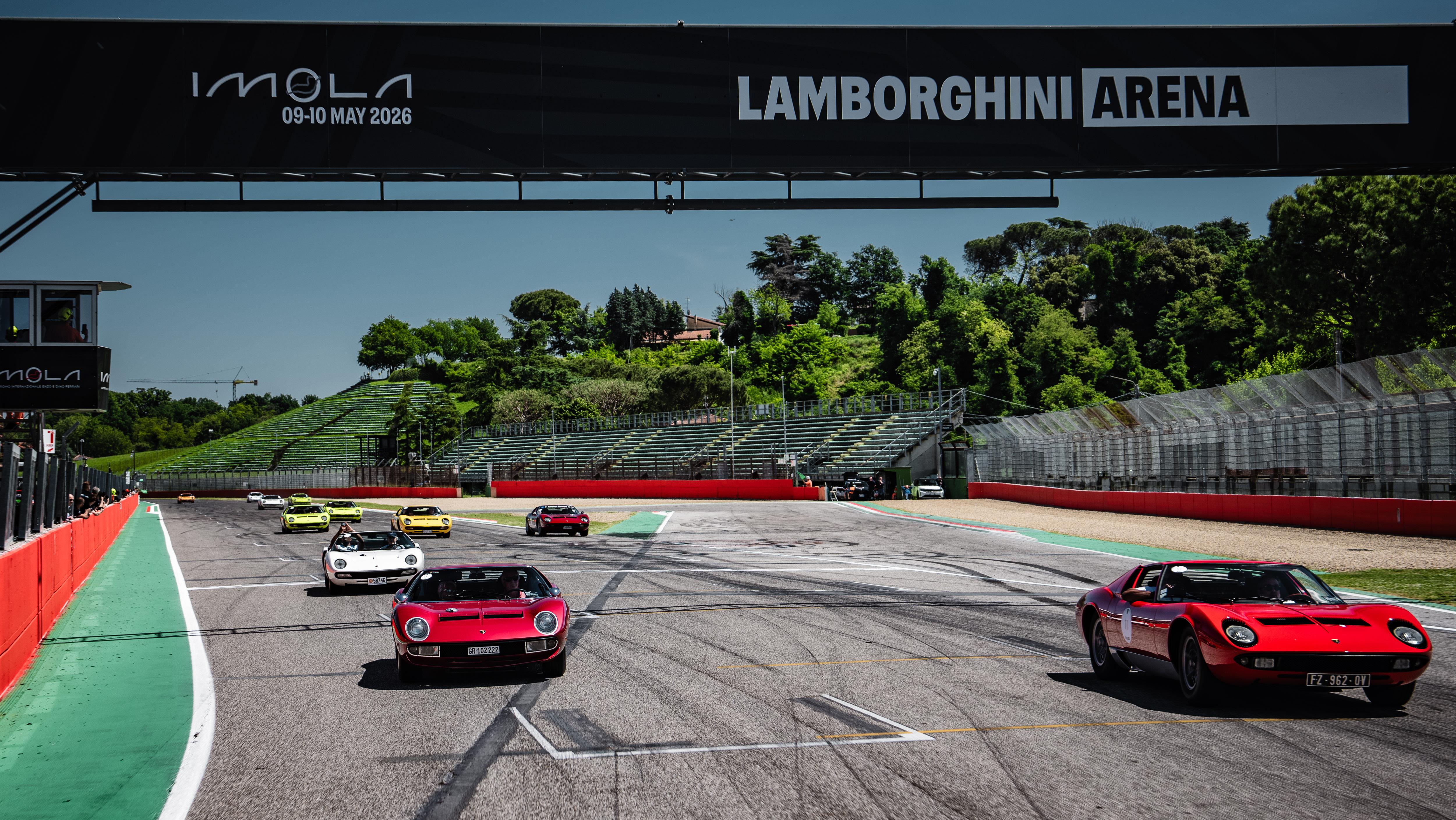
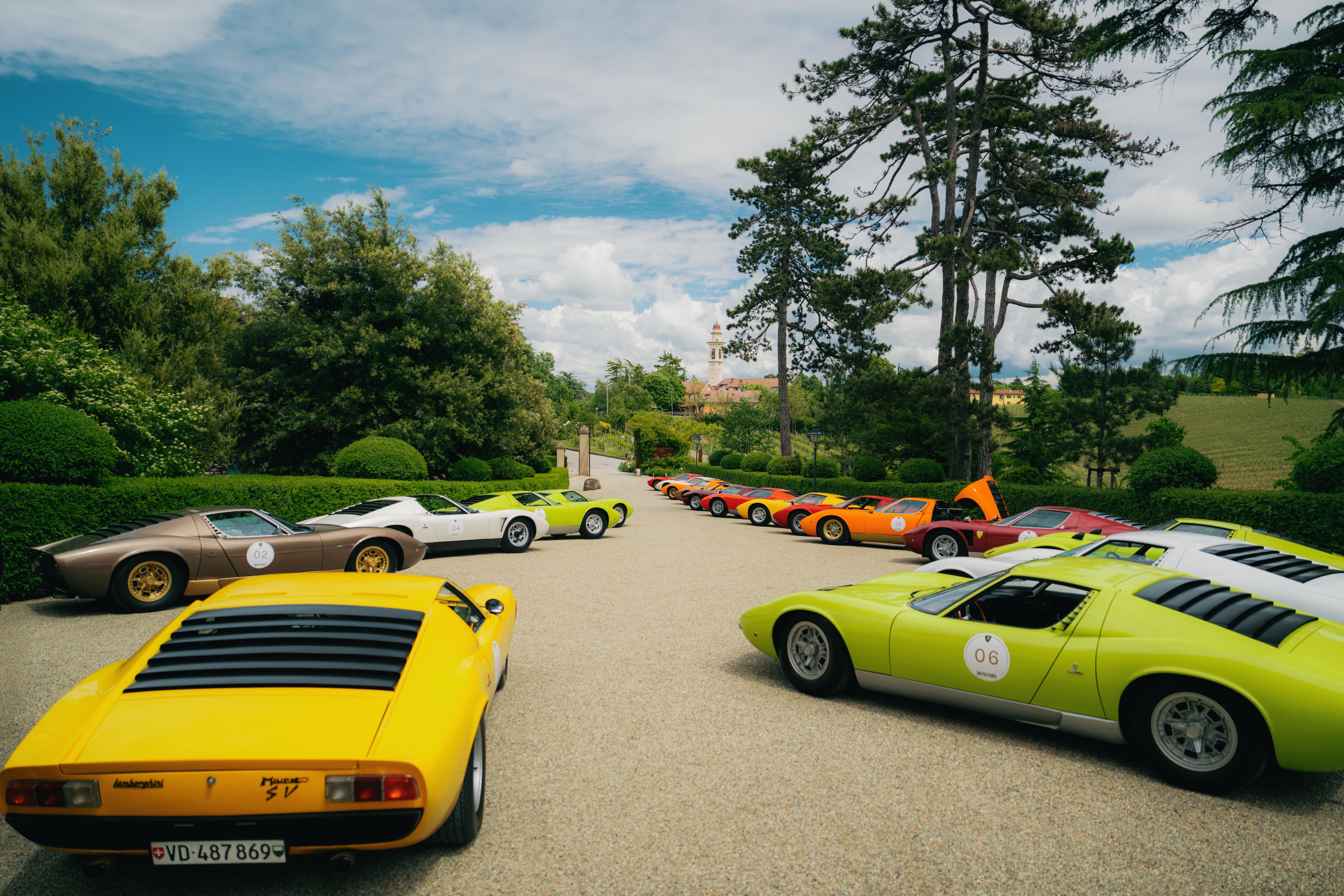
Upon arrival at Imola for the Lamborghini Arena, the Giro reached its climax with a parade of the famous F1 circuit dedicated to the Miura’s 60th Anniversary. This finale for the tour brought together enthusiasts, collectors and participants in a shared celebration of Lamborghini’s past, present and future.
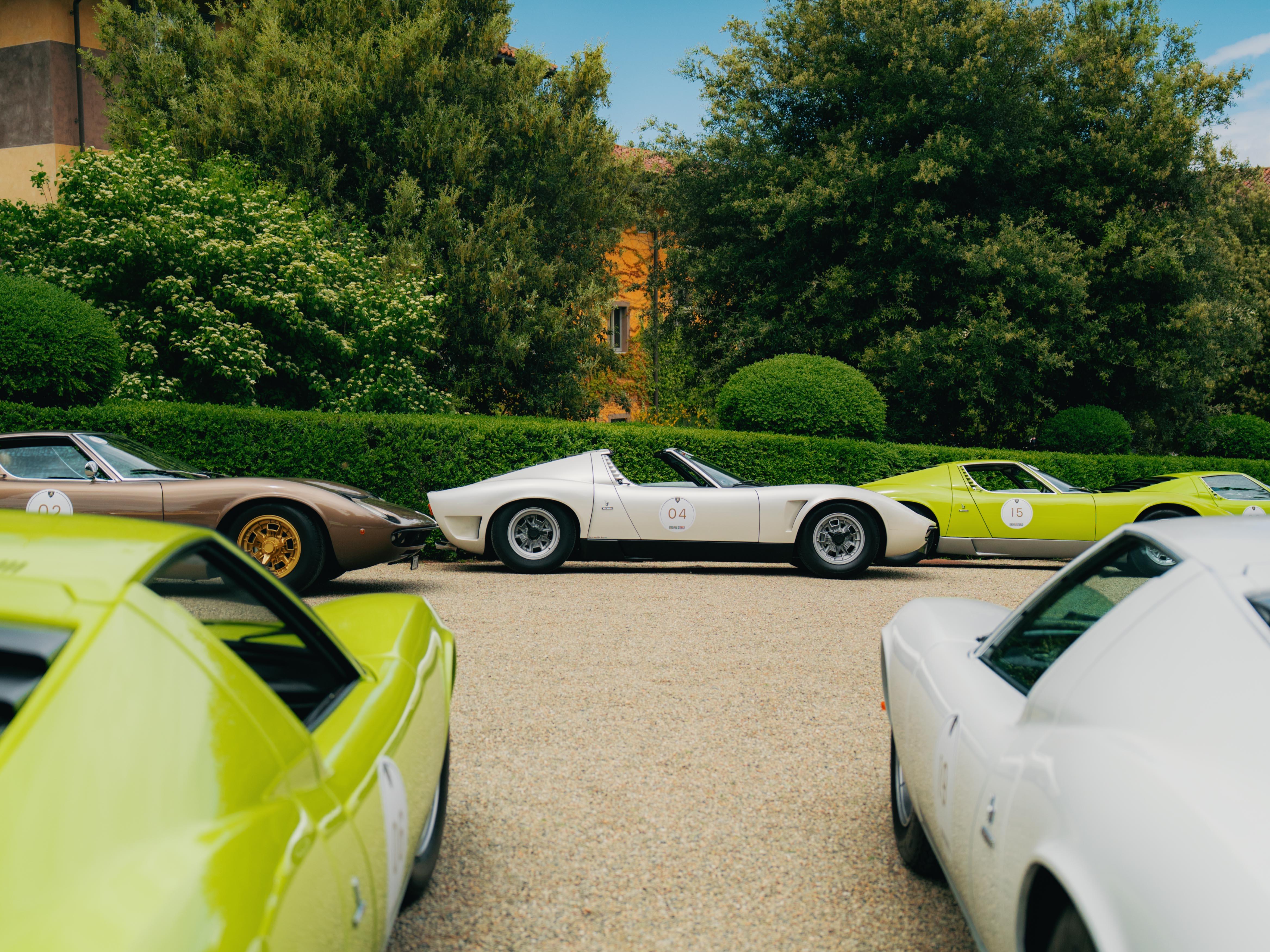
On the evening of 9 May, Miura collectors attended a gala dinner during which Lamborghini unveiled its latest open-top V12 limited-edition, the Fenomeno Roadster. Design and colours of this vehicle paid tribute to the one-off Miura Roadster built by Bertone in 1968.
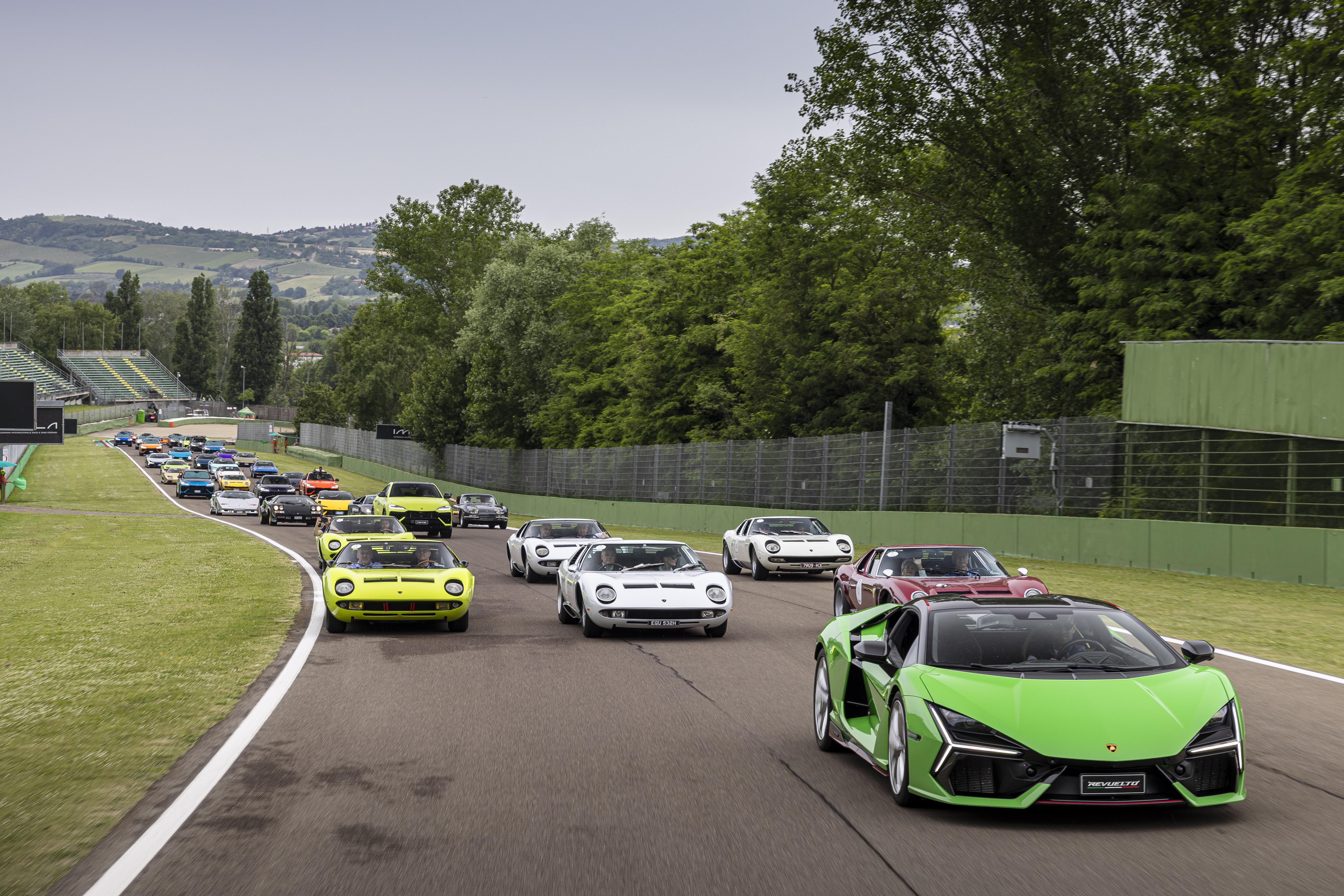
On 10 May, Miuras still present in Imola joined the Lamborghini Arena’s grand parade on the circuit, driving in front of thousands of enthusiasts alongside other Lamborghini models from around the world.