Words: Mike Ryan
Photos: Courtesy of Paul Blank Classic Car Car Broker
and Morgan Motor Company
Morgan is famous for their traditional approach to carmaking, using techniques and craftsmanship that the rest of the industry abandoned decades ago. That’s not to say Morgan is backward. Far from it, in fact, with more change in the last 25 years of the company’s history than the previous 90. That change included the introduction of the Aero SuperSports
The Morgan story started in 1909, when Henry Frederick Stanley Morgan (variously known as ‘HFS’ and ‘Harry’) built a three-wheel car that combined a Peugeot engine producing just 5.2kW with chassis, body and suspension components of his own design. Response to this was positive enough to convince HFS to go into production, with the first Morgan car released a year later. The three-wheel configuration was chosen for these cars as they attracted lower road tax in the UK than a four-wheel car, making them cheaper to buy and run.
Powered by front-mounted v-twin motorcycle engines in a range of capacities and from a range of suppliers, Morgans soon proved popular in motorsport, too. A notable victory in the 1913 Amiens Cyclecar Grand Prix led to the release of a sporty ‘Grand Prix’ model in the same year.
There were other companies producing three-wheelers at this time, with the likes of Merrill-Brown, TB, Premier, Scott, AC and others trying to get a slice of the market. However, the arrival of the Austin Seven in 1923 saw the demise of most of these builders, as the Seven offered “real” car features at a price comparable to the trikes.
HFS could see the writing on the wall, so introduced Morgan’s first four-wheel model – the 4/4 – in 1936. This used a four-cylinder Coventry Climax engine initially, replaced with a Standard four in 1939.
By this time, demand for the three-wheelers was dwindling. A four-cylinder Ford engine (for models known as the F4, F2 and F Super) had been introduced in 1934, and would be the only engine available for the three wheeler from 1945 until production ended in 1952.
A Familiar Name
The connection between these early Morgan three wheelers and the car featured starts with the name. In 1919, Morgan announced the ‘Aero’ model. As the name suggests, the Aero featured a body that was smoother and sleeker than Morgan’s existing models, even the Grand Prix. With an exposed v-twin engine up front and rounded nose behind that, plus a tail section that flowed around the single rear wheel, the Aero was described as being suitable “for competition work or fast touring,” with a top speed in the region of 110km/h.
In 1923, the ‘Super Sports Aero’ was launched. While broadly similar to the Aero, the Super Sports featured a lower chassis, high-mount exhaust and a water-cooled J.A.P. engine tuned to deliver a top speed of 130+km/h from the factory.
The Aero was replaced by the ‘Sports’ in 1933, when the Super Sports dropped its Aero suffix. At the same time, the previous beetle-back styling was replaced with a barrel-back design that recessed the spare wheel into the tail. Production of the Sports continued up to 1937, while the Super Sports remained in the catalogue until 1939.
In 1961, after a 20+ year hiatus, Morgan re-introduced the ‘Super Sport’ name. Born from an association with Morgan enthusiast Chris Lawrence, who had successfully raced a 4/4 at club level, the new iteration of the Super Sport (sometimes called the Super Sports) featured a highly-tuned version of the Triumph TR3/TR4 four-cylinder engine used in the Plus 4 (which was a development of the 4/4), along with aluminium body panels in place of steel. The result was a car that looked the same as a Plus 4, but was lighter, more powerful and around 20 per cent quicker in the 0-100km/h sprint.
Even by Morgan standards, the second-generation Super Sport was a niche model, with only 102 examples built over eight years, most of which were bought for track use.
A New Millennium Aero
Aside from the short-lived ‘Plus 4 Plus’ coupe of 1963, and the introduction of the V8-powered ‘Plus 8’ in 1968, a 1990s Morgan was little different to one from the 1950s. That familiarity was turned on its head when the ‘Aero 8’ launched in 2000.
While the name and styling referenced trad Morgans, the Aero 8 was completely modernised, with a deeper, integral front bumper, faired-in headlights, body-hugging guards and a flowing tail section with built-in spoiler.
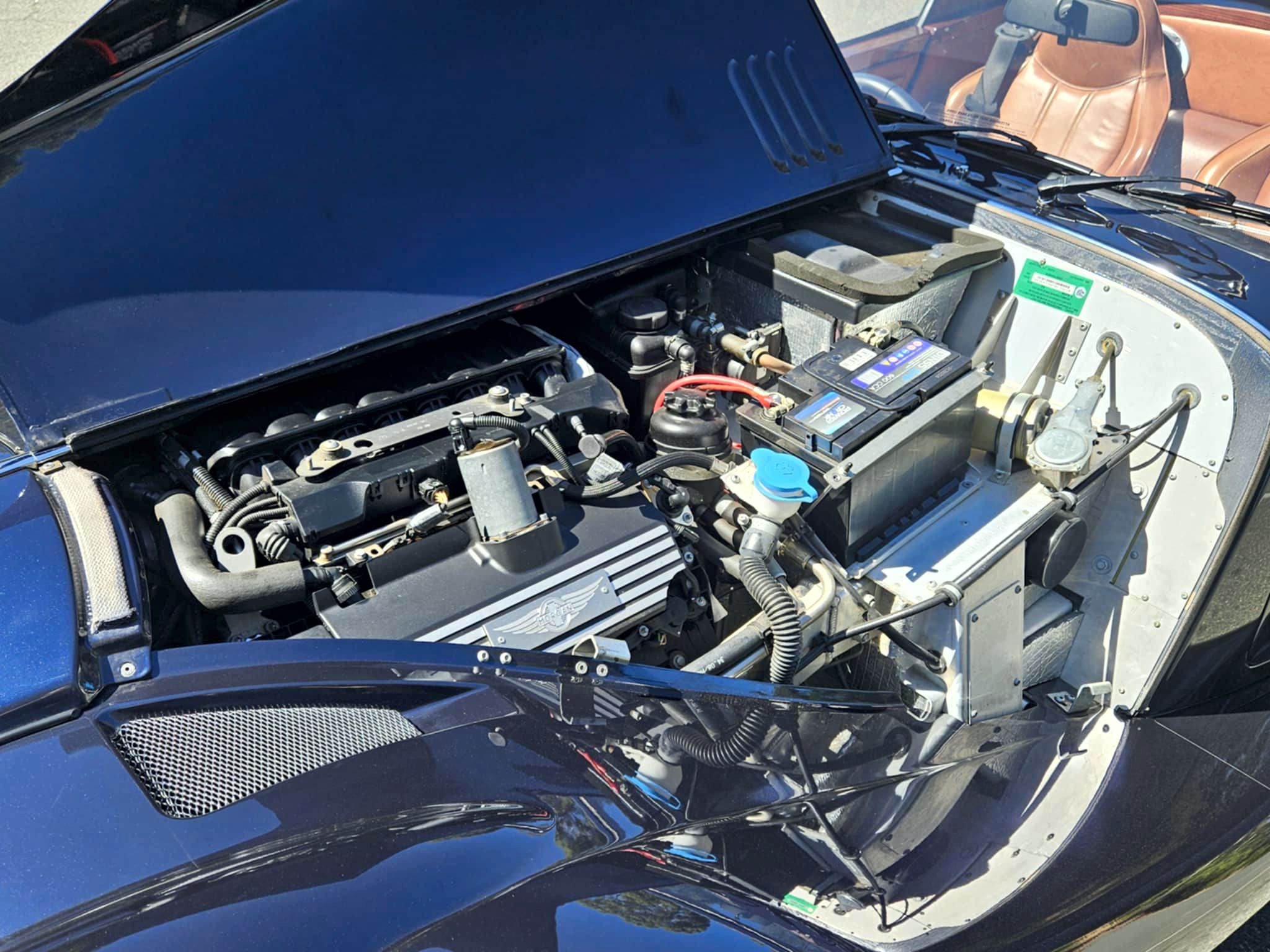
The bigger change was under this aerodynamic skin, with a bonded aluminium chassis replacing the welded steel ladder-frame used for all previous Morgans. Additionally, the new Aero introduced a BMW V8, initially of 4.4-litre capacity. The transmission – a six-speed manual – was also sourced from BMW, as were some other minor pieces, like door handles. A nod to Morgan’s heritage remained, though, with ash timber framing still used for parts of the body.
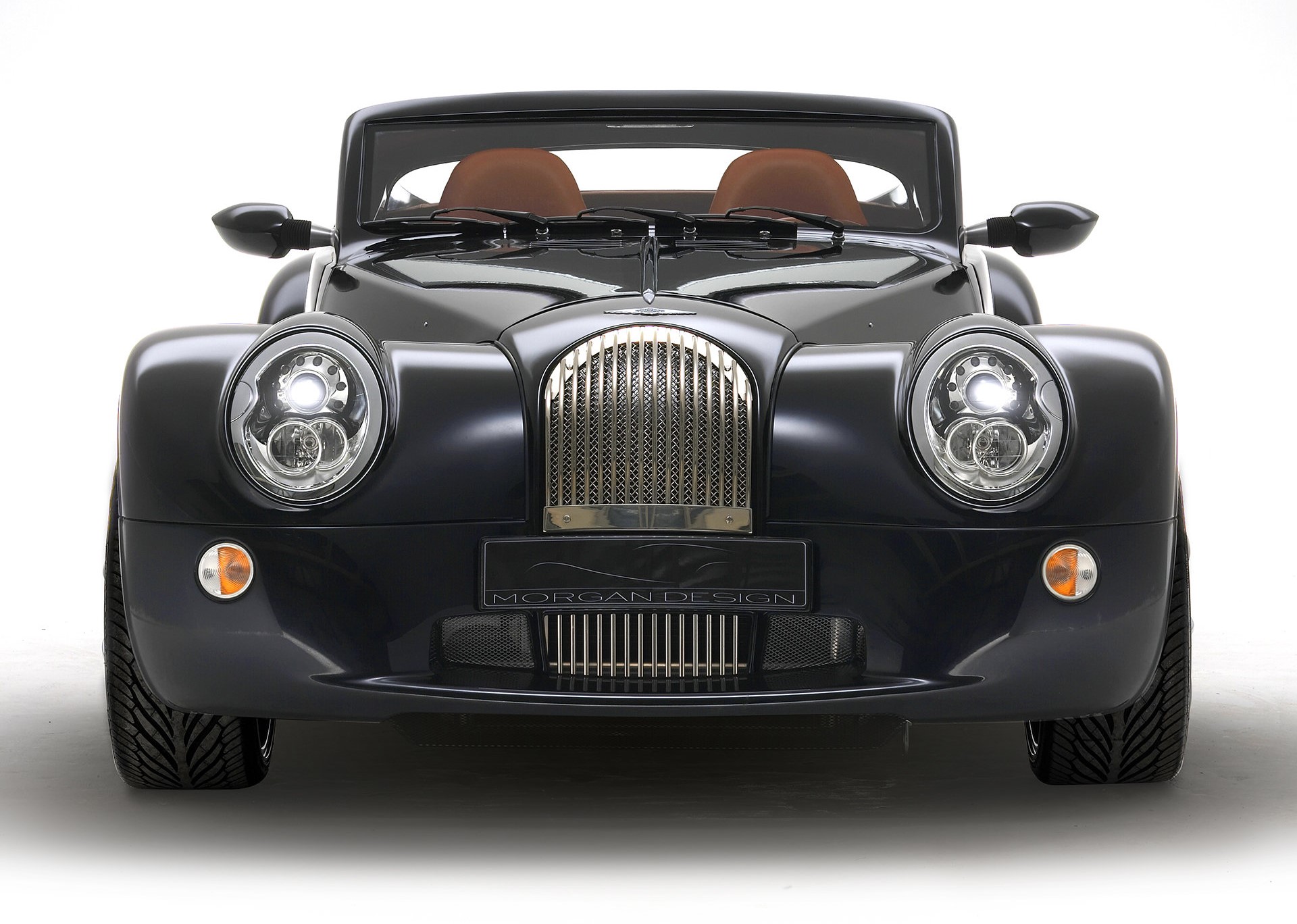
For all its innovations, what most people remember about the Aero 8 is its “cross-eyed” front end. Morgan had intended to fit headlights from the new MINI, but parent company BMW wouldn’t supply them until after that model had launched. As an alternative, lights were sourced from VW’s New Beetle, which had to be swapped from left to right to fit the Morgan styling.
While the Aero 8’s look polarised opinion, its performance couldn’t be denied, with 0-100km/h in under 5 seconds and a top speed in excess of 250km/h.
That performance was enhanced when the Aero 8 Series II launched in 2004, this time with a 4.6-litre BMW V8, the option of side-exit exhausts, and more interior space. Later in the same year, the Series III arrived, finally with the MINI headlights that had been intended from the outset.
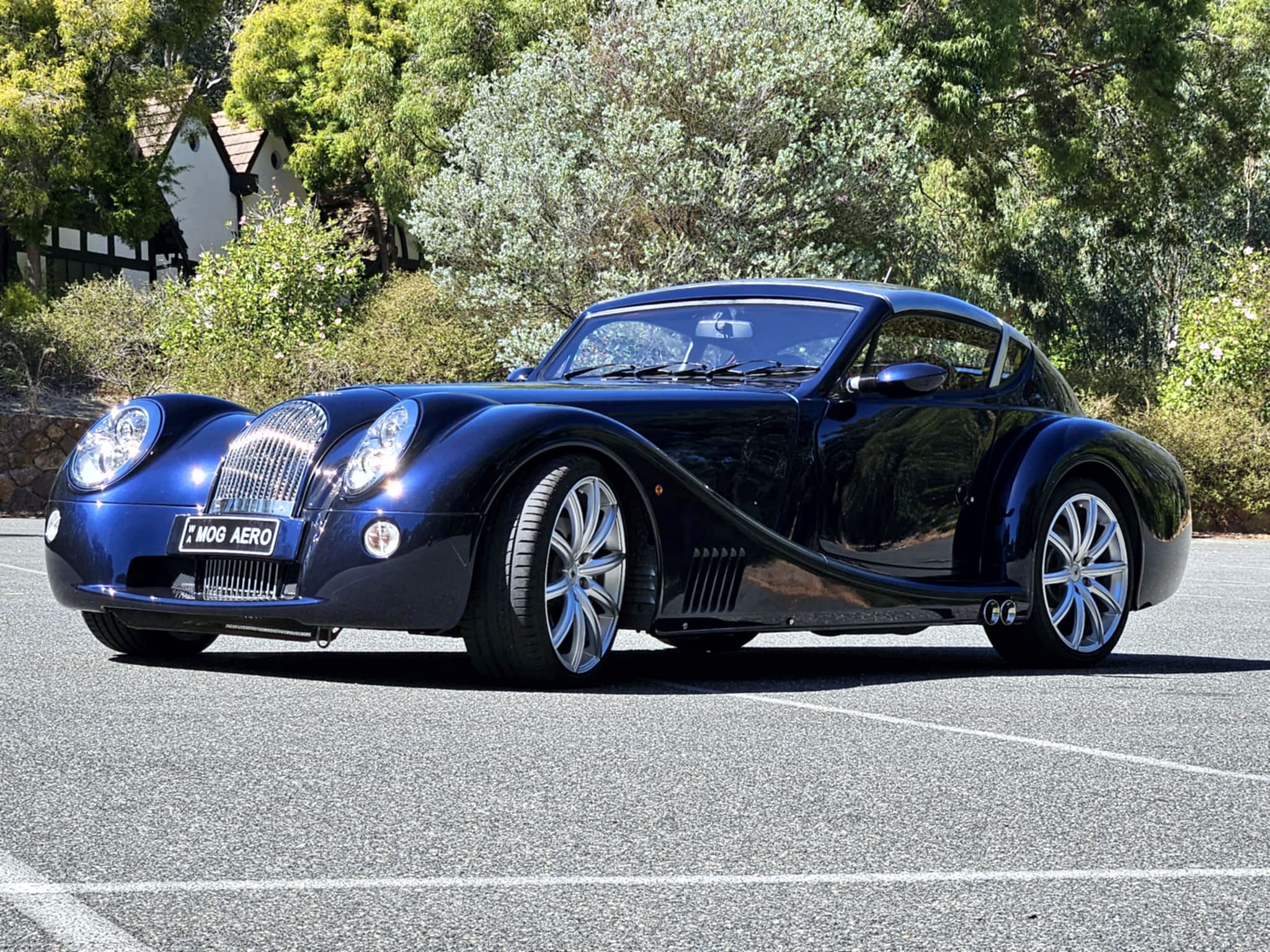
Introducing a Coupe. . .
While the Aero 8 was only built as a roadster, one longtime customer wanted the concept in coupe form. Prince Eric Sturdza, a Swiss-based banker and wealthy minor noble, approached Morgan in 2004 with the idea of an “Aero 8 GT”. The timing of his request aligned with renderings of future Morgans that English design student Matt Humphries had been sending to the company. Charles Morgan, the CEO of Morgan Motor Company back then, liked what he saw, commissioning the teenager to style a one-off Morgan coupe, with its build to be funded by Sturdza.
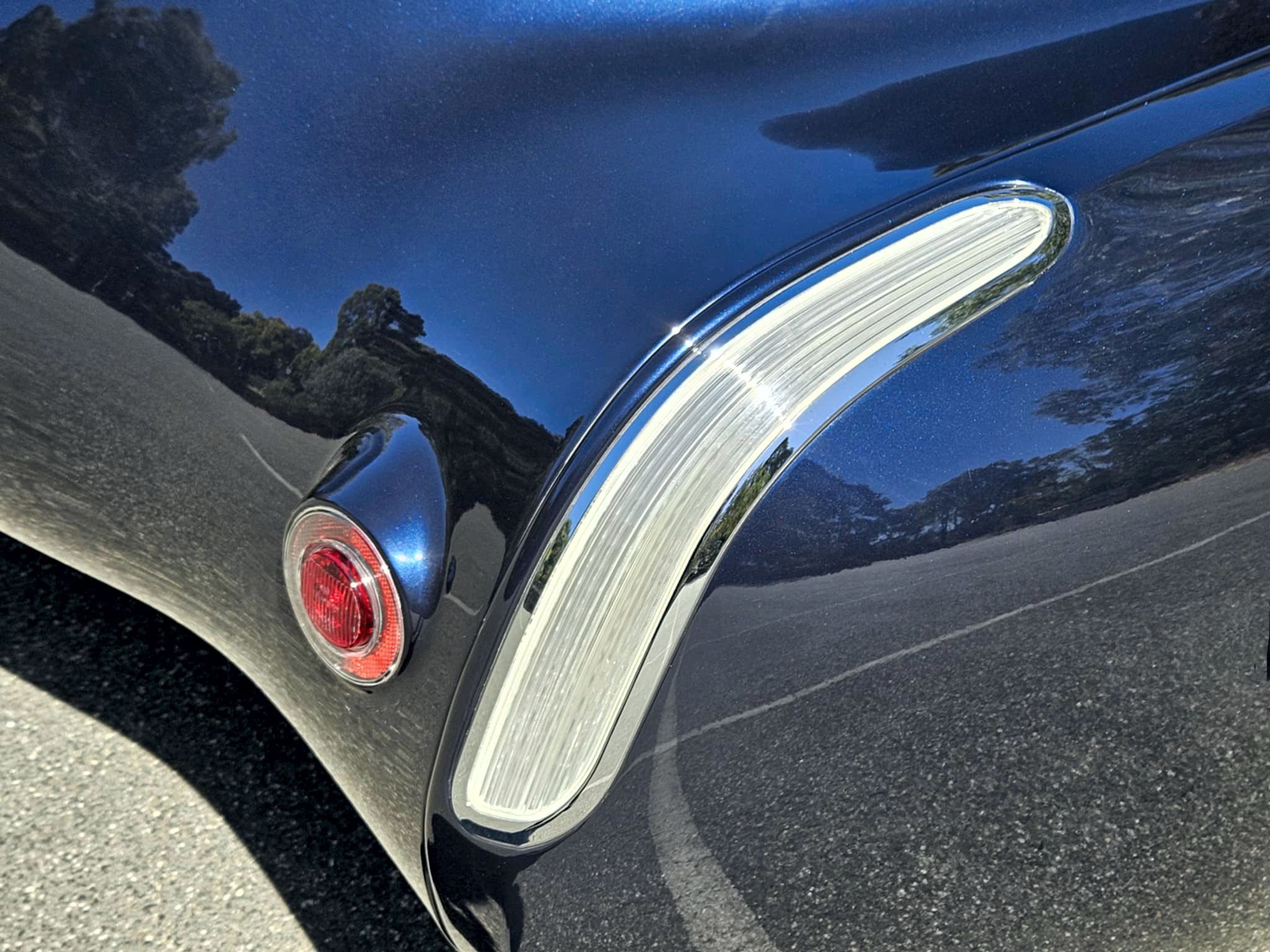
The result – the AeroMax – was defined by a fastback roof with a split rear window in the style of classic cars from the 1930s and the 1963 Corvette Sting Ray coupe. Humphries’s treatment of the coupe’s back end was far more attractive than the fussy styling of the roadster, with vertical indicator/tail lights (lifted from the Lancia Thesis) and compact brake lights in a boat tail rear that looked like it was milled from the single block of aluminium.
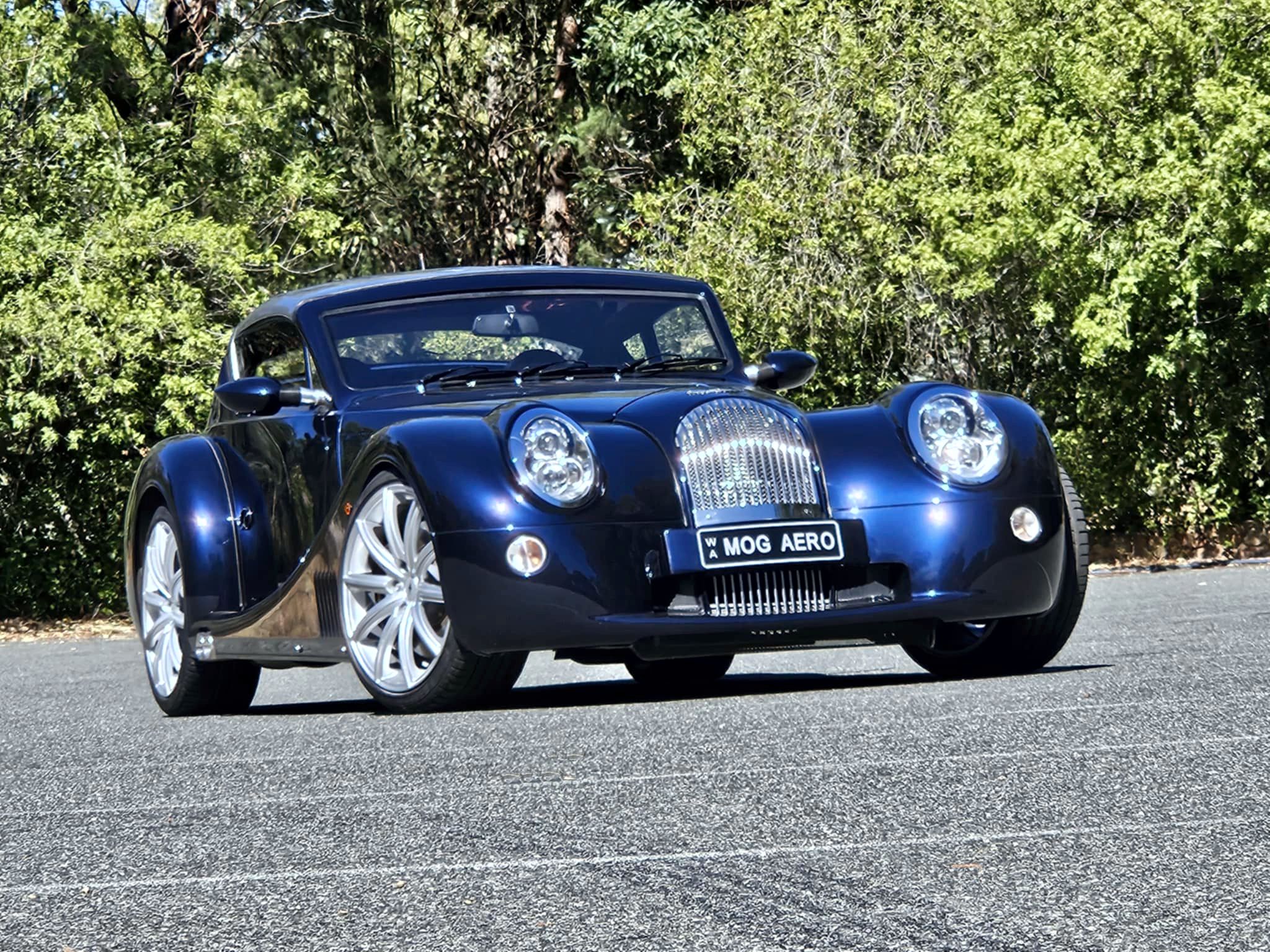
While most of the AeroMax’s changes over the roadster were at the rear, the front end was restyled, too, as were the doors and selected interior parts.
Debuting at the Geneva Motor Show in 2005, the AeroMax was welcomed far more warmly than the Aero 8. Sturdza, impressed with the creation he funded, commissioned four more examples of the car – two with manual transmissions and two with automatics. Many other cashed-up customers wanted an AeroMax, too, but Morgan hemmed and hawed for some time before finally committing to bring it to production. In the meantime, a Series IV version of the Aero 8 was released in 2005. This came with a 4.8-litre BMW V8 and introduced an automatic transmission option, both of which would be added to the AeroMax coupes that commenced production in 2008. Morgan stated at the time that the AeroMax would be limited to just 100 units, but a Morgan enthusiast site claims 117 left the factory in a little over 12 months.
This all leads up to the ‘Aero SuperSports’; a revival of two great names from Morgan’s past.
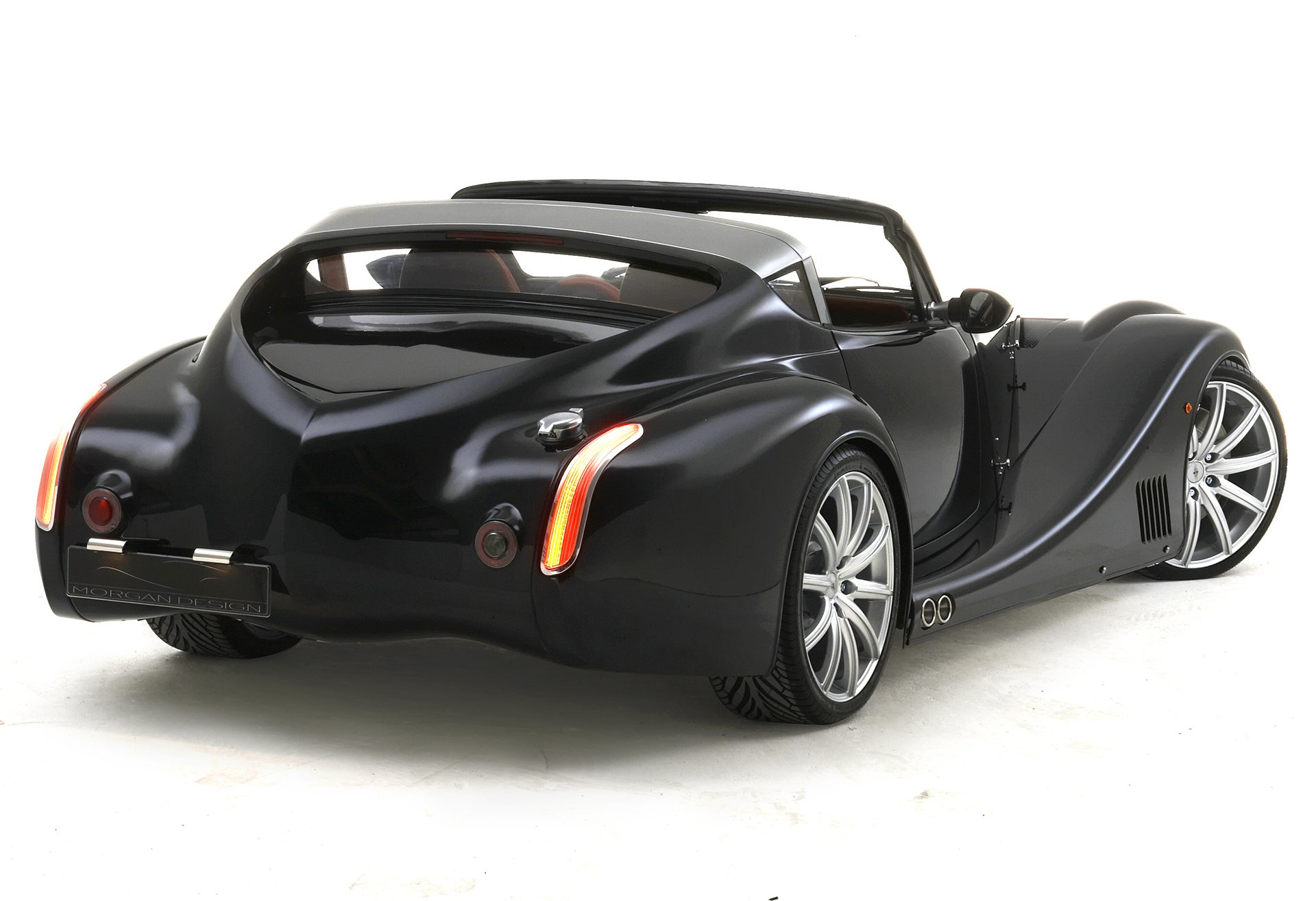
. . . then a Targa
Morgan chose the 2009 Villa d’Este concours in Italy to present the Aero SuperSports. Clearly inspired by the AeroMax coupe, the Aero SuperSports looked similar, but broke new ground.
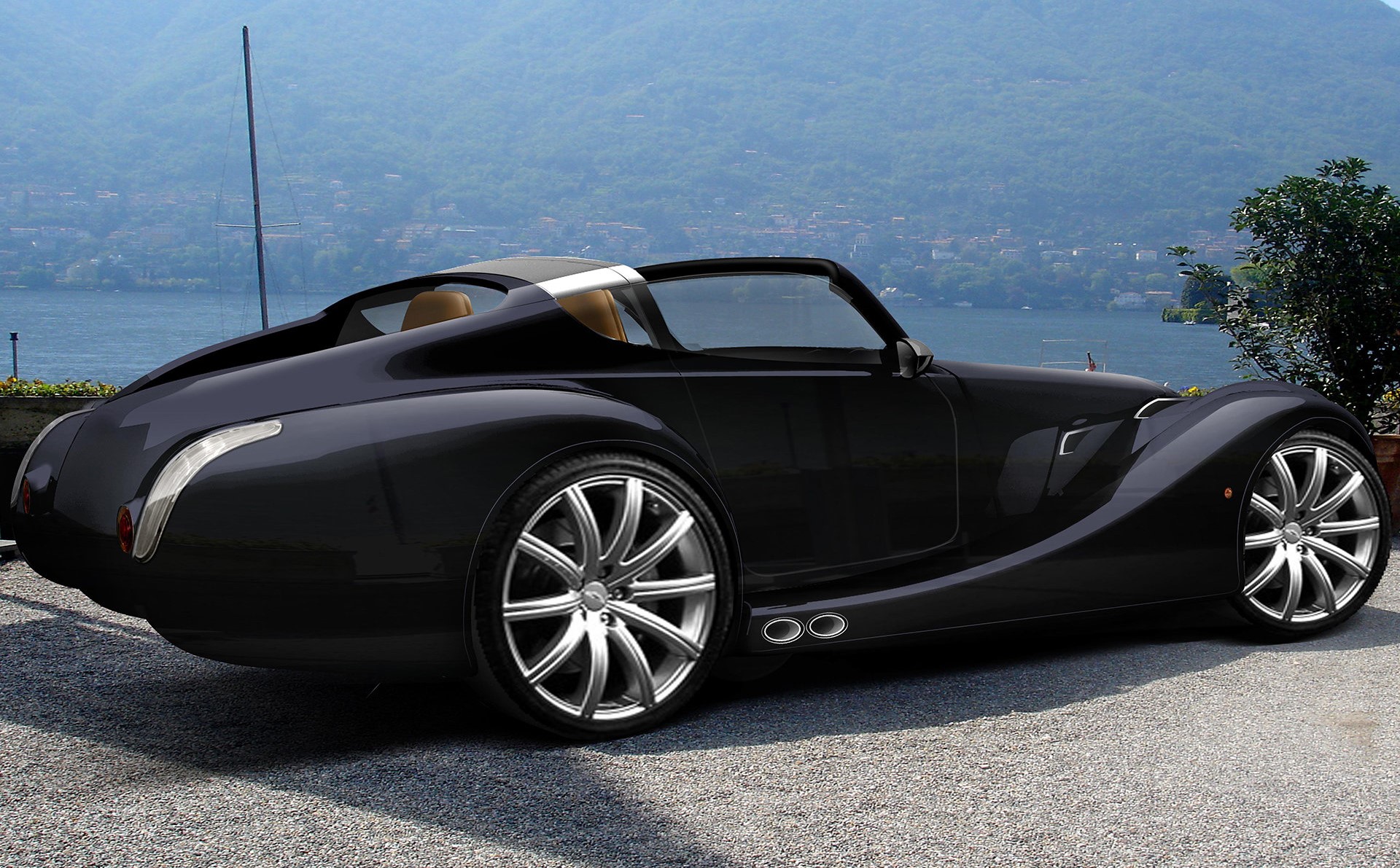
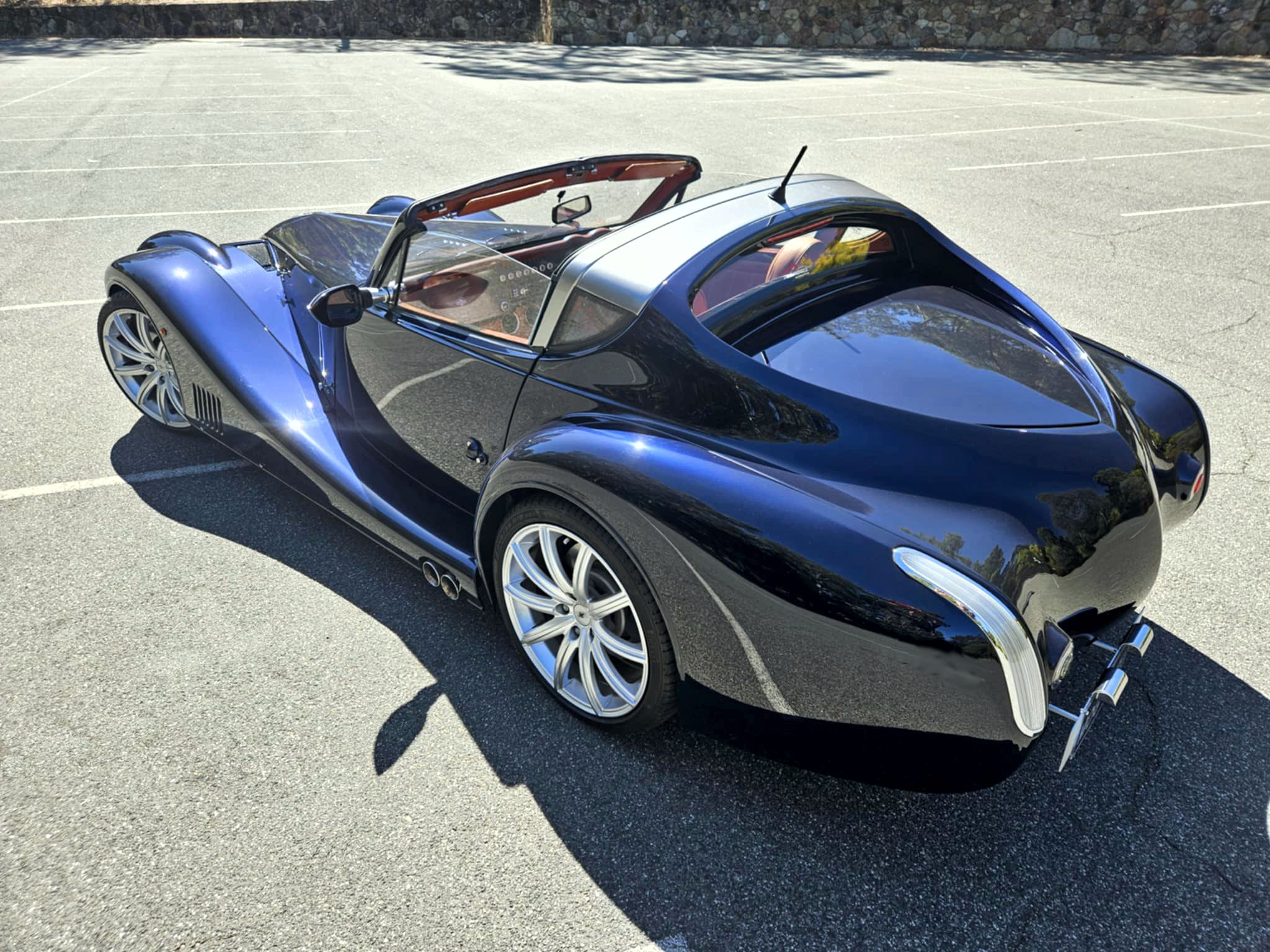
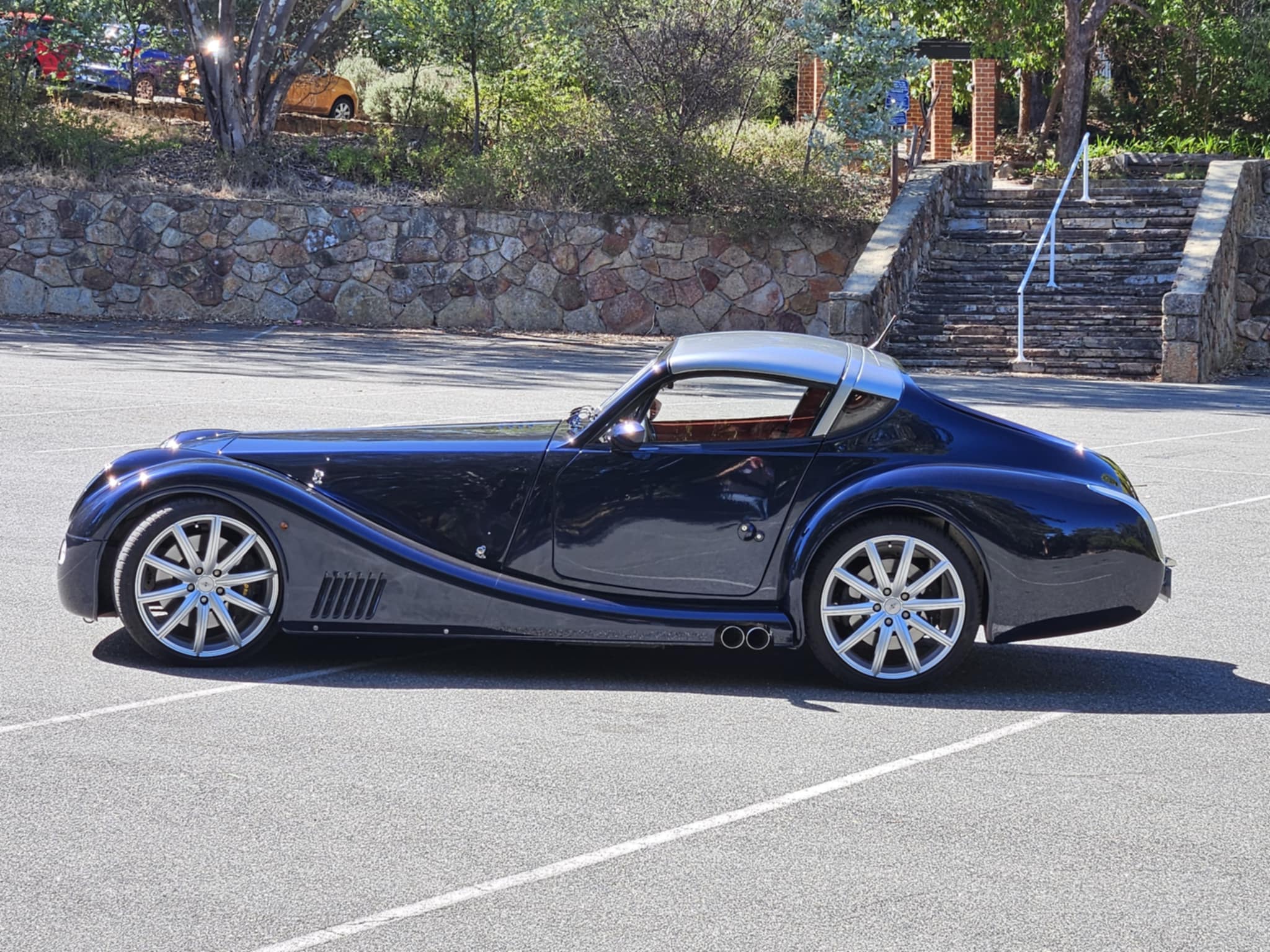
What defined the Aero SuperSports was its targa roof – a Morgan first. This consisted of two removable roof panels and a thick targa bar. On the car featured, these elements are in silver, although black and body colour finishes were also available, with a level of customer input often determining the final spec.
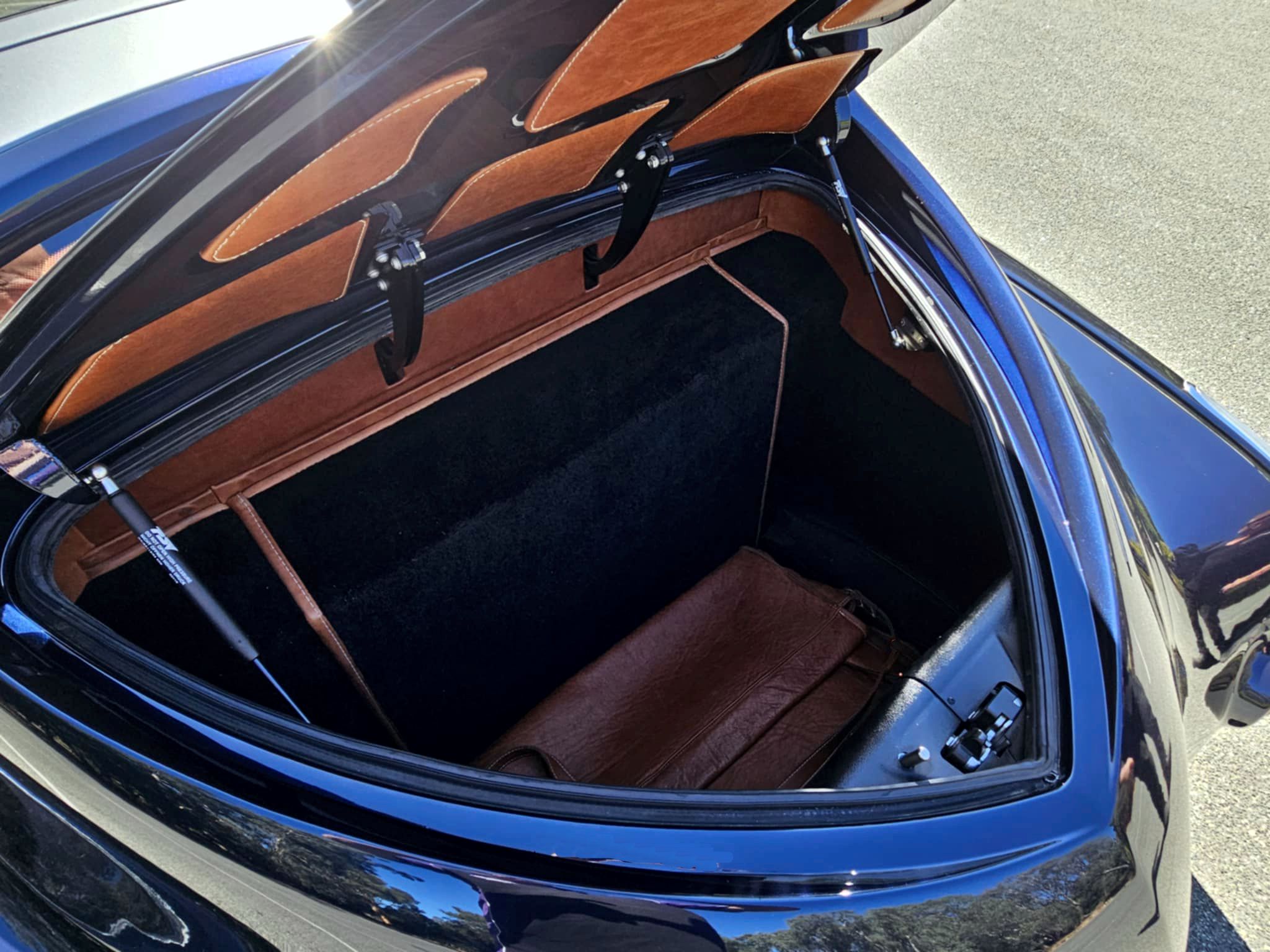
Incorporating a targa roof required reshaping the back end, with buttresses beyond the B-pillar flowing into a shield-shaped tail section. This treatment allowed for an upright rear window and a conventional boot. The practicalities of this boot were limited, though. With the two roof panels stowed, space is significantly reduced, with room for little more than a couple of overnight bags.
While the body had changed, compared to the AeroMax, the drivetrain didn’t. When production of the Aero SuperSports commenced in 2010, it was powered by a naturally aspirated BMW 4.8-litre V8 producing 270kW, 490Nm and 0-100km/h in 4.2 seconds. This was the sole engine choice, although a six-speed automatic transmission could be selected as an option to the six-speed manual.
Western Delight
The car featured is one of three Aero SuperSports delivered new to Australia. Ordered by the sole owner soon after he saw the Aero SuperSports in concept form at Villa d’Este in 2009, this ‘early bird’ enthusiasm led to an invitation from Charles Morgan to attend the production car’s launch at Geneva in 2010.
Morgan Cars Australia personally handed the car over to the buyer in Tasmania, after which it was enjoyed there for a period before being sent to Western Australia, where it’s resided alongside 1940s and 1980s Morgans since. The car is now on consignment with WA-based classic car broker, Paul Blank (see breakout).
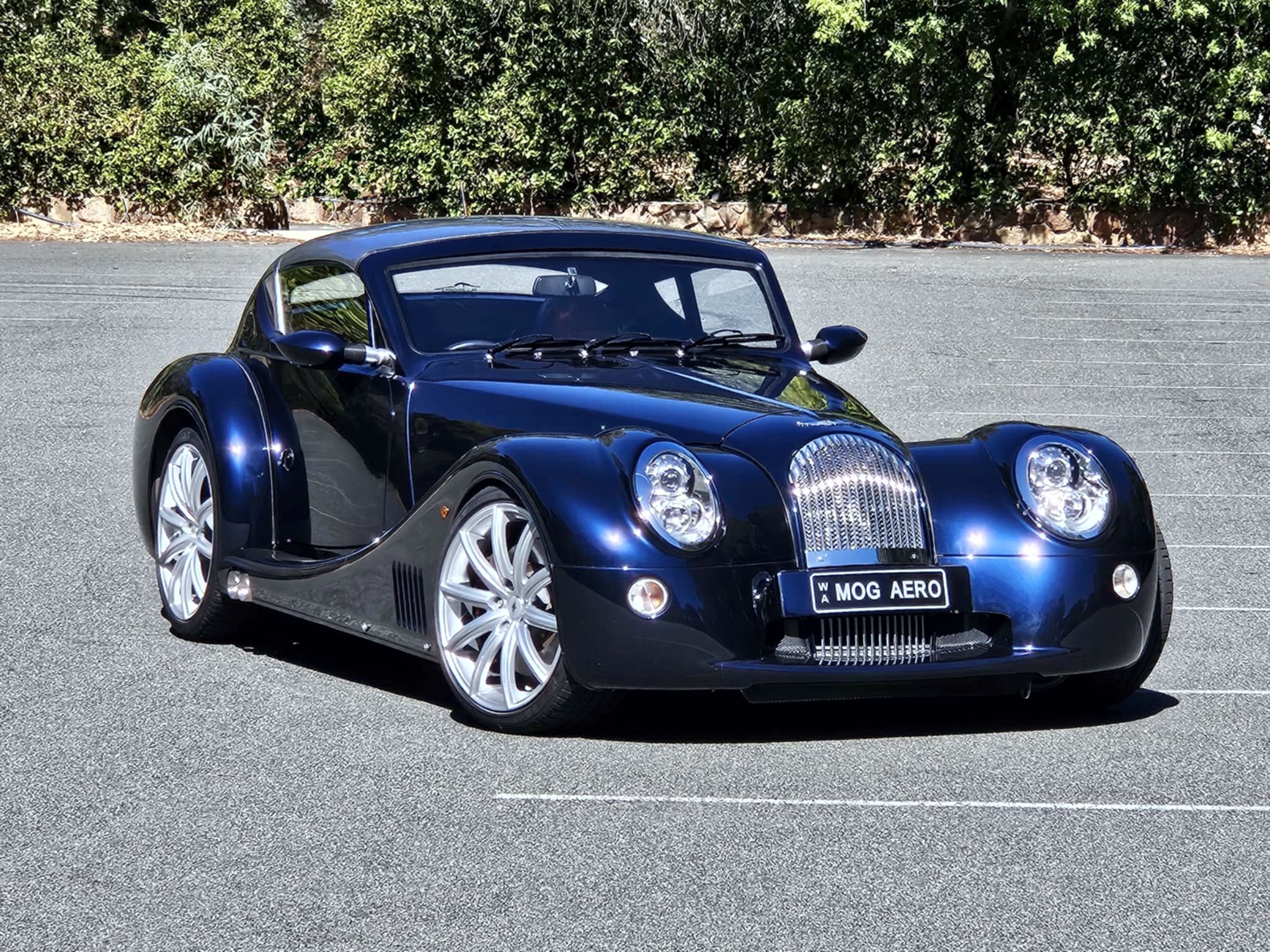
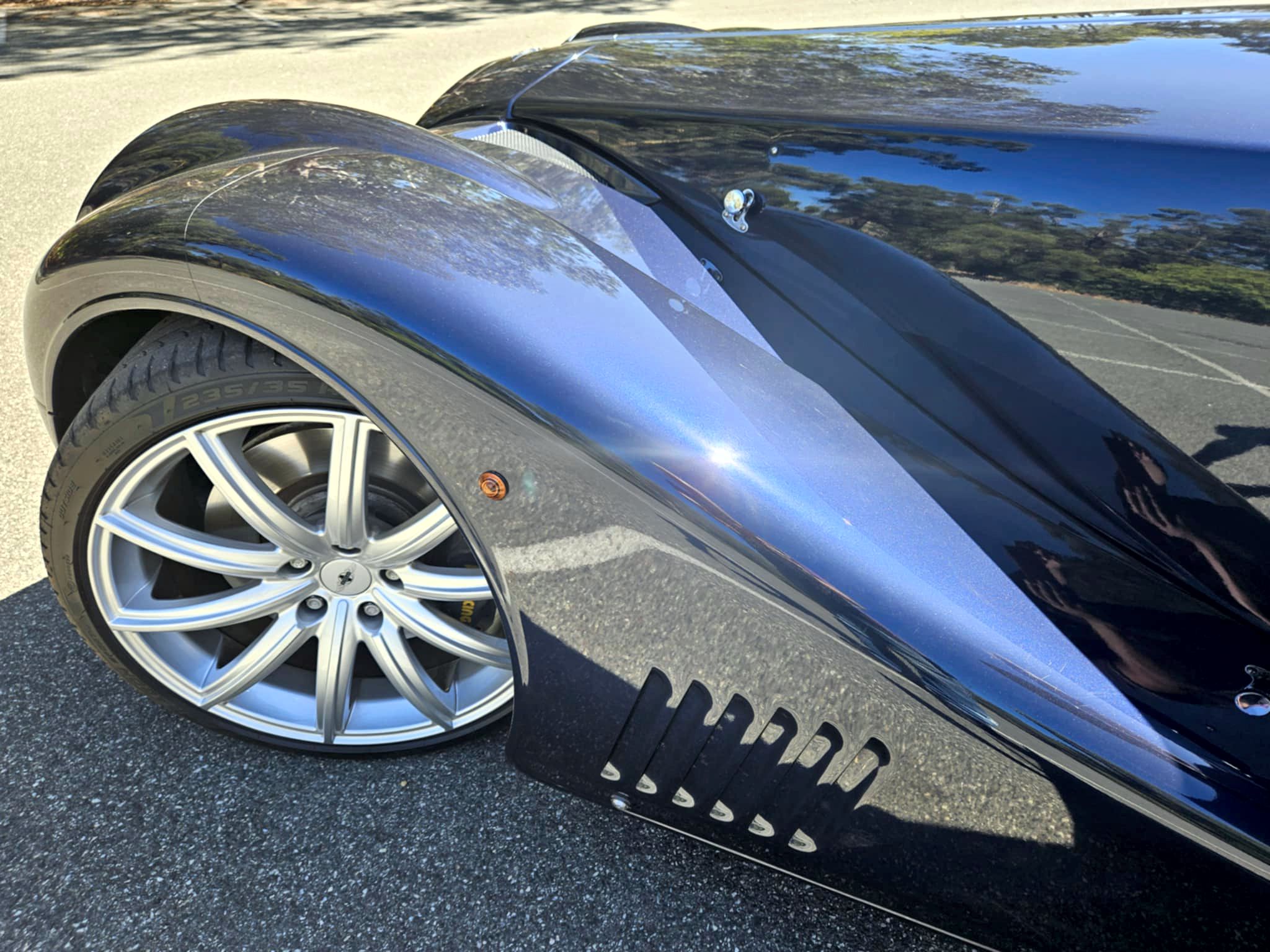
Finished in Monterey Blue metallic that complements the Aero Silver 19-inch alloys and silver targa panels, this car benefits from clearcoat protection over the front end, sills and rear guards. The desired manual transmission and side-exit exhausts were spec’d by the buyer, although a rear-exit exhaust was fitted for Australian compliance. Despite this compromise, Blank says the exhaust note is awesome. An aluminium skidplate to protect the sump is a non-factory addition.
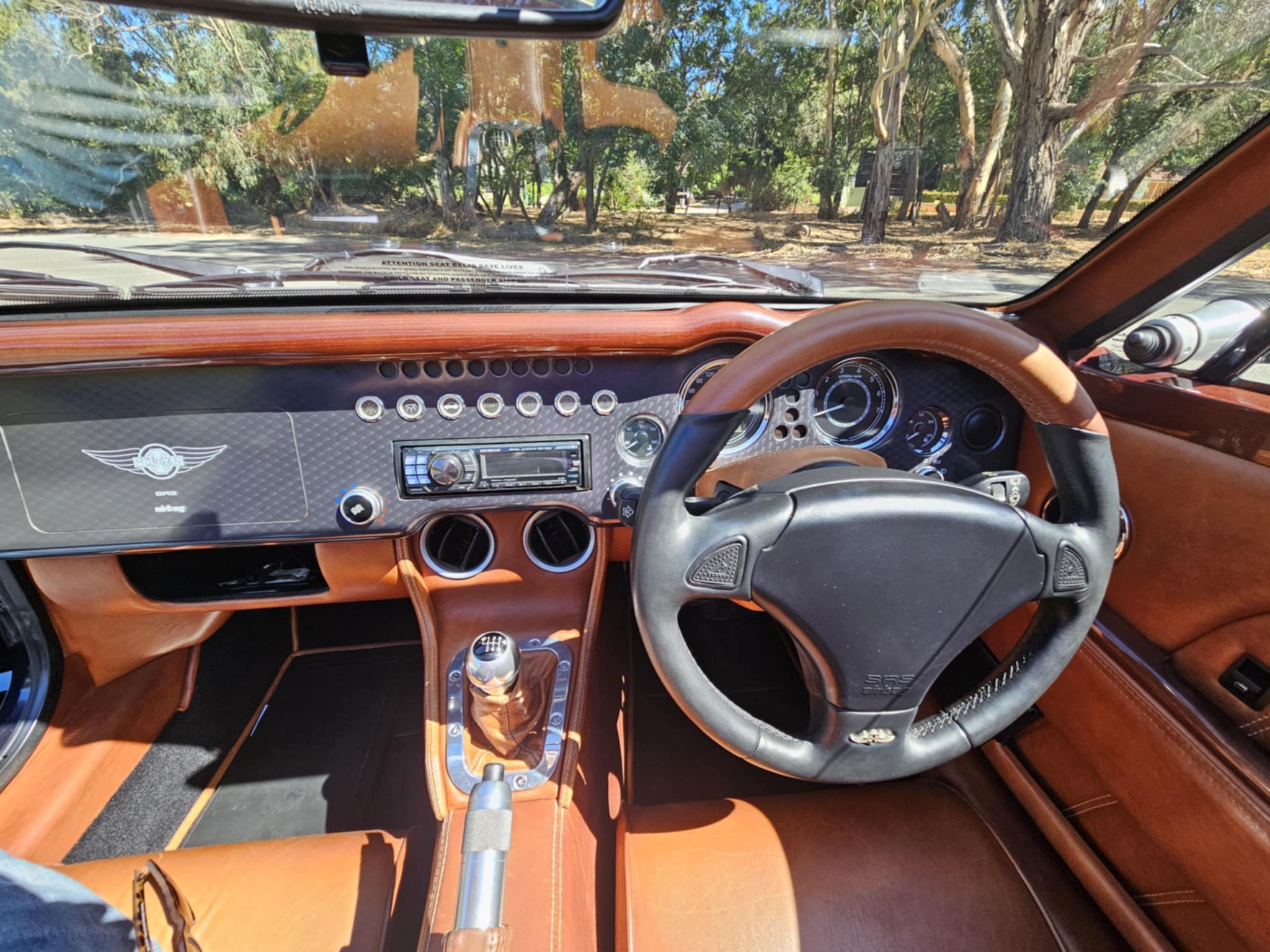
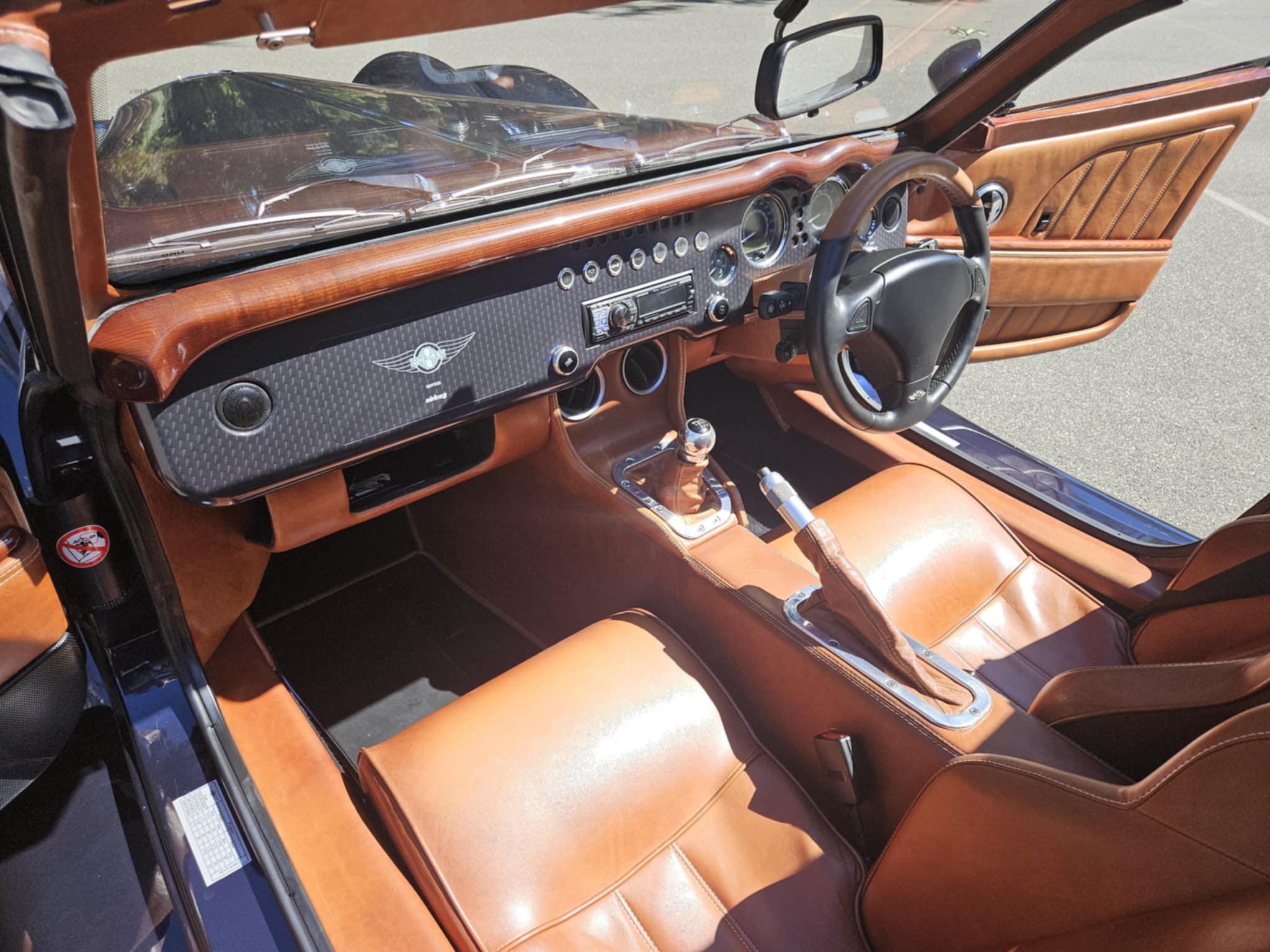
In the cabin, swathes of Muirhead Distressed Tan leather cover the Aero Sports seats, doorcards, centre console, lower dash, steering wheel, and boots for the shifter and handbrake. Accented with cream stitching, this leather extends to the boot, too. Tawny Ash timber caps the dash and doors, which along with a faux engine-turned finish on the fascia, is a nod to Morgans of old.
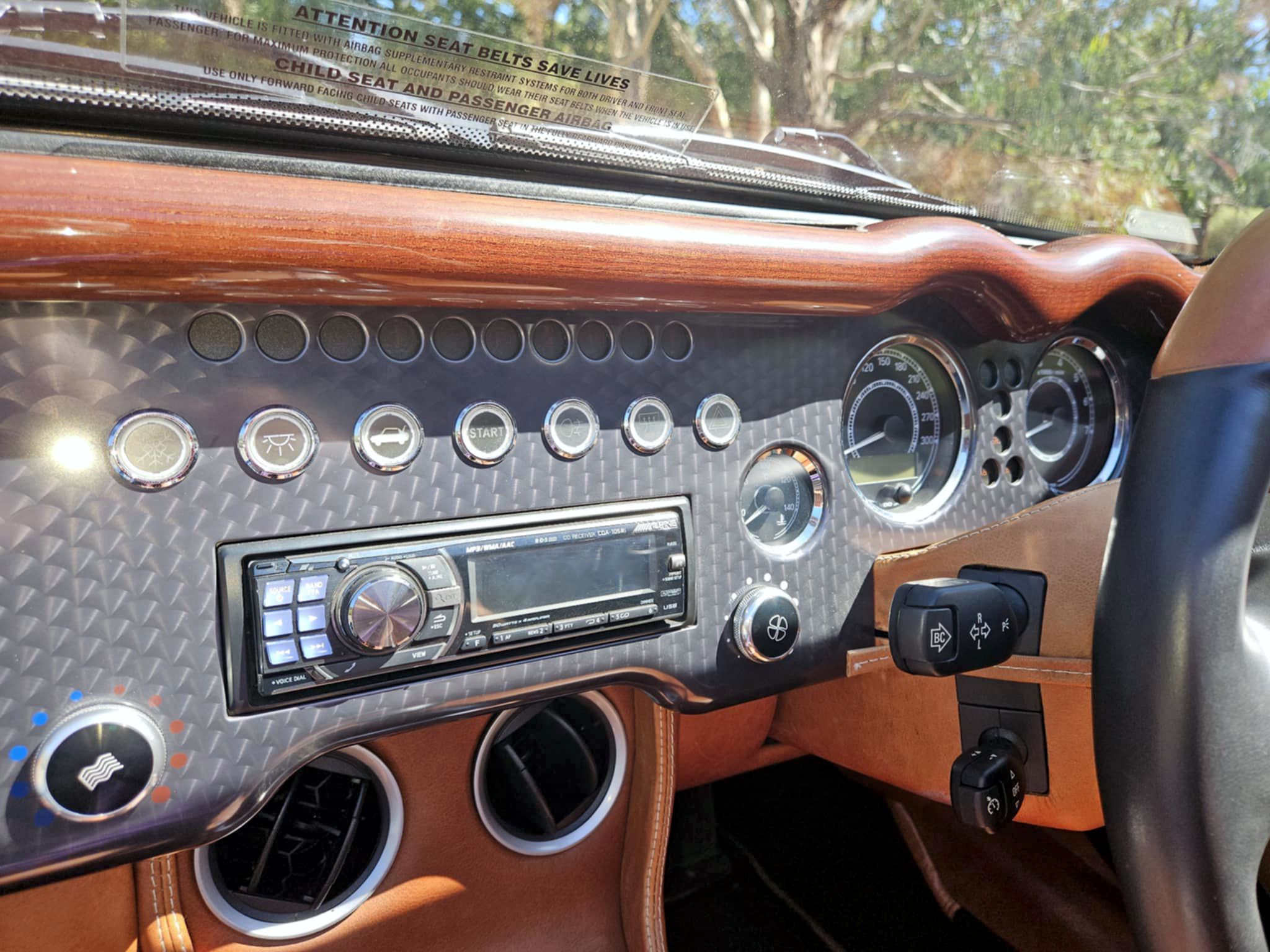
Despite modern features that include cruise control, power windows, climate control air con, driver/passenger airbags and ABS, the Aero SuperSports is still a very analogue car, with pushbuttons, tactile switches and conventional gauges - the lack of a touchscreen is refreshing.
An Alpine head unit for the sound system doesn’t look out of place, although it would have been nice to see Morgan do something more decorative to the boss of the airbag-equipped steering wheel, as this does jar a little with the aesthetic of the rest of the cabin.
When new, an Aero Supersports started at $375,000 (excluding LCT and ORCs), which was over $100K more than the Aero 8 roadster. On this particular car, factory options requested by the buyer took the price to over $400,000.
How Many?
A production total for the Aero SuperSports remains something of a mystery to this day. Fuelled by strong demand for the AeroMax, Morgan stated in 2009 that 200 units of the Aero SuperSports would be built. The following year, this was revised down to 180, then 175. The arrival of an ‘Aero Coupe’ (essentially a fixed roof SuperSports) in 2012 further reduced demand that was already starting to dry up.
The same enthusiast page that cites 117 units of the AeroMax states that 132 examples of the Aero SuperSports had been built by early 2013. As such, it’d be safe to assume production reached no more than 150 by the time the model was discontinued in 2015.
Regardless of how many were built in total, the Aero SuperSports remains an exceedingly rare car, especially in Australia.
Released a century after HFS’s first car, you could say Morgan’s Aero SuperSports was a 100th birthday present to itself. Don’t wait for your centenary to treat yourself to this truly rare automobile
For Sale
This 2010 Morgan Aero SuperSports is thought to be one of just two examples in Australia. The BMW 4.8-litre V8 and six-speed manual gearbox combine with Morgan’s stiff but light bonded aluminium chassis to provide exceptional handling, while the interior combines old-world charm with modern technology and safety features.
A car for the driving enthusiast who wants something different, this Aero SuperSports has travelled a little over 15,000km from new. Regular maintenance (by a BMW specialist in Tasmania and Morgan specialist in Perth) means this car is ready to enjoy.
Available through Paul Blank Classic Car Broker in Western Australia, the asking price for this rare, one owner car has recently been reduced to $287,000, with ‘MOG AERO’ personalised plates included for a WA buyer.
Contact Paul Blank on 0407 097 911 for more details.
See the advert online at www.justcars.com.au with the ad code JCMD5352002.