Words: Mike Ryan
Photos: Bertone
In 1969, Bertone was arguably at the peak of its powers. In the preceding decade, the Italian carrozzeria had designed the Lamborghini Miura and Espada, Alfa Romeo Montreal, Fiat Dino Coupe and many more production models, as well as Alfa Romeo Carabo, Lamborghini Marzal, Jaguar Pirana and Chevrolet Testudo concepts.
Amidst these icons, the ‘Runabout’ was another Bertone concept. It passed without too much attention when new, but more than five decades later, it’s been reimagined and confirmed for production.
Bertone Origins
The Bertone of the new millennium isn’t quite the same company that produced icons like the Miura and Montreal. What was founded by Giovanni Bertone in 1912 as a small carriage builder and repair shop didn’t even start producing bodies for automobiles until after World War I, but from there, progress was rapid. Commissions from Fiat and Lancia reflected the quality of work being done by Carrozzeria Bertone, but tough times in the late 1920s saw a diversification into commercial bodies.
In 1932, Giovanni’s son, Giuseppe (known as Nuccio), joined the business and would shape its growth in the lead up to World War II. Highlights from this period included bodies on the Fiat Balilla and one-offs like the Fiat 1500 Aerodinamica and Lancia Aprilia cabriolet.
Post-War Growth
With precious little coachbuilding work available in the early years after WWII, Bertone’s gamble on rebodying a pair of MG TDs in 1952 paid off. US importer Stanley Arnolt saw them, liked them and commissioned Bertone to build around 100 TF-based equivalents that were sold in the US as the ‘Arnolt-MG’. This was followed by the ‘Arnolt-Bristol’ that used a Bristol 404 chassis clothed in swoopy bodywork designed and built by Bertone.
By this stage, Nuccio Bertone was running the business, and although he was an accomplished designer in his own right, he recognised talent, hiring Franco Scagalione as Head of Design. It was Scaglione who designed the trio of futuristic ‘BAT’ (Berlinetta Aerodinamica Tecnica) Alfa Romeos between 1953 and ’55. At the same time, what had started as a 1000-unit run of bodies for Alfa Romeo’s Giuletta Sprint increased to 40,000 before production ended. The Fiat 850 Spider took its place on Bertone’s production line in 1965, with nearly 140,000 built.
Other carmakers, like NSU and Aston Martin, came to Bertone for body design and manufacturing, as well as concept car design and building. The move to larger premises in 1959 was followed by Scaglione being replaced by the legendary Giorgetto Giugiaro. Along with one-offs on Maserati, Ferrari and Aston Martin chassis, Giugiaro penned designs for volume models like the Simca 1000 Coupe, Iso Rivolta GT, Alfa Romeo 2600 GT and BMW 3200 CS.
1960s Icons
When Giugiaro left Bertone in 1965 to establish his own studio, he was replaced by Marcello Gandini, who would remain with the carrozzeria until 1980. It was Gandini who designed the Lamborghini Miura and Espada, as well as the Fiat Dino Coupe and Alfa Romeo Montreal, among many others. Bertone’s body production increased by 40 per cent in the late 1960s, with the workforce as high as 1,500 a few years later.
In 1972, Giovanni Bertone died and the Fiat X1/9 replaced the 850 Spider as the company’s volume vehicle. The X1/9, which stayed in production for 16 years and was sold as a Bertone vehicle near the end of that run, has a strong connection to the Runabout concept from 1969.
Bertone’s notable designs from the 1970s and ‘80s included the Lamborghini Countach, Jarama and Jalpa, Maserati Khamsin, Ferrari Dino 308 GT4, Lancia Stratos, Volvo 262C and 780, Citroen BX and XM, amongst others. Countach and Stratos aside, few of these generated the same excitement and energy as Bertone's creations from the 1960s.
Decline, Death and Revival
In the 1990s, concepts and explorations of new technologies became a larger part of Bertone’s business, with contract bodybuilding mainly limited to Opel/Vauxhall convertibles and the Fiat Punto. Following Nuccio Bertone’s passing in 1997, contract work dried up entirely and Bertone was on the brink. Fiat purchased their factory in 2009, with bankruptcy following in 2011. The ‘Stile Bertone’ design studio was the only survivor of this, but even it went under in 2014.
Rights to the Bertone name had been sold a year earlier, with a relaunch as ‘Bertone Design’ focussing on architecture and industrial design. Bertone Design was sold two more times after this, with the current owners officially reviving the brand in 2022 with a commitment to return to automotive design. The first product of this was the Lancia-inspired, Lamborghini-powered ‘GB110’ supercar. Released in 2024, production of the GB110 will be limited to 33 units.
The new Runabout follows a similar model, combining historically-inspired styling with proven production underpinnings.
Quirky – with a Purpose
Bertone call the new Runabout a “vision of Italian neo-retro modernity”. To unpack the “retro” bit of that, it’s worth explaining the original Runabout in more detail.
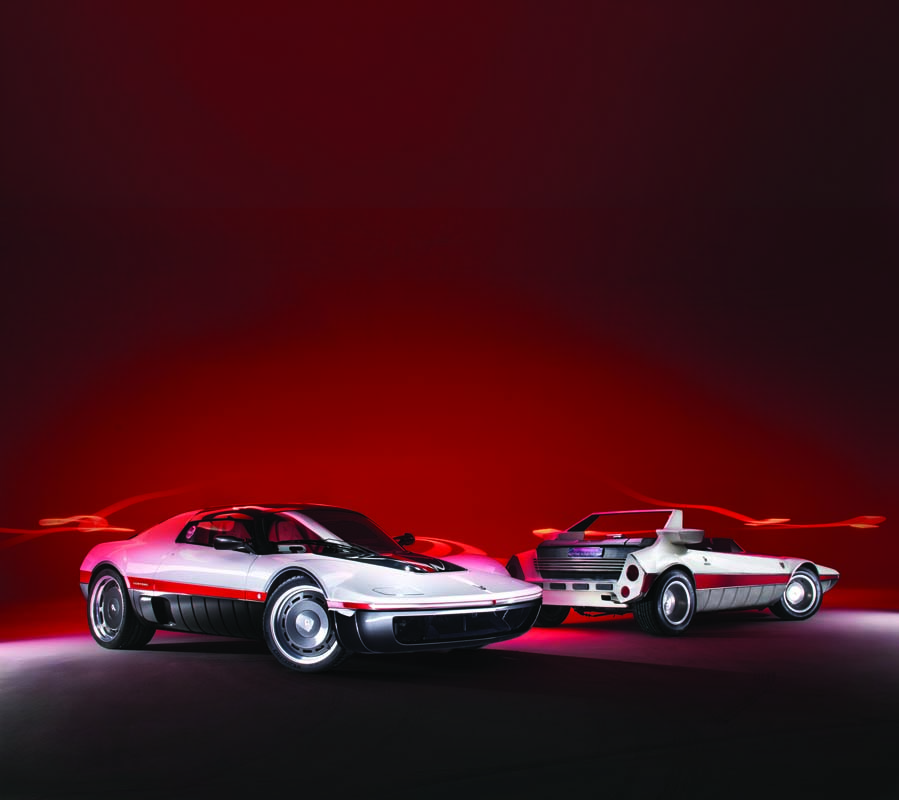
Making its debut at the 1969 Turin Motor Show, the Marcello Gandini-designed Runabout featured a low-profile (only 108cm high) wedge shape comparable to a speedboat, with no doors, no side glass, and only a rudimentary windscreen.
Deeply-dished wheels sat under bold flares front and rear, but the standout styling feature of the Runabout was its headlights. These were mounted behind the two-seat cabin in angular pods on an equally angular rollbar. Tail lights were more conventional, set into the extremely truncated ‘coda tronca’ (short tail) rear that featured a set of rubber blocks in place of a bumper bar.
A running, drivable vehicle, the original Runabout was powered by a 903cc inline four-cylinder engine, transversely mounted behind the cabin. This was sourced from an Autobianchi A112, which explained the Autobianchi badge on the concept’s nose. Whether the A112’s four-speed manual transmission was also fitted to the concept is unrecorded but seems likely.
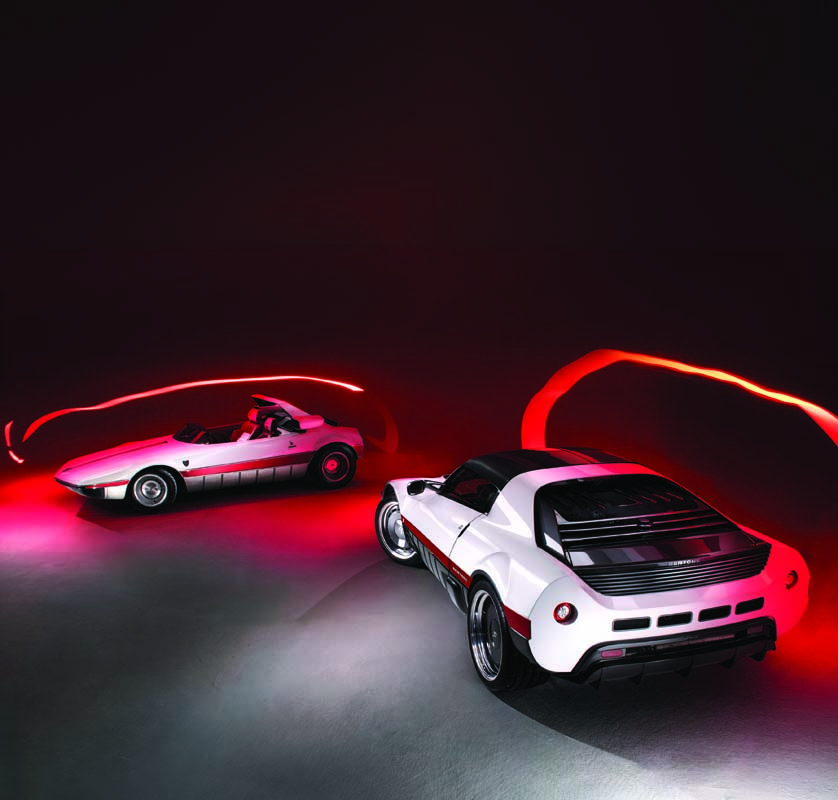
Described in Bertone’s own two-volume history as “strange” and “an extravagance,” the Runabout seemed frivolous, but it had a purpose – exploring the possibility of a future production vehicle in a similar style. What was sown with the Runabout came to fruition in the Fiat X1/9 that launched in 1972. View the original Runabout alongside a Fiat X1/9 and the similarities are obvious, although there’s a little of Bertone’s BMW-based ‘Spicup’ concept from 1969 in the X1/9, too.
Following its turn on the show circuit, the Runabout was largely forgotten. That changed when the new Bertone announced they were bringing a modern version to production.
Retro – and a Bit of Exige
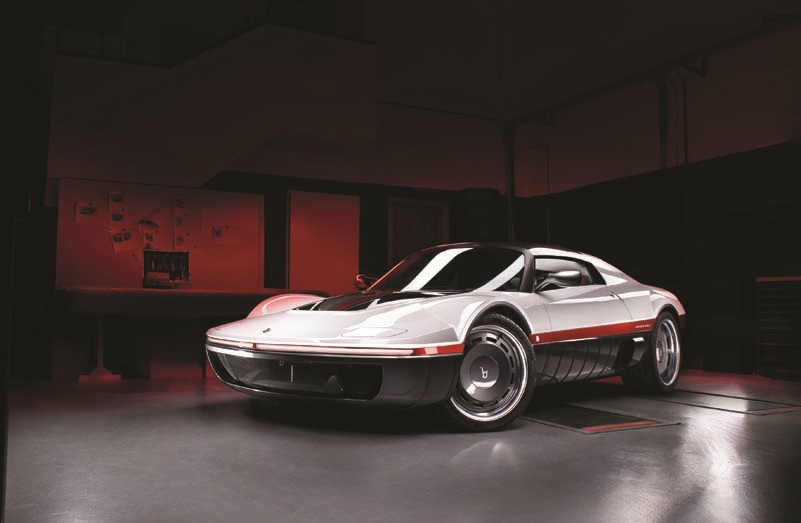
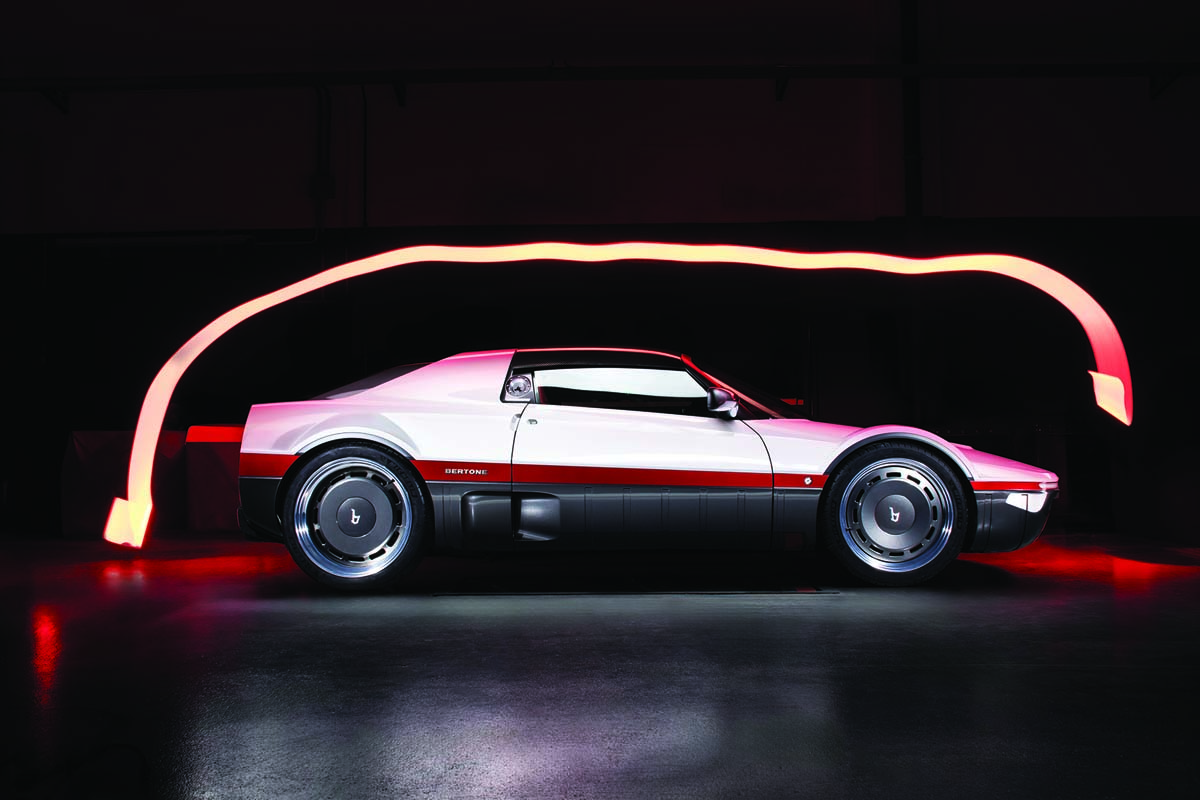
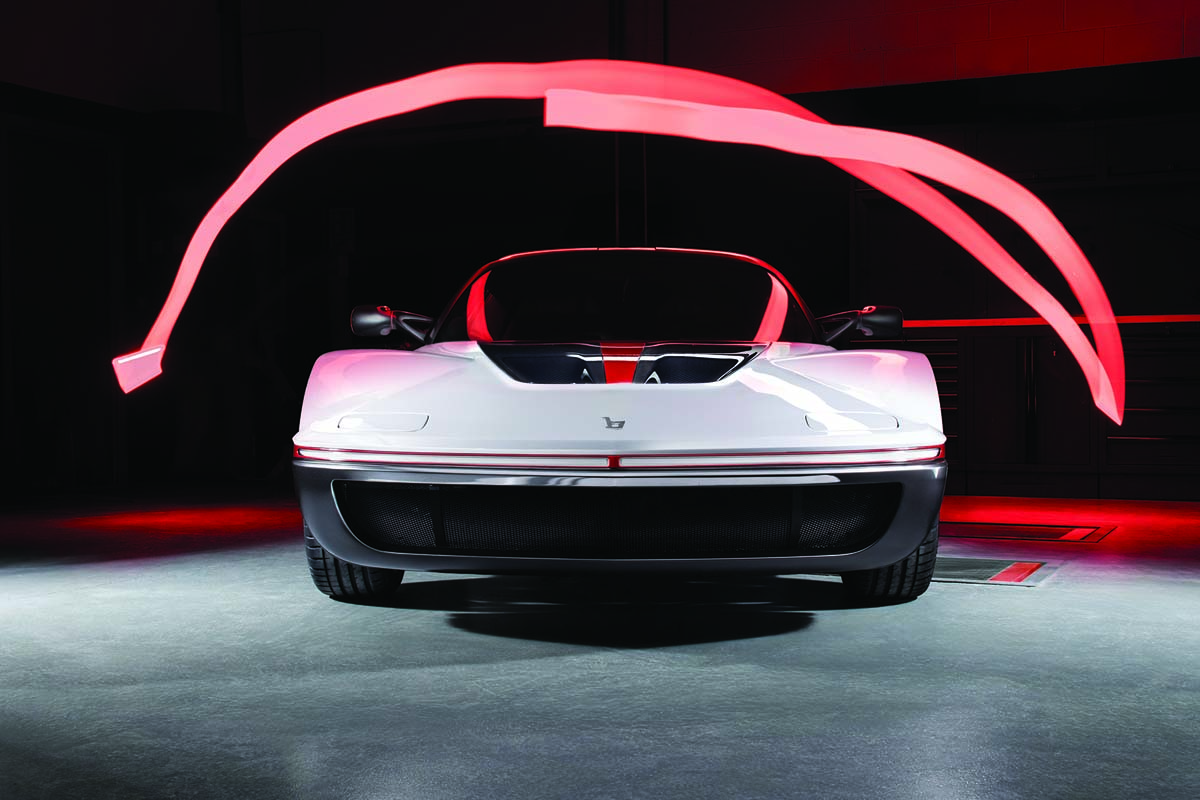
The first indication that the Runabout was making a return came in October, 2024, when Bertone revealed a new version. With the option of open barchetta (aka speedster) or targa top coupe bodies, the new Runabout featured styling clearly inspired by the original, specifically the wedge shape and coda tronca. To these key elements, practicalities necessary for a production car, like doors and conventionally-positioned headlights were added. There were also prominent scoops at the front and on the flanks to feed air into what was described at the time as a mid-mounted V6 engine.
Some more fanciful features included an oval steering wheel, five-point race harnesses on deep bucket seats and a tall gear shifter in the cabin. A compact digital instrument pod and minimal switchgear were other notable features.
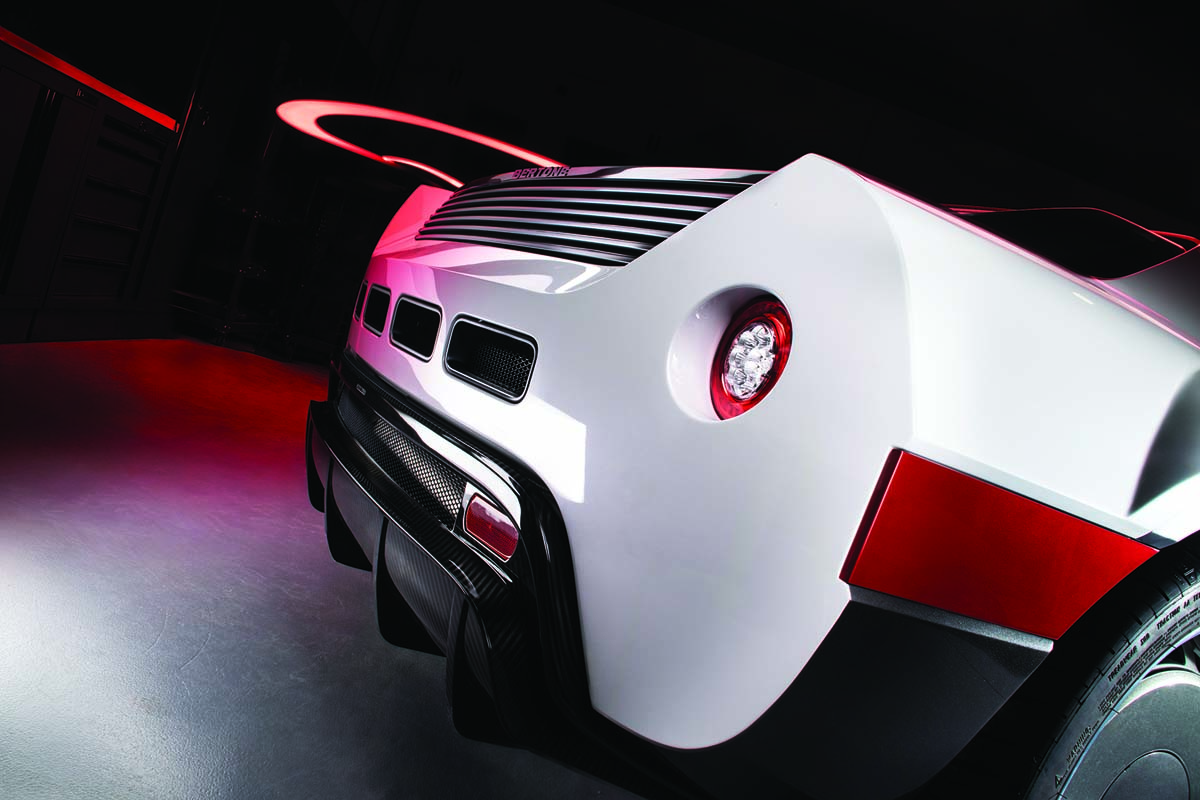
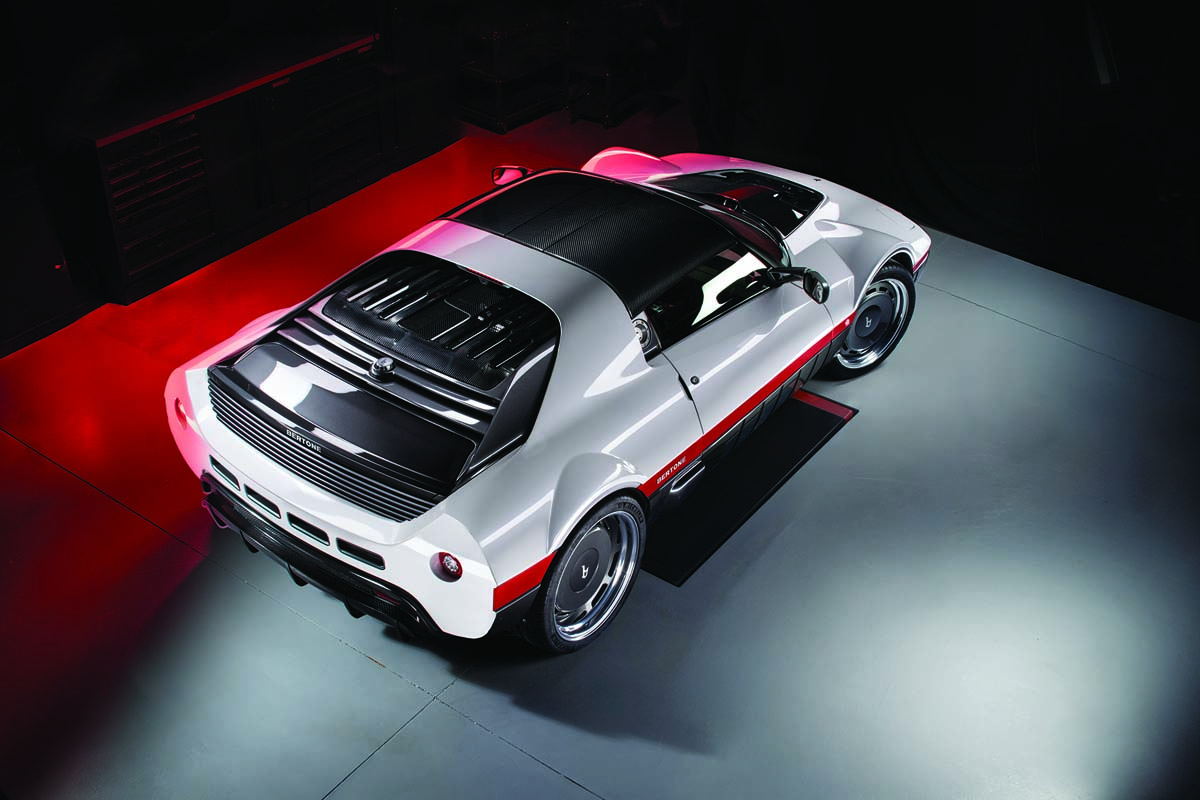
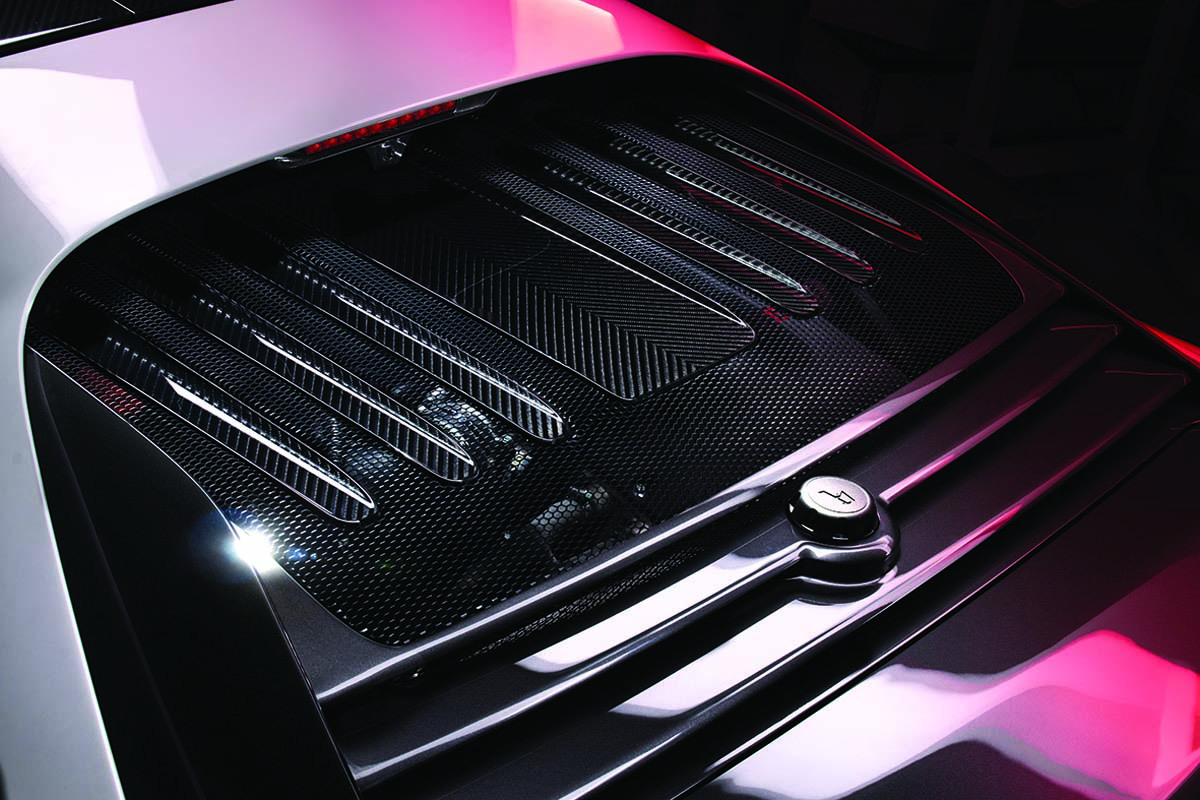
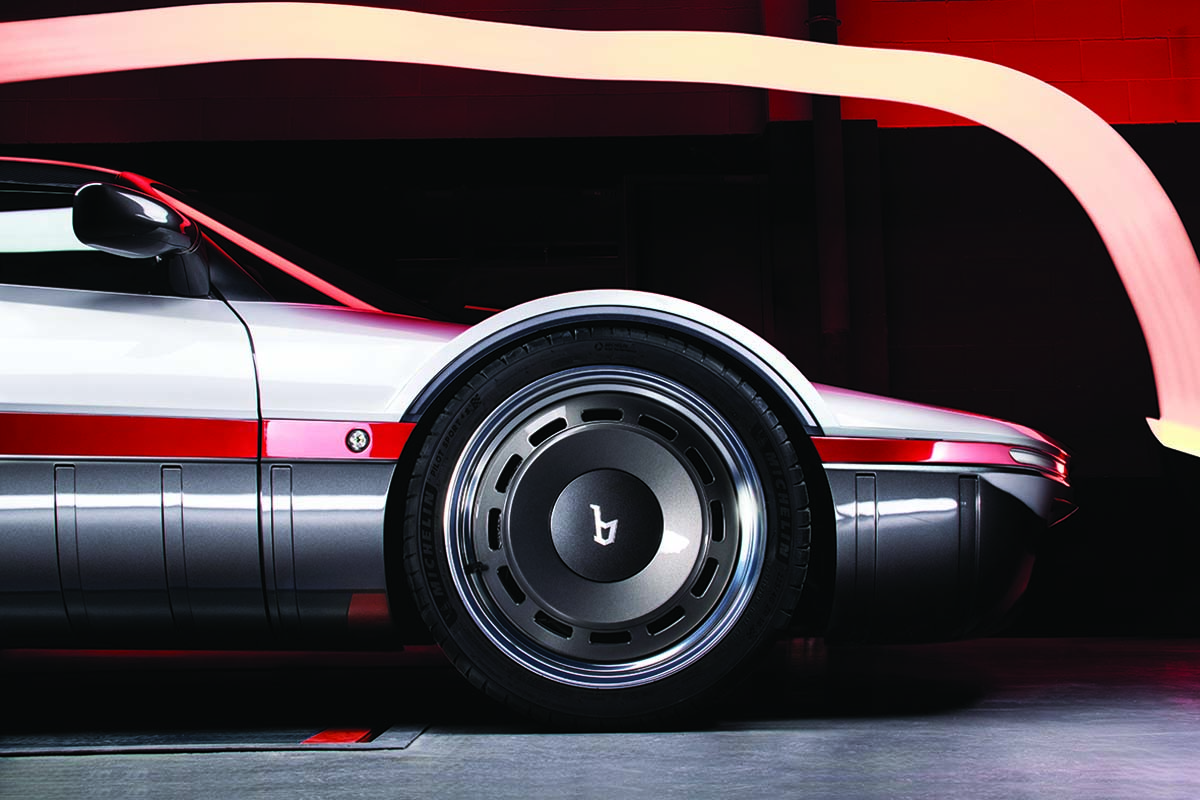
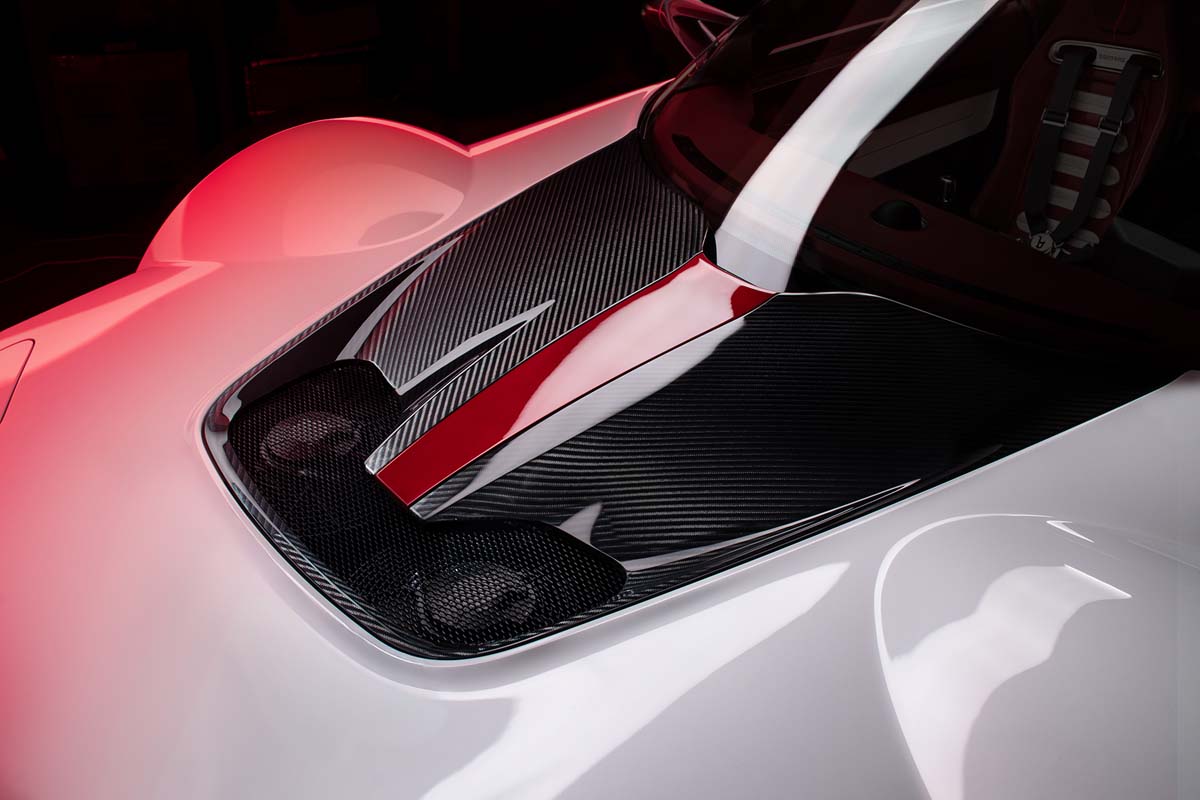
This January, at the Retromobile show in Paris, the production version of the new Runabout was revealed. While the basic shape remained unchanged between the 2024 concept and the 2026 production version, along with the option of open and coupe bodies, there were several detail changes. Aluminium alloy wheels had been changed to a narrower multi-slot design, with restyled carbon fibre engine and radiator covers, too. The targa’s removable roof panel was also changed to a carbon fibre piece as part of a lightweighting mantra that sees the finished car weigh just 1,057kg.
Based on the Lotus Exige’s bonded aluminium chassis, the new Runabout also uses that car’s Toyota-sourced 3.5-litre V6 with an Eaton supercharger. The claimed 354kW and 490Nm (475hp and 369ft/lb) peaks are more than this engine produces in the Exige, with tuning to optimise power delivery in the mid rpm range. Matched to a six-speed manual gearbox, this engine allows the Runabout to reach 100km/h from standstill in 4.1 seconds and hit a top speed of 270km/h.
Big 343mm disc brakes are fitted to all four wheels, which are 18 inches at the front and 19 inches at the rear. Double wishbone suspension all round features adjustable dampers, with adjustable anti-roll bars, too.
Artisan Construction
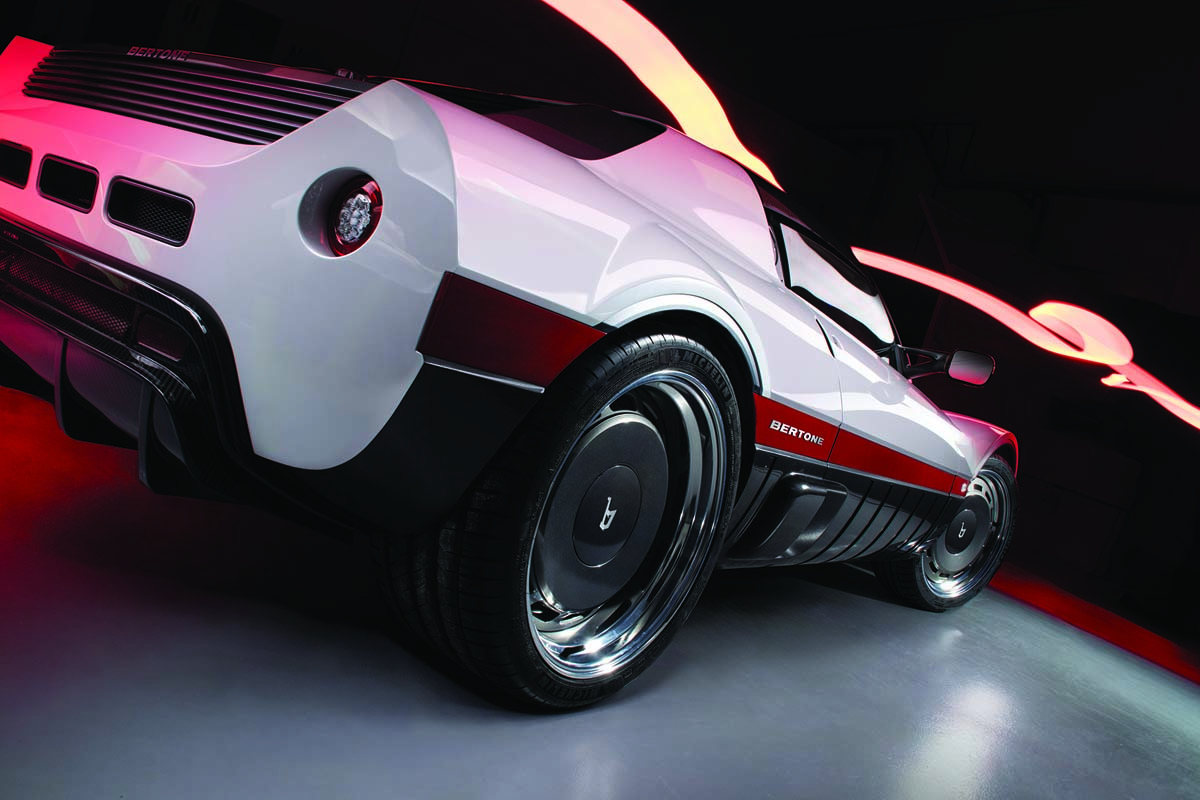
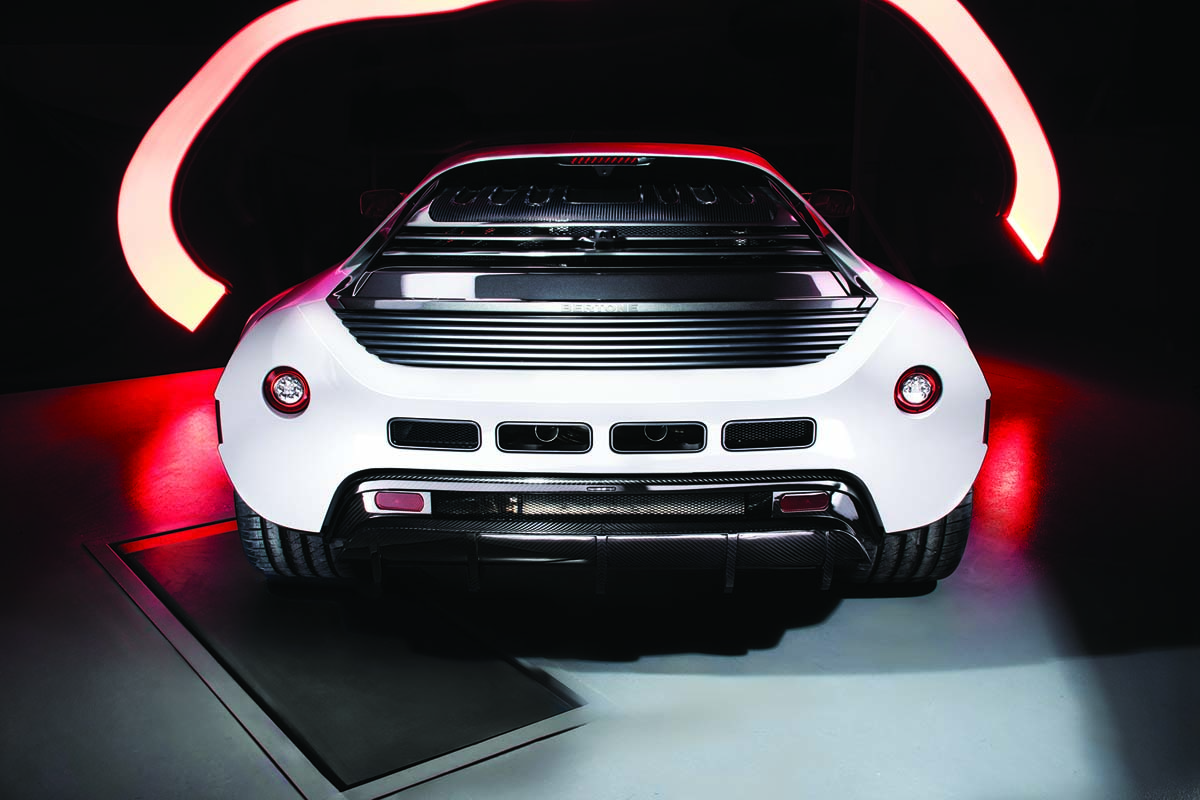
The Runabout body is hand-built from aluminium and carbon fibre, incorporating S-duct channels to feed air to the mid-mounted V6 and optimise cooling for both road and track use. These channels are also said to improve aerodynamic balance without the need for spoilers and wings. A horizontal band around the car’s waist carries Bertone badging on the flanks and LED DRLs at the front. LEDs also feature in the pop-up headlights, which have been outlawed on production cars for decades, but made possible on the Runabout thanks to its low build total (more on that below).
At the rear, the four rubber bumper blocks from the 1969 concept have been reinterpreted as openings for exhaust outlets, with a prominent diffuser added. Tail lights have been simplified to single units, but the rest of the back end stays true to the coda tronca ethos.
Inside, the production Runabout features low-set sports seats using carbon fibre shells and hand-finished leather trim. Milled aluminium detailing, an open shifter gate and tactile switchgear are all deliberate touches, aimed at keeping the interior as basic and analogue as possible.
The dash is simplicity itself, with a digital tachometer as the sole gauge, while a compass in the centre of the dash taps into the Runabout’s nautical inspiration.
Limited Run
The first product of what’s been called the ‘Bertone Classic Line,’ only 25 units of the new Bertone Runabout will be built, with a starting price of €390,000 (AU$670,800 approx.) each. Purchasers will be able to personalise paint, trim and other details of their car, along with matching accessories, via a curated process with Bertone’s Centro Stile design department.
As the Runabout’s platform is the same as a Lotus Exige, it would be possible to build one in RHD for local use, but it’s unknown if there's been any interest from Australia for this exclusive creation.