

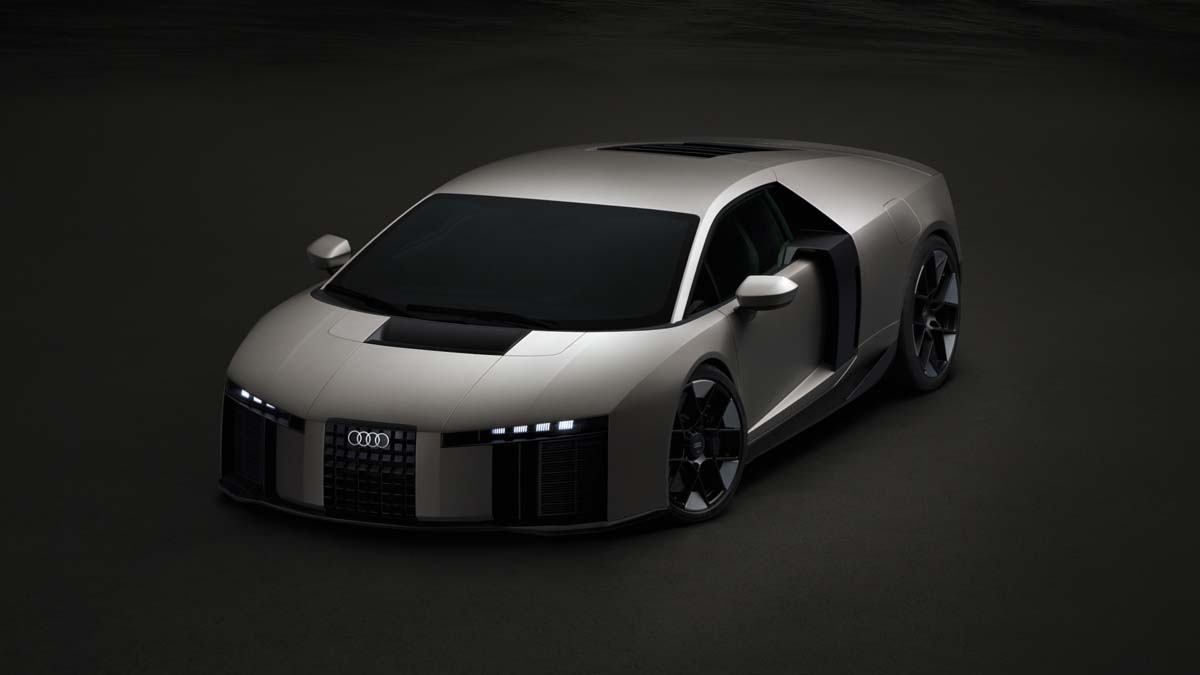
When Audi ended production of their mid-engined R8 supercar in 2024, many thought it wouldn’t be replaced, but a successor has been revealed. The ‘Nuvolari’ revives the spirit of the R8, combining a similar platform with a hybrid drivetrain and new-look styling. It also coincides with Audi’s return to Formula 1 this year after almost a century out of grand prix racing.
“With the Audi Nuvolari, we are accelerating technological progress,” says Gernot Döllner, Chairman of the Board of Management of AUDI AG. “It shows what is possible when the focus is on technology, performance and execution through teamwork — and when we achieve progress together.”
Historic Connection
Audi’s new supercar takes its name from Tazio Nuvolari, the Italian driver who raced for the likes of Alfa Romeo, Bugatti and Maserati in grand prix competition throughout the 1920s and ’30s. Successful with these marques, Nuvolari’s connection to Audi came after he was lured out of retirement to drive for Auto Union from 1938 to 1939. At the wheel of the mid-engined V12 Type D racer that others found difficult to master, Nuvolari won his last significant races in this vehicle, including the Italian and Donington GPs in 1939.
Nuvolari raced briefly after World War II, winning some minor grands prix, along with a class victory in the 1947 Mille Miglia, but had retired from racing again, this time permanently, by the time the Formula One World Championship we know today held its first season in 1950.
New Nuvolari
Described as the most powerful and fastest production vehicle Audi has ever offered, the Nuvolari is based on Lamborghini’s Temerario, using the same hybrid drivetrain, based around a V8 and multiple electric motors.
At the heart of this hybrid drivetrain is a mid-mounted 4.0-litre biturbo V8 that revs up to 10,000rpm, and produces 588kW and 730Nm in isolation. To this, three axial flux electric motors are added - two on the front axle and a third between the V8 and the transmission – plus a 7.3kWh lithium-ion battery. Each electric motor produces 110kW, with the two front motors delivering up to 2,150Nm of torque.
Combined output from the hybrid drivetrain is listed at 736kW, which is around 60kW more than the same combination in the Temerario. Zero to 100km/h acceleration is achieved in 2.6 seconds (0.1 sec faster than the Temerario), and 0-200km/h in 6.8 seconds, with a listed top speed of 350+km/h.
The hybrid drivetrain’s energy management system is inspired by motorsport experience, continually controlling power and energy recovery. Adaptive technology allows energy recovery in almost all driving situations, while also maximising the impact of the Nuvolari’s Launch Control.
For stopping, a package combining electric and hydraulic systems allows the brake pedal to be effectively decoupled from the actual braking force, ensuring better pedal feel. Derived from F1 experience, a Ceramic Pro braking system features 420x40mm front discs with ten-piston calipers, 410x32mm rear discs with four-piston calipers, plus a special internal cooling system for the discs themselves.
Smart Quattro
Audi's 'quattro predictive ride’ system in the Nuvolari processes the current driving state based on detailed sensor data — including steering angle, acceleration, yaw rate and grip level — continuously feeding that information into the all-wheel drive control system. If a potential loss of grip is detected in a corner, the system responds proactively, distributing torque precisely in both longitudinal and lateral directions.
Audi adds that the electric motors on the front axle are a key element of this predictive dynamics system, enabling variable torque vectoring for agile cornering and stability, even at high speeds or in slippery conditions like wet or snowy roads.
“With the Audi Nuvolari, our entire team has once again demonstrated its technical expertise, innovative strength, and dedication,” says Rouven Mohr, Chief Technical Officer at Audi. “This is reflected not only in the vehicle’s performance and its Formula 1-inspired technologies, but also in the ability to transfer innovations quickly and precisely into a production vehicle.”
Intervention of the quattro system can be controlled via four driving modes. Selectable on the steering wheel, the modes are ‘E-Hybrid,’ ‘Balanced,’ ‘Dynamic’ and ‘Dynamic+’.
E-Hybrid uses electric power only, with Balanced adjusting drivetrain input to provide the best mix of comfort, efficiency and performance. Dynamic sharpens the throttle response, steering and traction control, while Dynamic+ ramps that up even further for “an emotional driving experience”.
Understanding that most Nuvolari buyers will want to enjoy their cars on a closed circuit, the Nuvolari also features a Track Mode that allows traction control to be adjusted or deactivated entirely.
New Look, F1 Inspiration
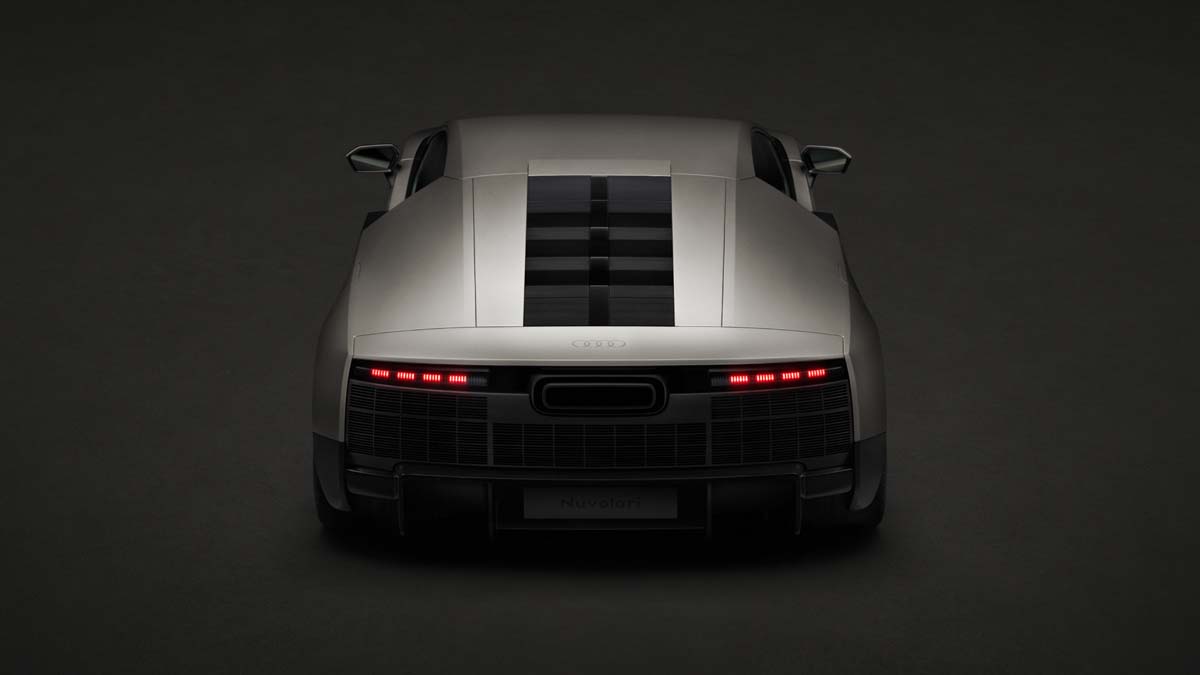
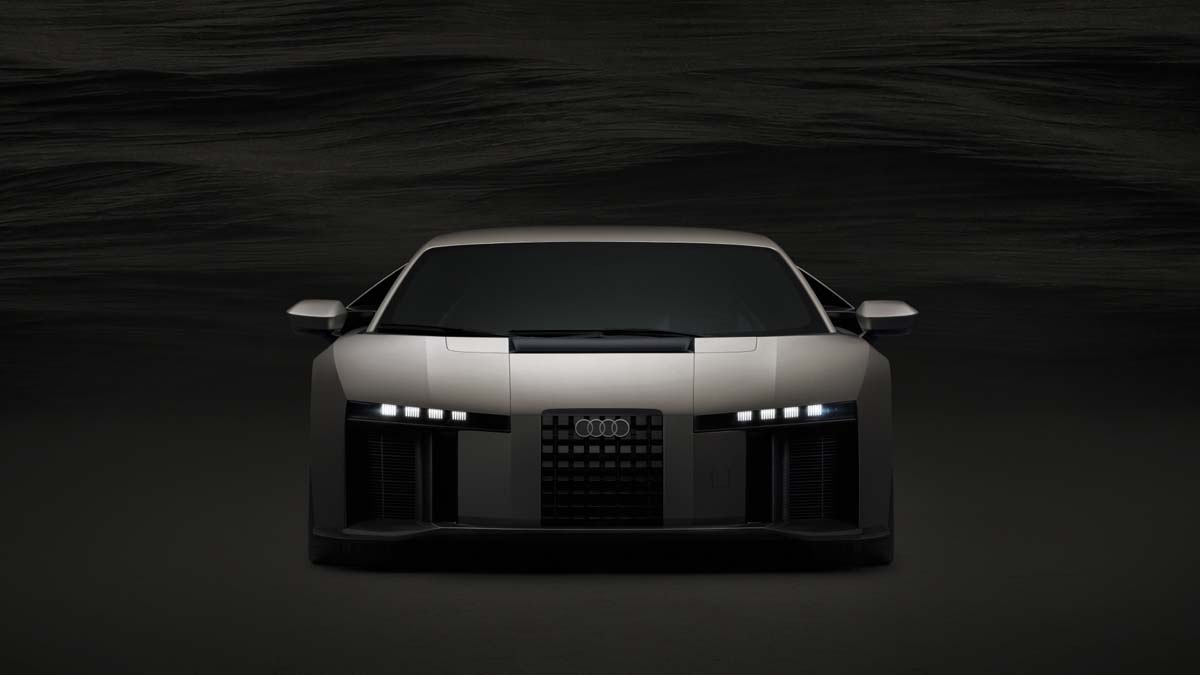
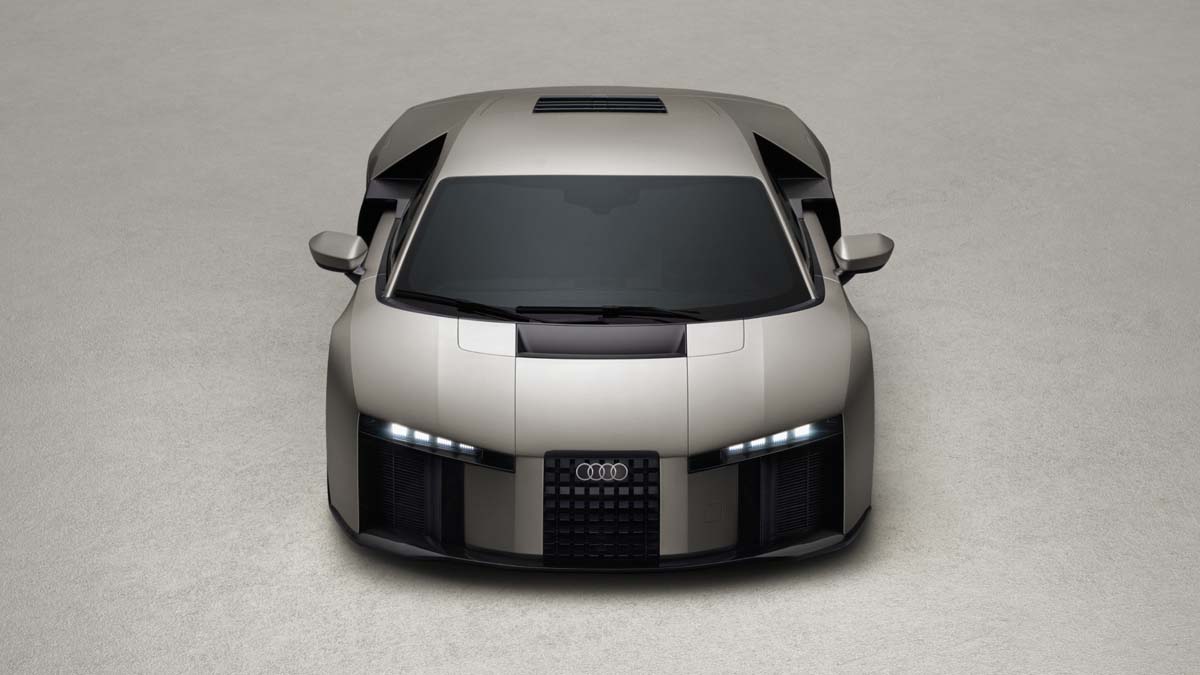
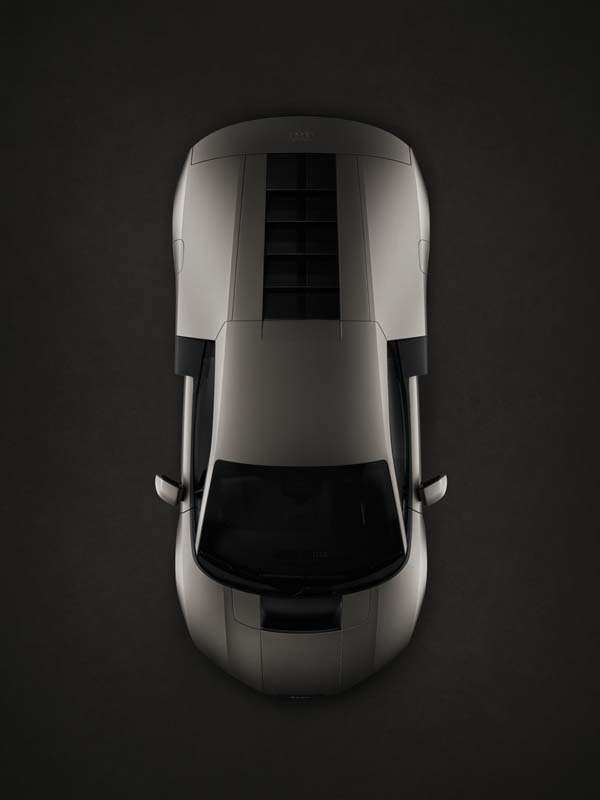
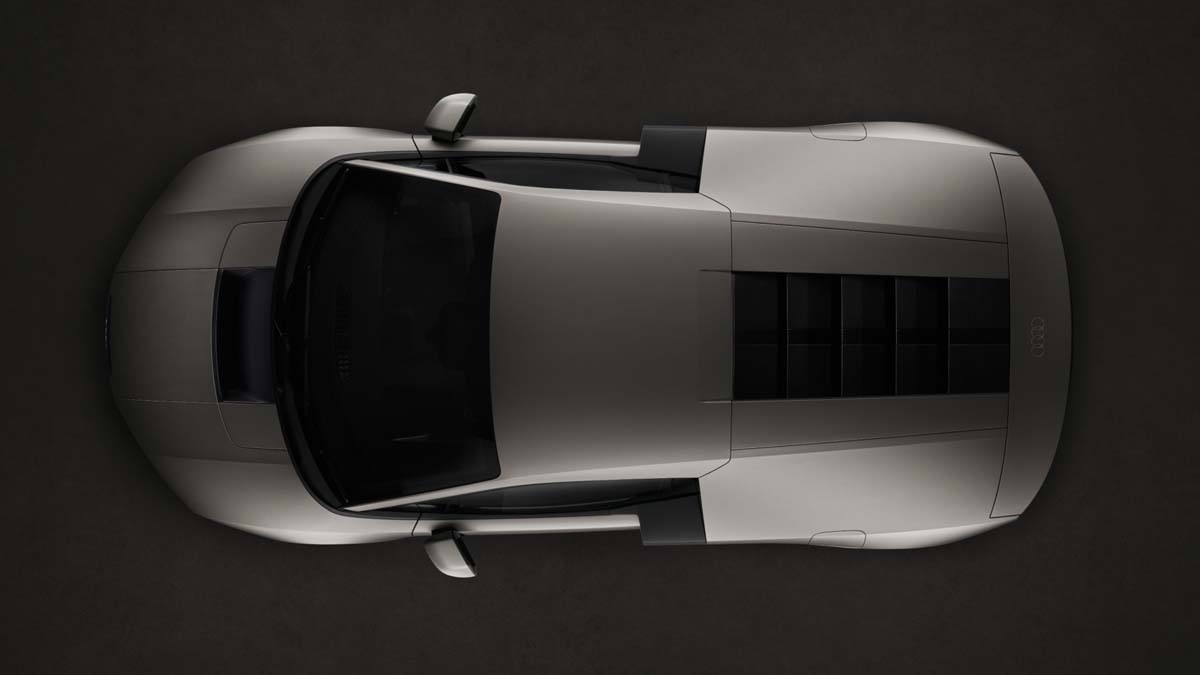
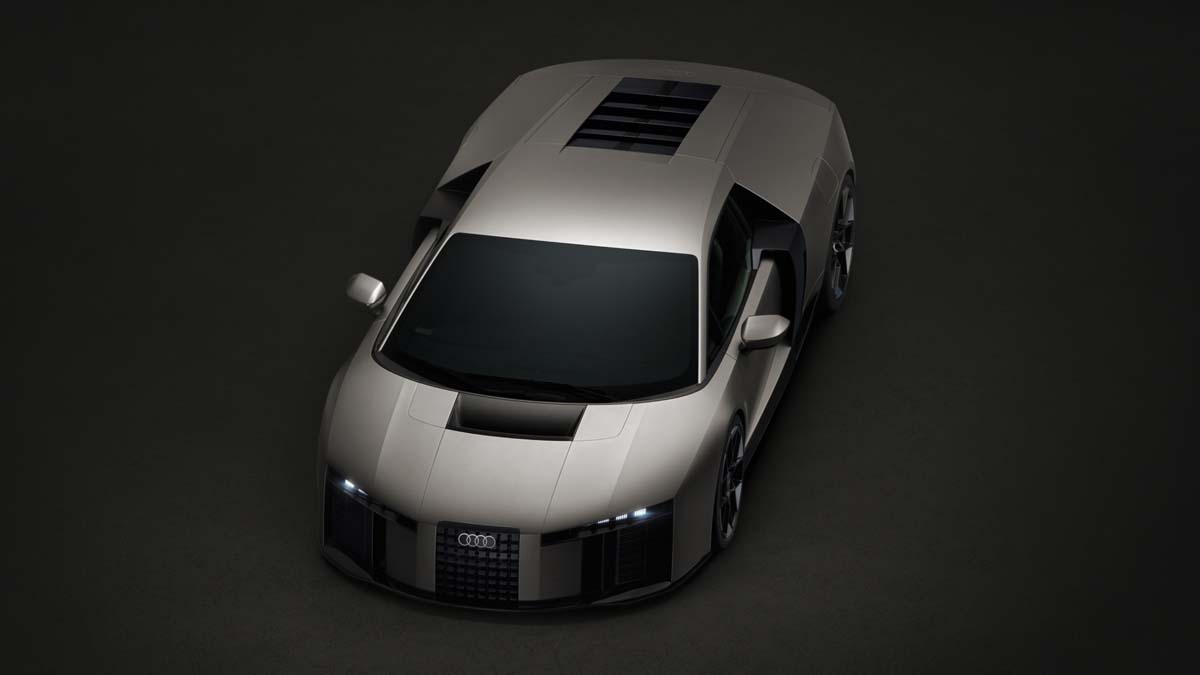
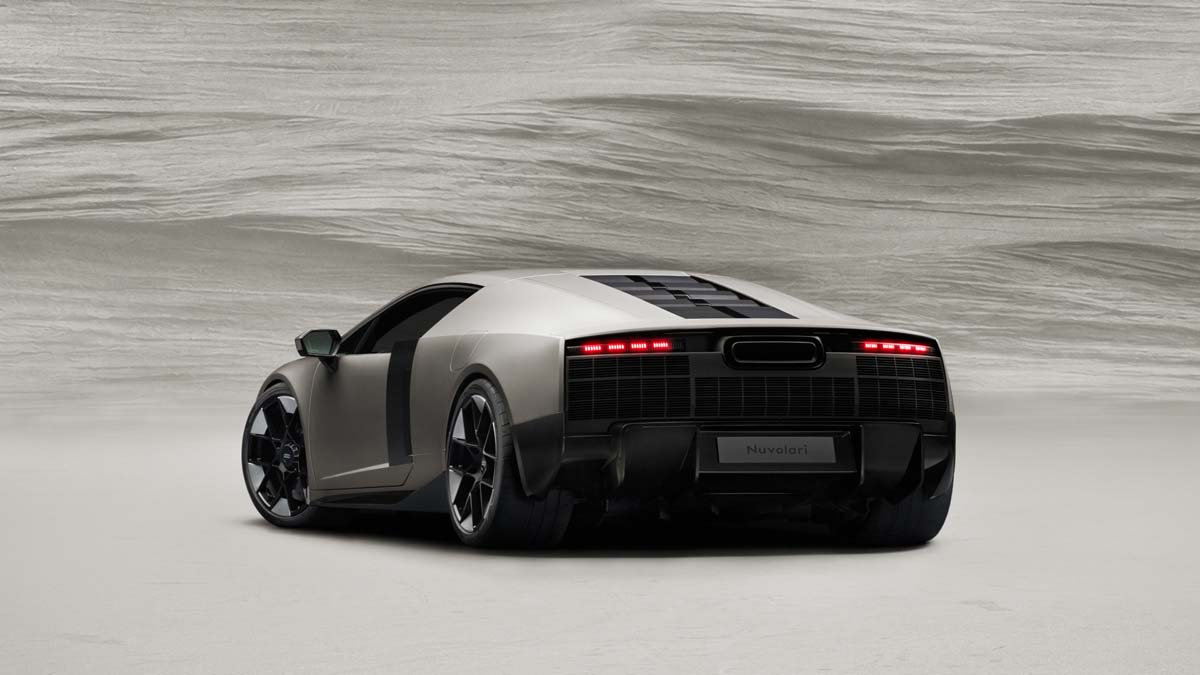
The slab-sided styling seen on the Concept C that was unveiled last year has been transferred with few changes to the Nuvolari and marks the first expression of Audi’s new design philosophy in a production vehicle. While traces of the R8 are visible, the new car looks more solid - Audi describes it as “monolithic”. And while it looks like it’s been hewn from a single block of steel or aluminium, virtually all the exterior panels are carbon fibre reinforced polymer.
Applying F1 technology, the panels are shaped under high pressure and at high temperature to minimise weight and maximise strength. The space frame chassis underpinning these panels is a first for Audi, also combining low weight with high strength, which in turn allows the drivetrain and quattro system to perform at their best.
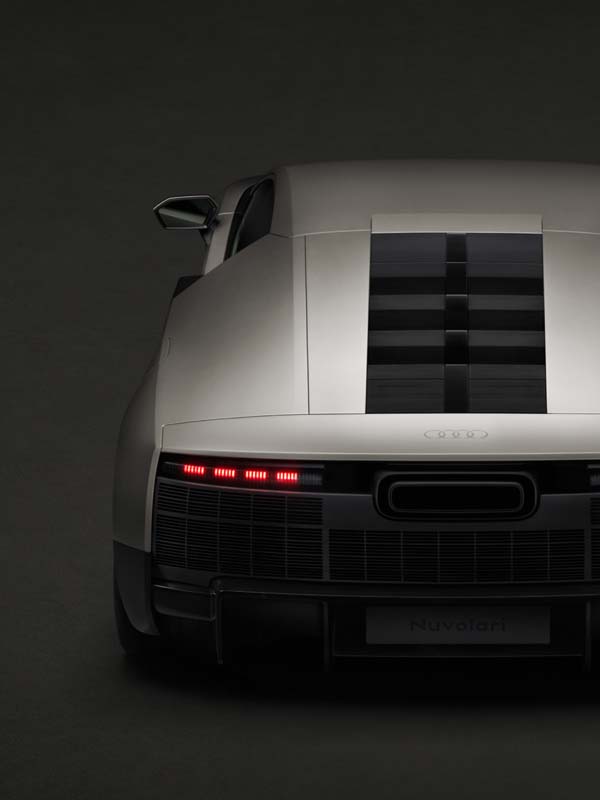
The exterior is finished in ‘Titanium,’ a new signature colour that’s also applied to Audi’s F1 cars and was inspired by the Concept C. This is accented with raw carbon fibre elements, particularly around the engine air intakes, in the style of the R8. The Nuvolari introduces another production car first for Audi in centre-lock wheels. These are 21-inch in size.
Active aerodynamics are drawn from F1 experience (including feedback from Audi F1 drivers Nico Hülkenberg and Gabriel Bortoleto), ensuring maximum stability and precise control. Front aero sections cool the brakes and reduce lift, as does an extensive rear diffuser. An adaptive rear wing is three-position adjustable and can deploy automatically, depending on the drive mode, delivering up to 400kg of downforce.
Minimal Interior
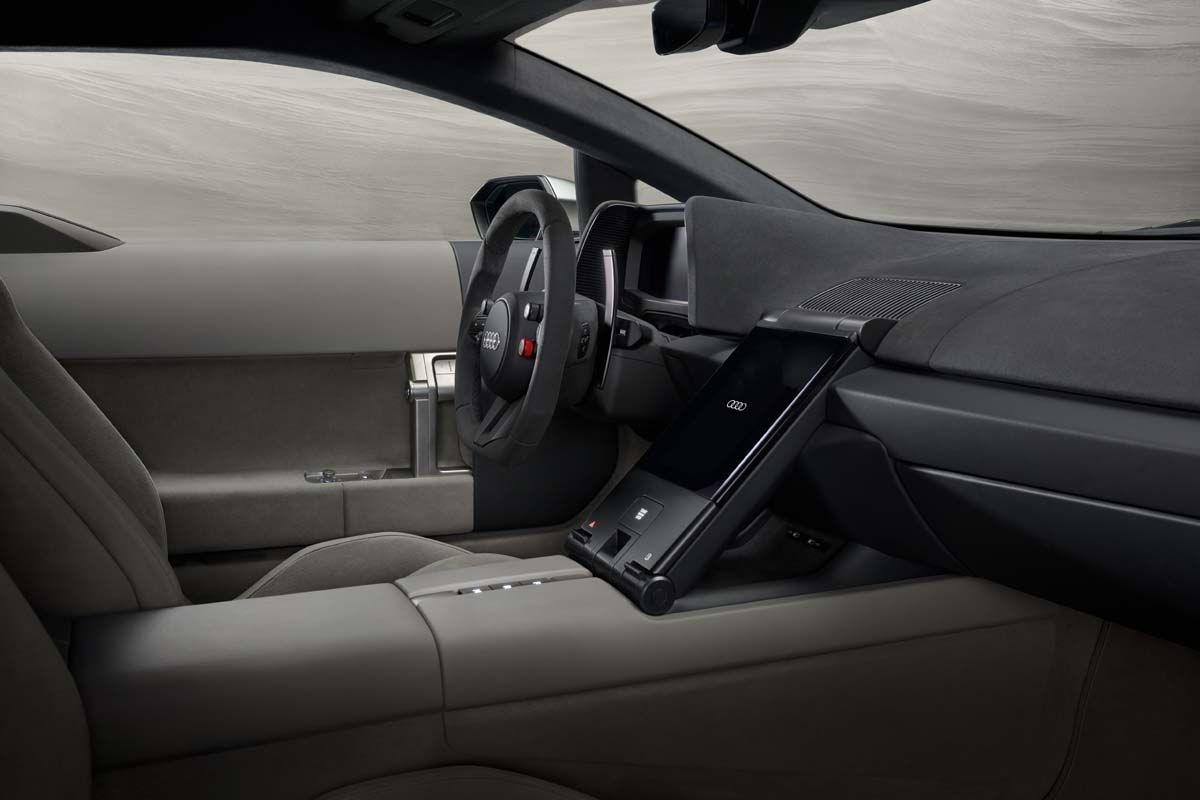
A minimalist, driver-centric approach to the Nuvolari’s interior concentrates all essential controls and vehicle functions within the driver’s forward vision. Both the instrument display and centre console displays are digital, with minimal switchgear beyond the steering wheel.
Anodised aluminium and carbon fibre has been used on some interior elements, while colours are said to be inspired by Auto Union Type C racers from the 1930s. The interior also features themed “zones,” with deep, dark tones in the front, and a lighter tone in the rear.
Strictly Limited
Unlike the R8, production of the Nuvolari will be limited to only 499 examples. Manufacture of the new car will start early next year for selected markets. An Australian release was unconfirmed at time of writing, but unlikely, as some reporting suggests the Nuvolari will only be produced in LHD.
The last R8s to be released new in Australia back in 2021 cost almost $300,000 (or $400,000+ for the Performance variant), so if an RHD version of the limited-edition Nuvolari was made available here, it would likely cost close to $1 million.


