

Words: Mike Ryan
Photos: McLaren Automotive
Think McLaren supercars and the likes of the MP4-12C, Senna, P1, 675LT, 570S and Artura may come to mind. But decades before these models, and even well before the iconic F1, McLaren had built another ‘race car for the road’.
McLaren’s ‘M6 GT’ from 1969 was essentially a roadgoing version of their M6B Can-Am car. In the Canadian-American Challenge Cup for sports prototypes – better known as Can-Am – McLaren had been particularly successful. The V8-powered M6 and M8 roadsters developed by Bruce McLaren would win the championship each year from 1967 to 1971. McLaren himself took the honours in 1967 and 1969, with team mate Denny Hulme champion in 1968 and 1970, followed by Peter Revson in 1971 – all in derivations of the McLaren M6 and M8. Here in Australia, John Harvey won back-to-back Australian Sports Car Championships in 1971-72 with a McLaren M6B powered by a Repco V8.
At the end of the 1960s, McLaren’s results in Can-Am made a move into Group 4 sports car racing with an enclosed version of the M6B roadster seem attractive. However, while Can-Am was largely unrestricted, there were tighter regulations in Group 4, including the requirement to homologate cars for competition. That homologation total had been set at 25 units, which was a doddle for major manufacturers like Ferrari, Porsche and Ford, but a stretch for McLaren, which was still something of a shoestring operation at the time.
When the FIA upped the homologation requirement to 50 cars, that put a Group 4 entry out of the question entirely, but it didn’t extinguish Bruce McLaren’s dreams of a Can-Am car for the road.
Big Power, Small Number
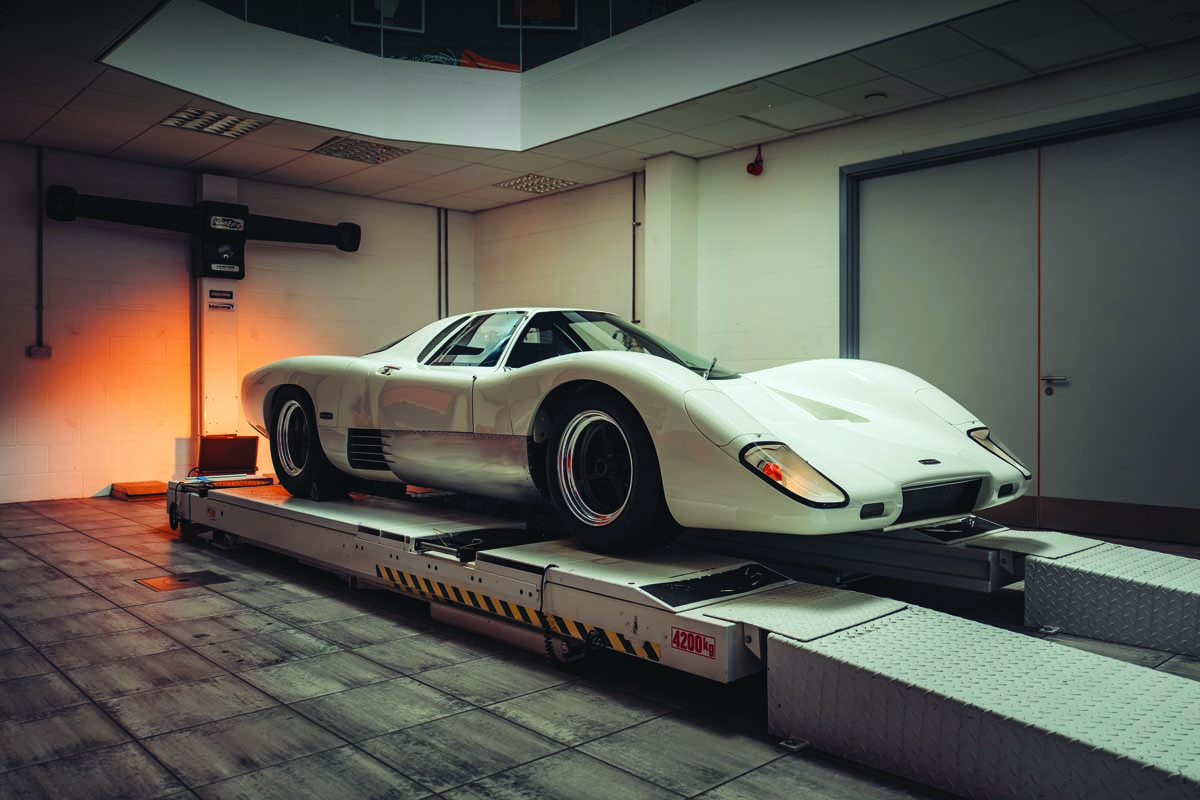
Wearing the tag of ‘M6GT,’ the first road-legal McLaren car was built in early 1969. Combining a fibreglass monocoque coupe body with an M6B spaceframe chassis, the M6GT also featured competition spec suspension. Coil springs front and rear were combined with lateral links and trailing radius rods at the front, while the rear used lateral top links, lower wishbones and twin radius rods. Powered by a mid-mounted Chevrolet V8, matched to a rear transaxle, the M6GT was capable of 150+mph, all while being road registerable – at least in the UK.
While the first M6GT built went to a McLaren customer and was used mainly in competition (including for a period with a roadster body fitted), the second was owned and driven by Bruce himself. Confusingly, Bruce’s car wears chassis ‘M6GT-1’ but was the second example built, sometime in early 1970. Compared to ‘M6GT-2-R,’ which was the first car built, M6GT-1 featured softer suspension, thicker fibreglass for the body constriction and was better trimmed inside, although appointments were still rudimentary. A curiosity with McLaren’s personal car is that it featured pop-up headlights that had to be raised and lowered by hand.
When Bruce McLaren was killed testing one of his M8D race cars at Goodwood in June, 1970, the GT programme ground to a halt after just two cars were completed. However, a third M6GT was built by Trojan, who did the actual assembly work for all of McLaren’s customer cars at the time. That car was shopped around at a number of shows, but failed to spark renewed interest in the GT. Since then, a handful of M6GT tributes have been built up by individuals, using M6 and M12 roadsters as a base.
The two ‘genuine’ GTs have passed through several hands over the years, with M6GT-1 now residing in Chicago and M6GT-2-R believed to be in Hong Kong.
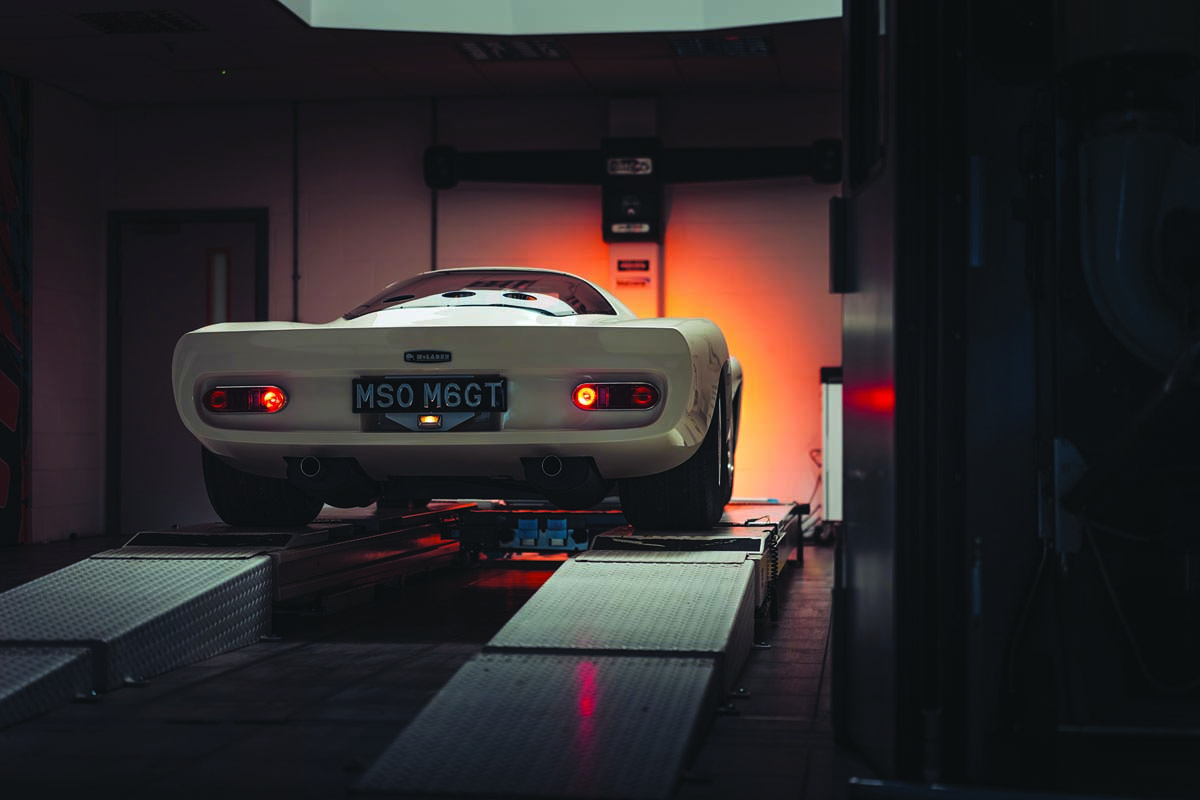
Now, there’s a third M6GT, and this one is more “McLaren” than the originals, as it was built by the modern carmaker’s ‘McLaren Special Operations’ division.
MSO Finesse
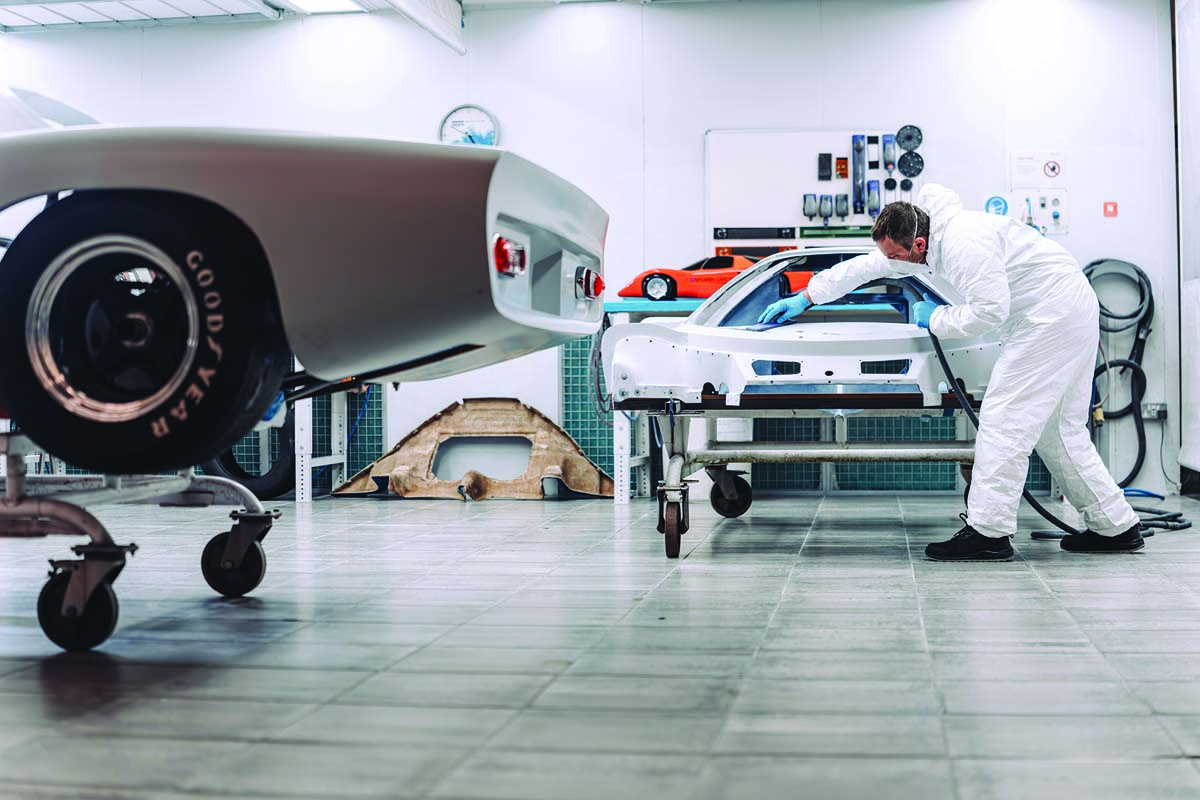
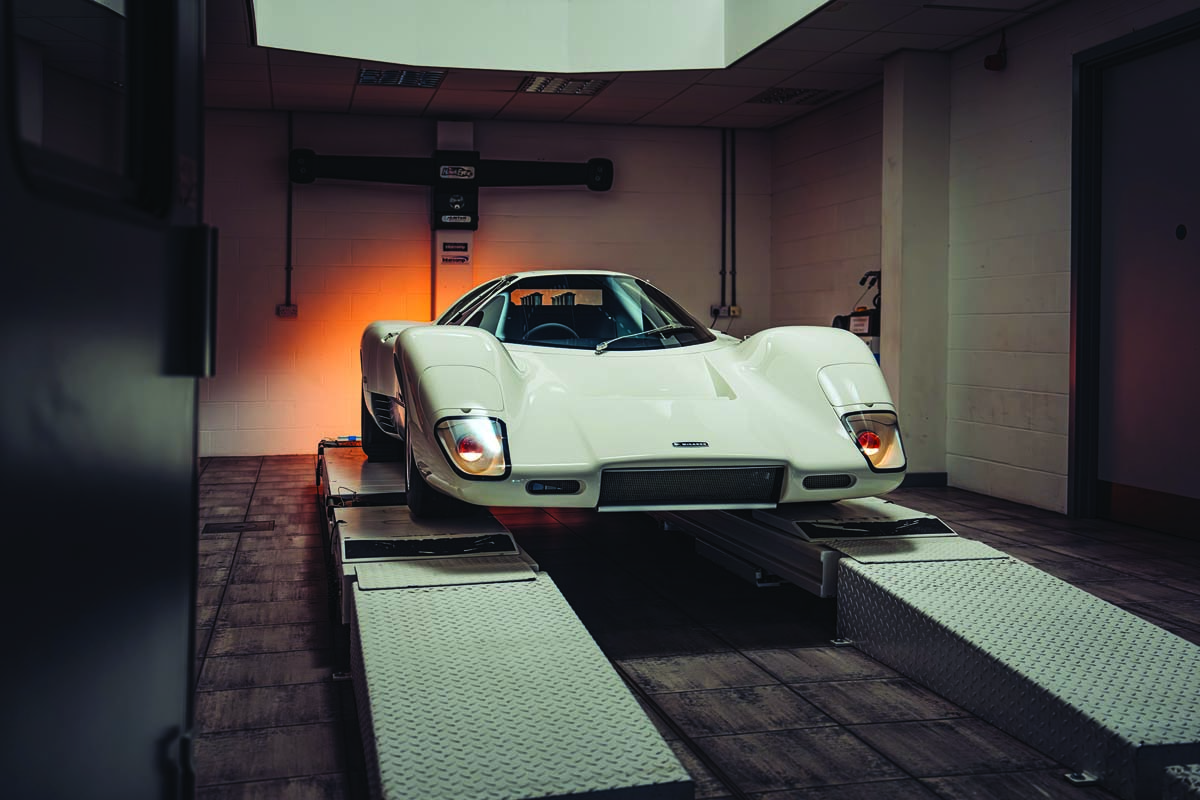
While described as a restoration by McLaren Special Operations (MSO), it’s perhaps a little more accurate to describe the M6GT featured as a creation, as it combines period-correct GT elements and a genuine M6A chassis with many new components, including all-new fibreglass bodywork using the original moulds.
The engine, a small block Chev V8, is fitted with correct ‘camel hump’ cylinder heads, while the complex suspension uses the same componentry as the original M6GT – right down to imperial-era bearings that are no longer built and had to be sourced from old stock.
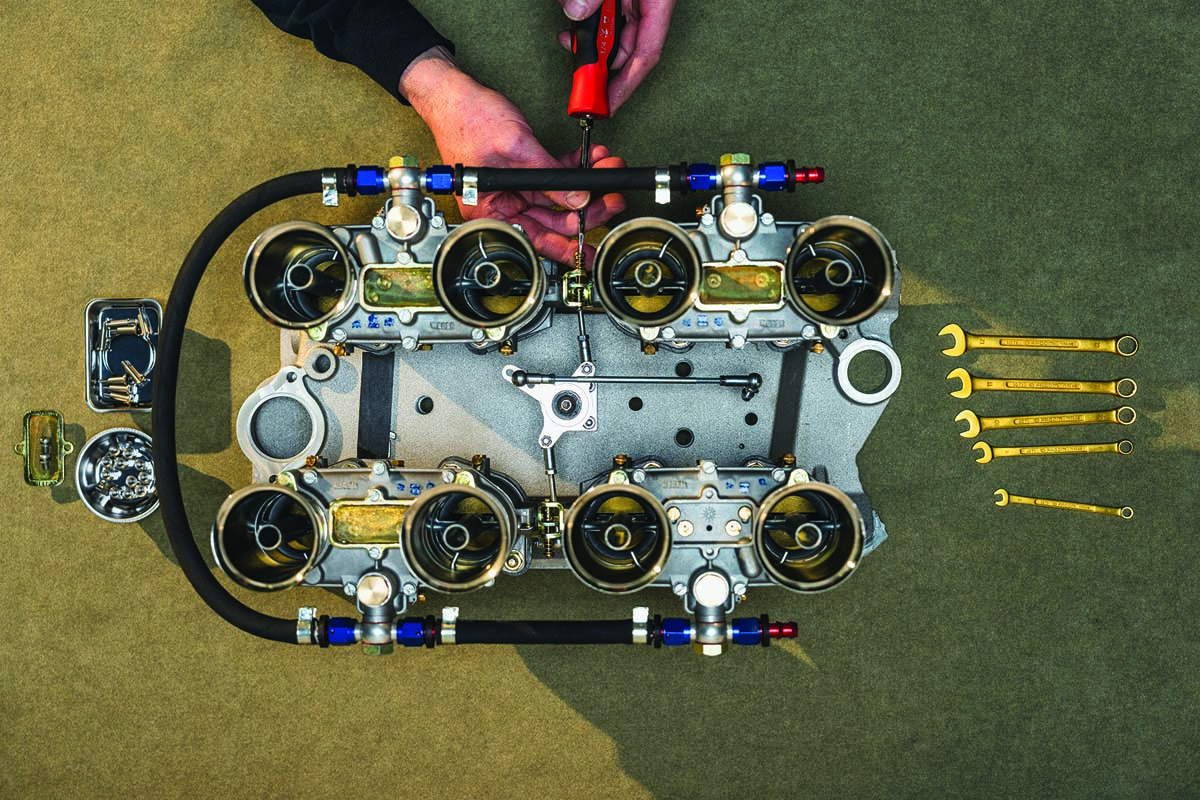
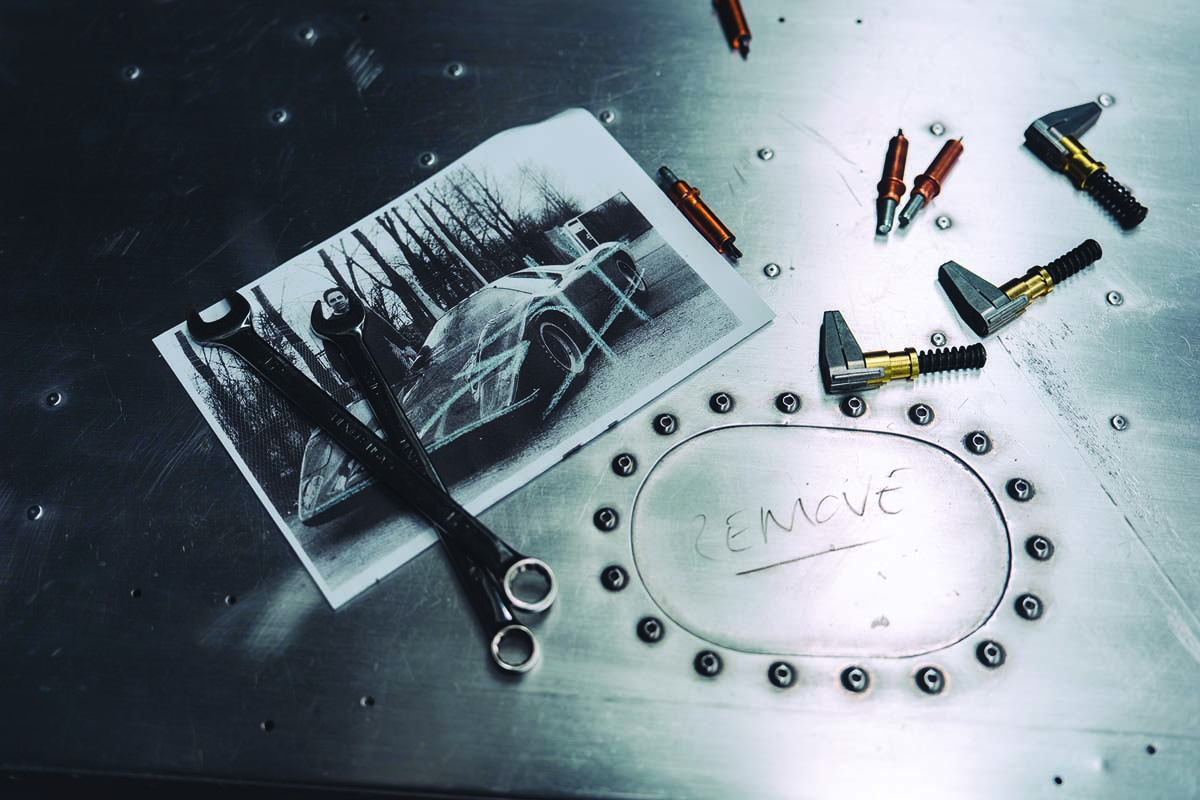
Constructed as a new car from the ground up, this M6GT remains 100 per cent faithful to the original, with period photographs and original materials used to ensure authenticity. MSO say they treated this project not as a new build, but an act of custodianship.
The M6A chassis was inspected and verified against vehicles with known provenance to ensure authenticity. After locating the original body moulds, MSO found evidence of period modification – most likely referring to the difference between the headlight treatment on the original two cars.
White is Right
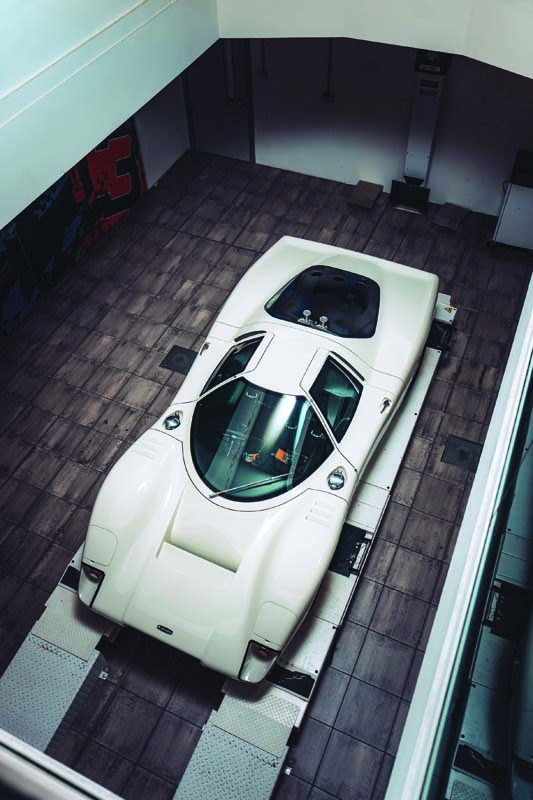
For the exterior finish of this car, one might have expected McLaren’s signature Papaya orange, as on the first M6GT built, or perhaps red as a nod to McLaren's own M6GT. MSO chose neither, instead creating a bespoke creamy white called ‘Colnbrook’. The colour references the finish of McLaren’s first F1 car, the 1966 M2B, while the green stripe on that car inspired the M6GT’s interior treatment.
The name for this shade comes from the factory where the original M6GT was developed. This was under the flight path of London Airport – now Heathrow Airport – with the location apparently chosen so Bruce didn’t have to journey far from his day job when flying to race meetings all around the world.
Authentic to the Smallest Detail
Surrounding the race car-derived cockpit, MSO sourced new glass and Perspex from a specialist supplier, then added hidden structural elements, like a roll hoop and rear frame support. Although not visible on the finished car, these and other elements, like the wiring harness, received the same attention to detail as the visible exterior features and in-cabin appointments.
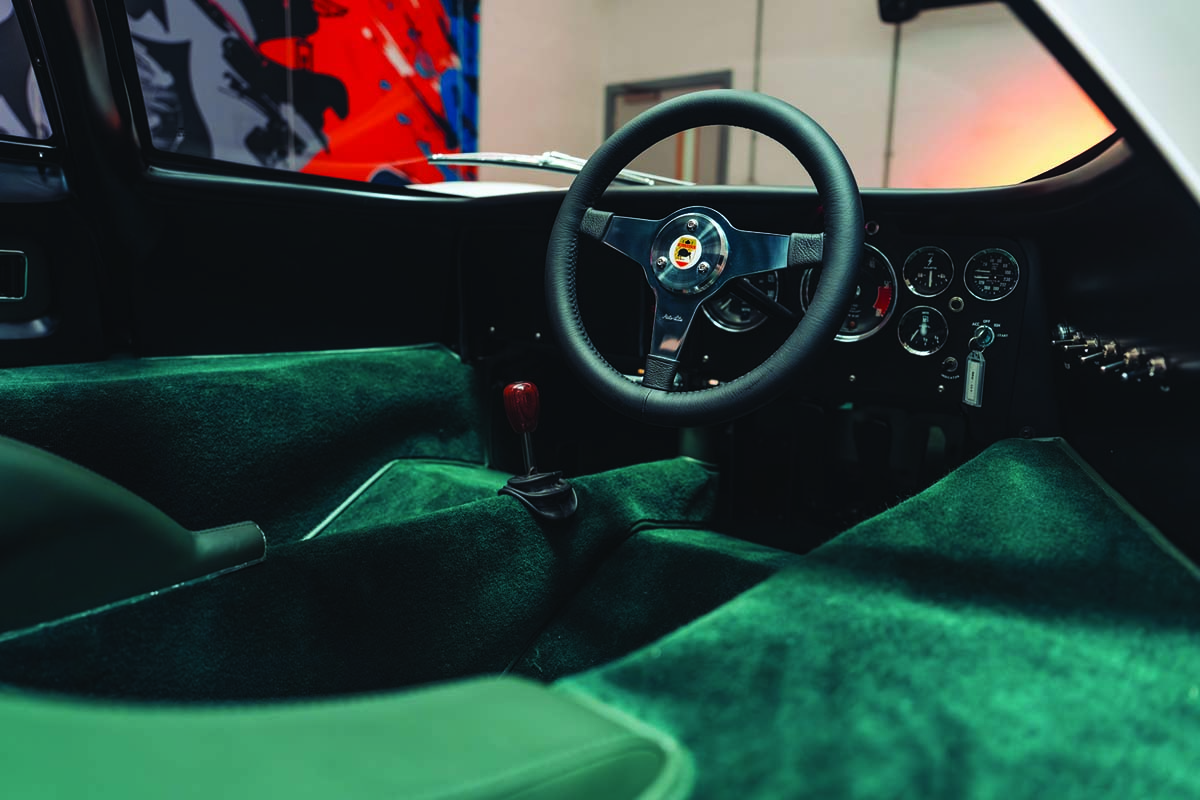
Of the cabin, entry isn’t exactly easy thanks to the broad sills that are actually the fuel tanks. And once seated, accommodation for two is tight. Authentic interior features include vinyl for the pair of sports seats that incorporate heat-seam detailing in green. This is said to have been inspired by McLaren’s racing heritage, with matching green carpets fitted, too.
Period instruments (a mix of Jaeger and Smiths gauges) sit ahead of the vinyl-wrapped Moto-Lita steering wheel, while the stubby gear shifter is capped with a turned Walnut knob. Indicators are operated from a dash-mounted toggle switch, but the push-button horn is mounted to the driver’s right, where there’s also a bank of additional toggle switches for the wipers, fan and lights.
Goodwood Debut
Unveiled at the 2026 Goodwood Festival of Speed, the new M6GT shared space at ‘McLaren House’ with other restored models from McLaren history, like an Austin Seven Ulster, F1 GTR and M8A from the 1968 Can-Am season, as well as modern supercars from McLaren Automotive.
“The M6GT: Restored by MSO has been a labour of craft and care for the team and served as both a technical education and a living reminder of Bruce’s ambition to take McLaren beyond the racetrack,” said Jon Simms, Director, McLaren Special Operations.
“This car occupies a unique place in our collection – a tribute to the very beginnings of the company and a spiritual education for its future.”


