Words: Mike Ryan | Photos: Mecum Auctions
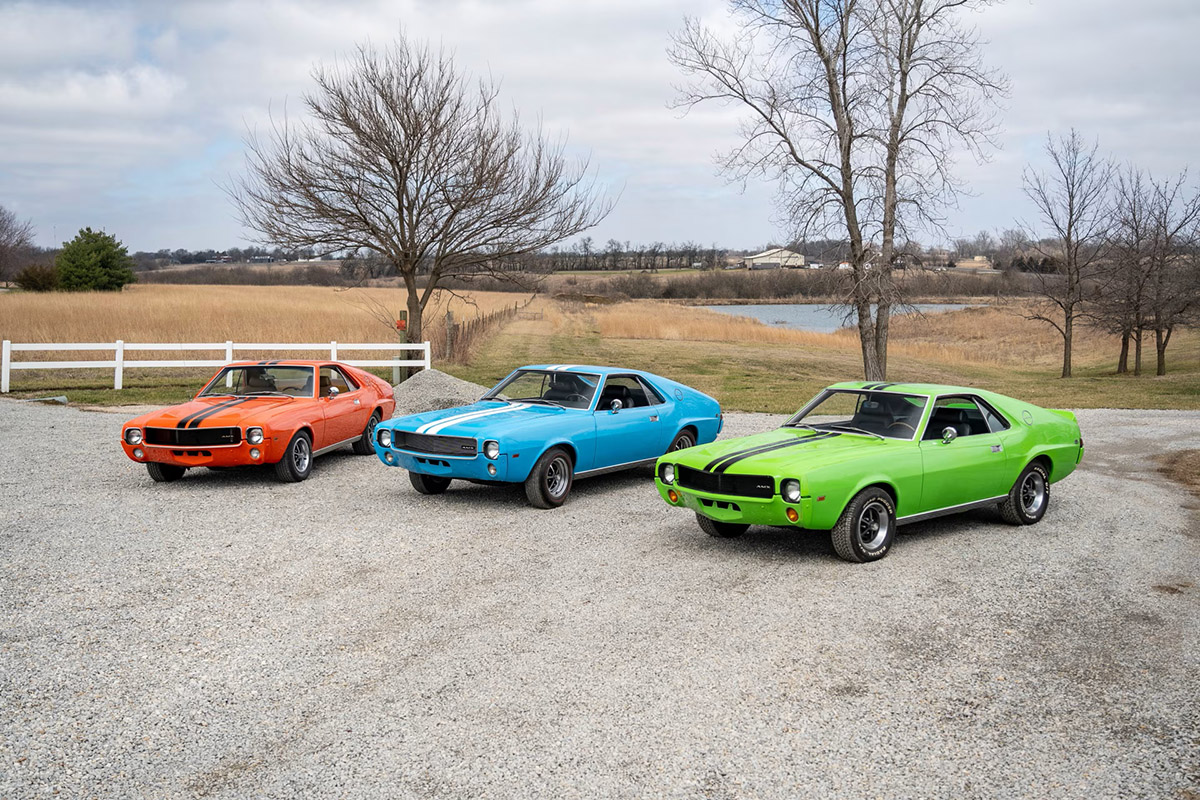
For a handful of years from the late 1960s to the early 1970s, carmakers went a little mad, offering some eye-catching and unforgettable colours with equally memorable names. All the major US brands brightened their palettes at this time, but American Motors were first – with the ‘Big Bad Colours’.
Being a small player compared to the Big Three of Ford, GM and Chrysler, American Motors Corporation (AMC) always had to make dollars stretch further, do more with less or occupy market niches the Big Three didn’t. For a period, that worked well, with AMC’s compact Rambler meeting a need for smaller, simpler and more economical cars when times were hard. Studebaker enjoyed similar success with their Lark before the Valiant, Falcon and Corvair landed to dominate the “compact” car market in the US.
By the mid-1960s, changes at the management level led AMC to take on the Big Three head-to-head with larger cars and luxury models. AMC also entered the ‘Pony Car’ market that had been spawned by Ford’s Mustang with the Javelin. In February, 1968, four months after the Javelin launched, the ‘AMX’ arrived.
Just for Two
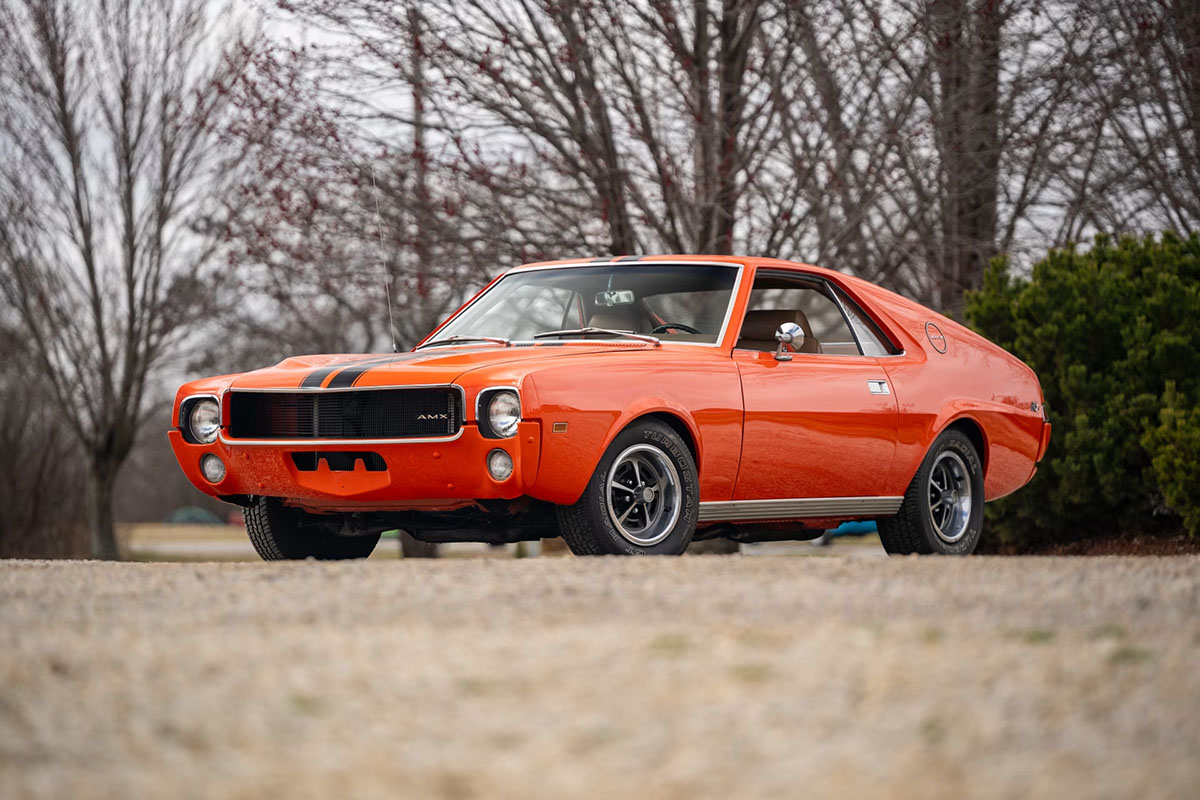
When it debuted, the AMX (standing for American Motors eXperimental) was the first two-seat, steel bodied volume production car from an American manufacturer since Ford’s original Thunderbird more than a decade earlier.
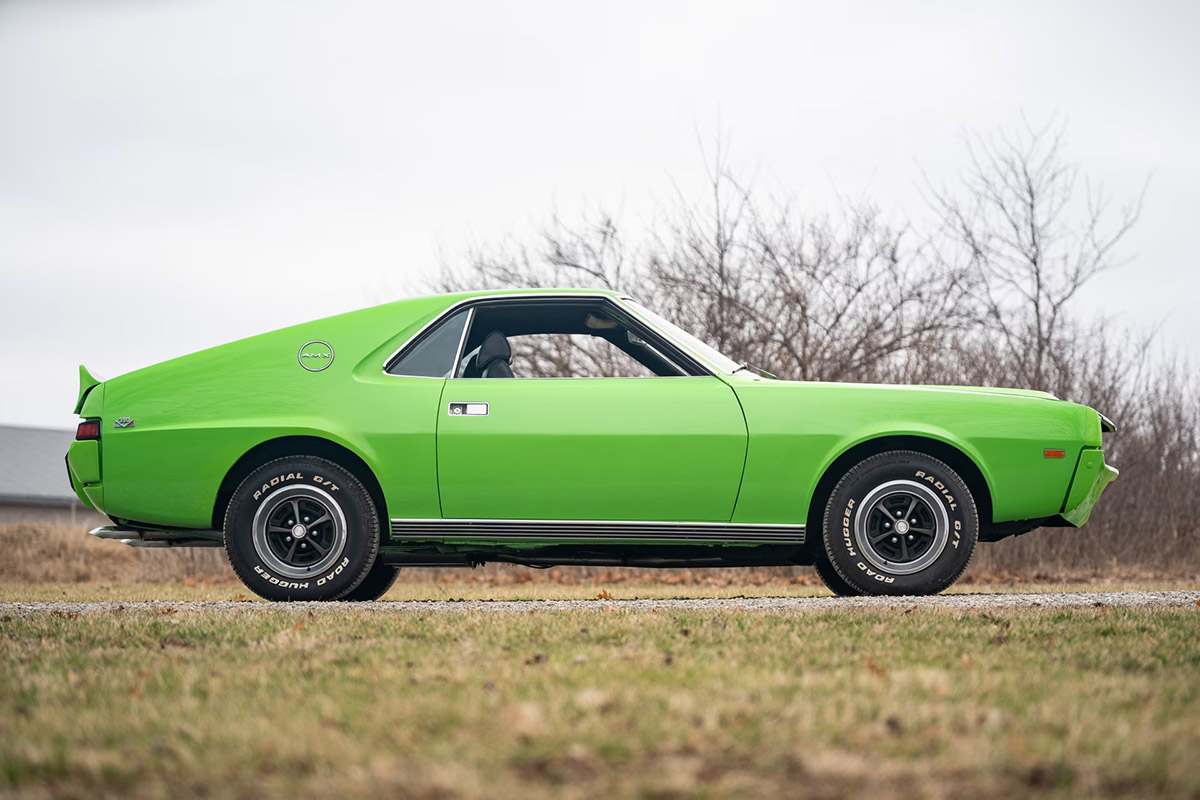
While the AMX-badged concept from 1966 looked like something from George Barris’s workshop, the production version for 1968 had a very familiar look to it. To save money on what AMC knew would be a niche model, the AMX used the same sheetmetal as the Javelin from the B-pillar forward. Behind that, a shortened wheelbase (at 97 inches, a full 12 inches shorter than the Javelin) and heavily-docked tail were the unique body elements. The other point of difference was the running gear.
While the Javelin could be ordered with an everyday six-cylinder engine from AMC’s range of powertrains, the AMX was only offered with a V8. The base engine was 290ci, producing 225hp, with 343 (280hp) and 390 (315hp) V8s optional. The latter was introduced specifically for the AMX, but could be optioned for any AMC car in 1968. Available transmissions were a four-speed manual and three-speed automatic, both using a floor shifter.
To enhance performance, AMC offered the optional “Go Package”. Only available with the 343 or 390, this added heavy-duty suspension and cooling components, wider wheels and performance tyres, power-assisted front disc brakes and a ‘Twin Grip’ limited slip diff. So equipped, an AMX blurred the line between sports car and muscle car.
While the Go Package was optional, the standard gear was still pretty impressive, including dual exhausts, stiffer suspension and wider tyres than an equivalent Javelin. Inside, full instrumentation and bucket seats with a centre console were also standard.
Against Chevrolet’s Corvette – the only other American-made two-seater – the AMX was slightly smaller and more than US$1,000 cheaper in 1968. Despite these advantages, initial sales were modest, with just 6,725 AMXs leaving the factory compared to more than 56,000 Javelins.
The same basic formula from 1968 was applied to the 1969 AMX, but early in that model year, AMC introduced a new – and hopefully profitable – option to bring more attention to their two-seater.
Big Bad Colours
While a lot of car enthusiasts know Chrysler’s ‘High Impact’ colours (and their comical names), along with the similarly bold offerings from Ford and GM, AMC were actually first with the idea. Launched in January, 1969, AMC’s “Big Bad Colours” came to market months ahead of the High Impact colour options.
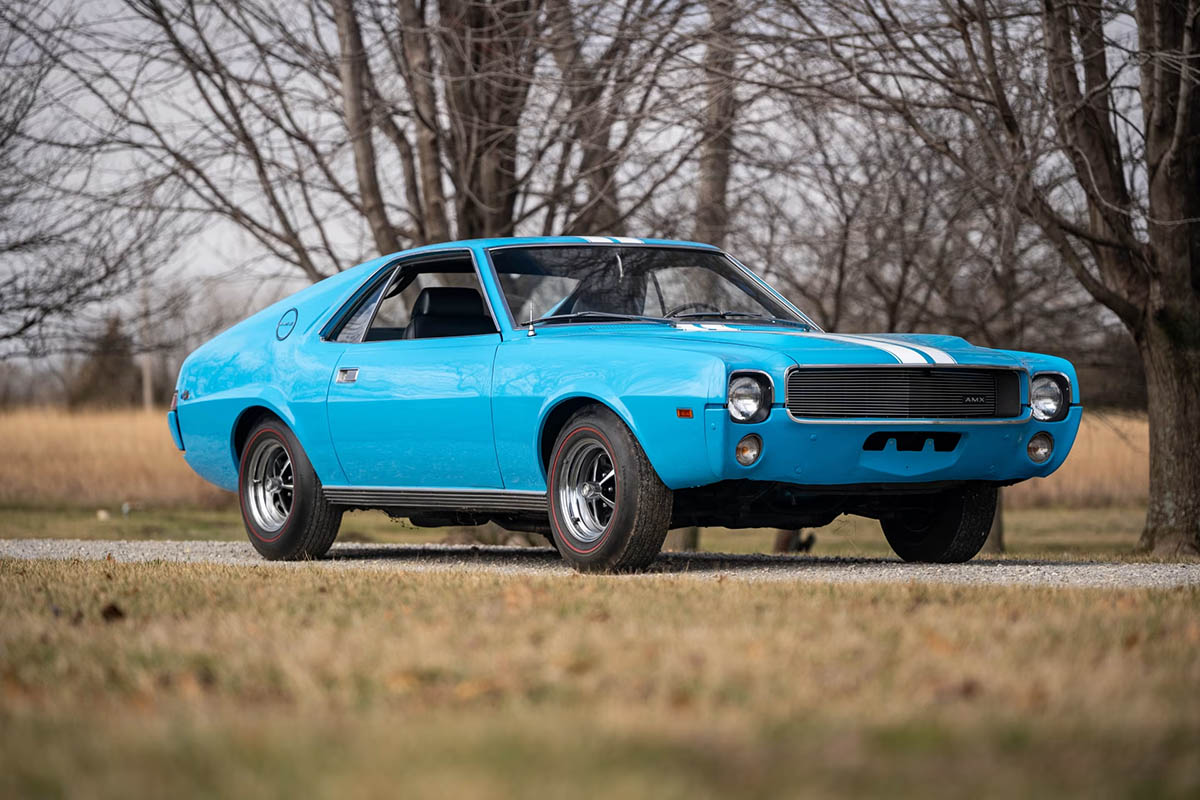
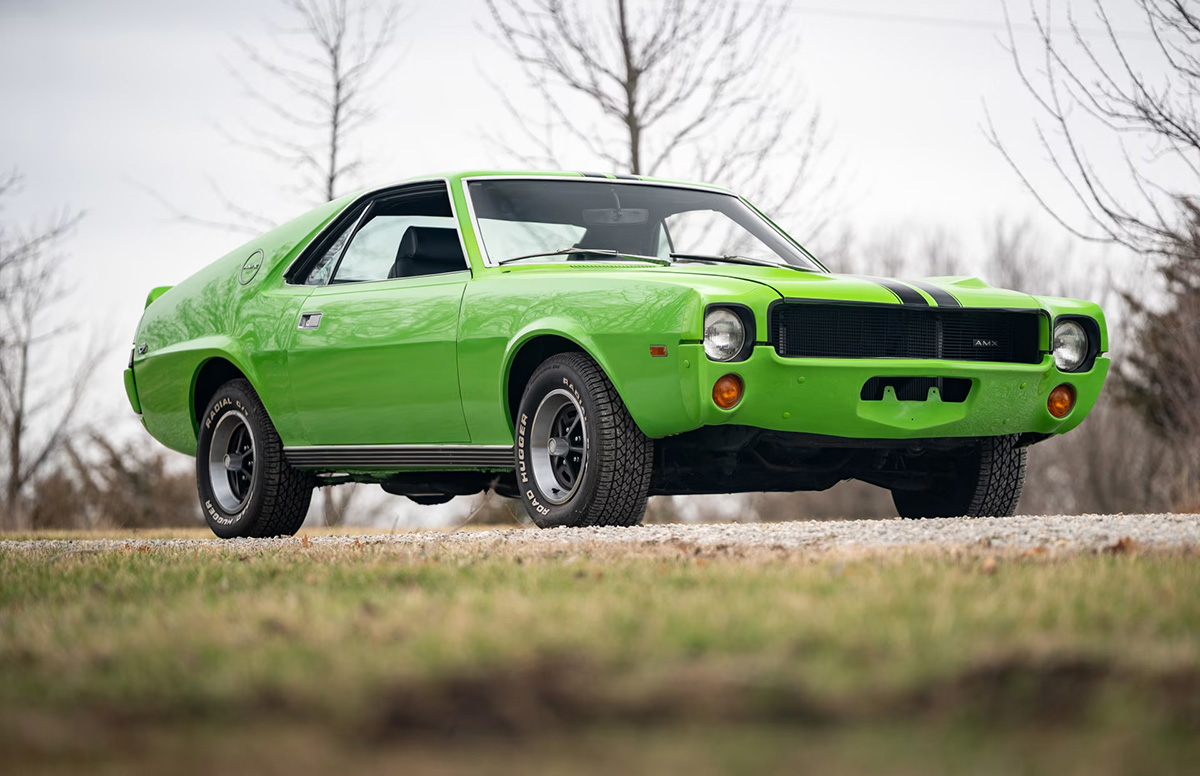
The three colours - ‘Big Bad Orange,’ ‘Big Bad Blue’ and ‘Big Bad Green’ – were bright and very eye-catching. To further their impact, AMC added body-coloured front and rear bumpers, body-coloured rear bumper overriders, and lower grille trim on the front bumper that mirrored the upper grille brightwork.
Pitched specifically to AMX and Javelin buyers, the Big Bad Colours package launched as a no-cost option, then became a US$34.00 extra. At the time, selecting a non-standard colour for your AMC added US$39.40 to the price, so Big Bad was good value.
Technically, the three Big Bad colours could be added to any AMC for 1969, but the higher price would apply. Additionally, an Ambassador, Rebel or Rambler so painted didn’t get the coloured bumpers and additional trim – these were exclusive to the AMX and Javelin.
The Big Bad package co-incided with other new options available to AMX/Javelin buyers for 1969, like leather seats, a roof spoiler and exterior sill mouldings that mimicked side-exit exhausts. Standard kit was updated, too, with a larger tacho and 140mph speedo introduced, as well as a hood for the instrument cluster.
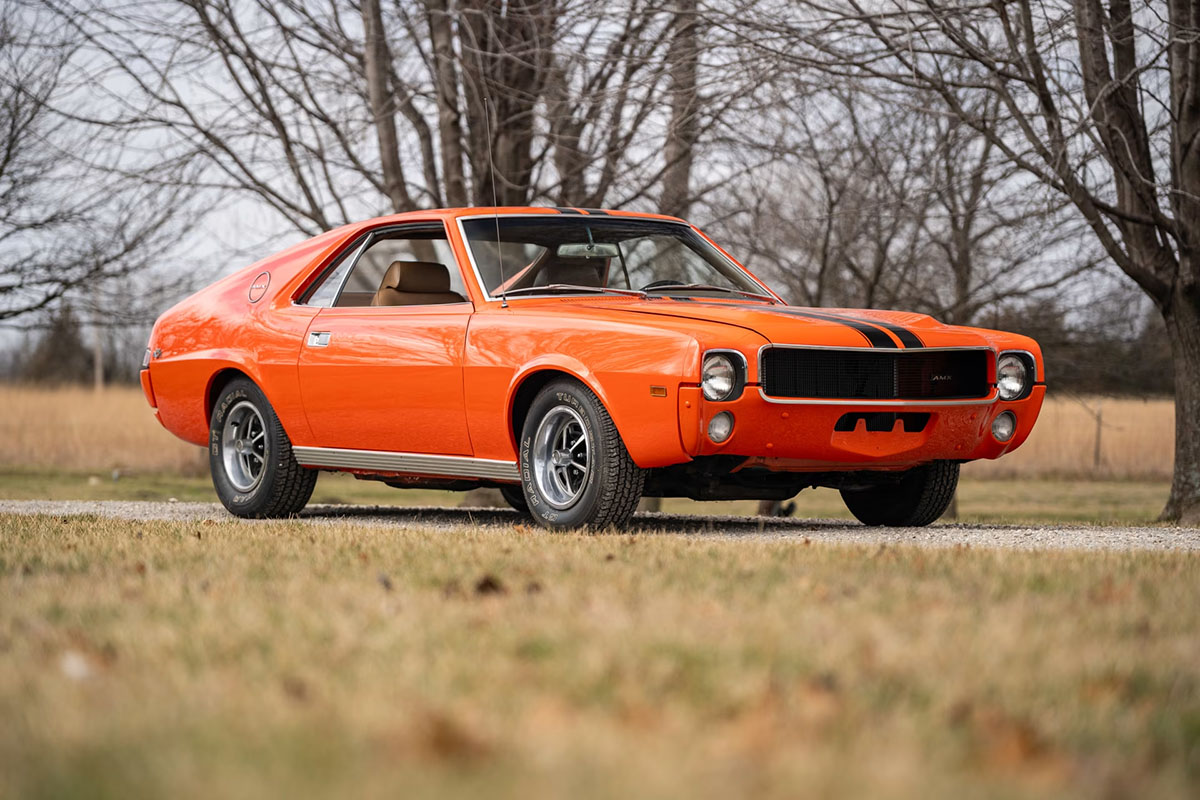
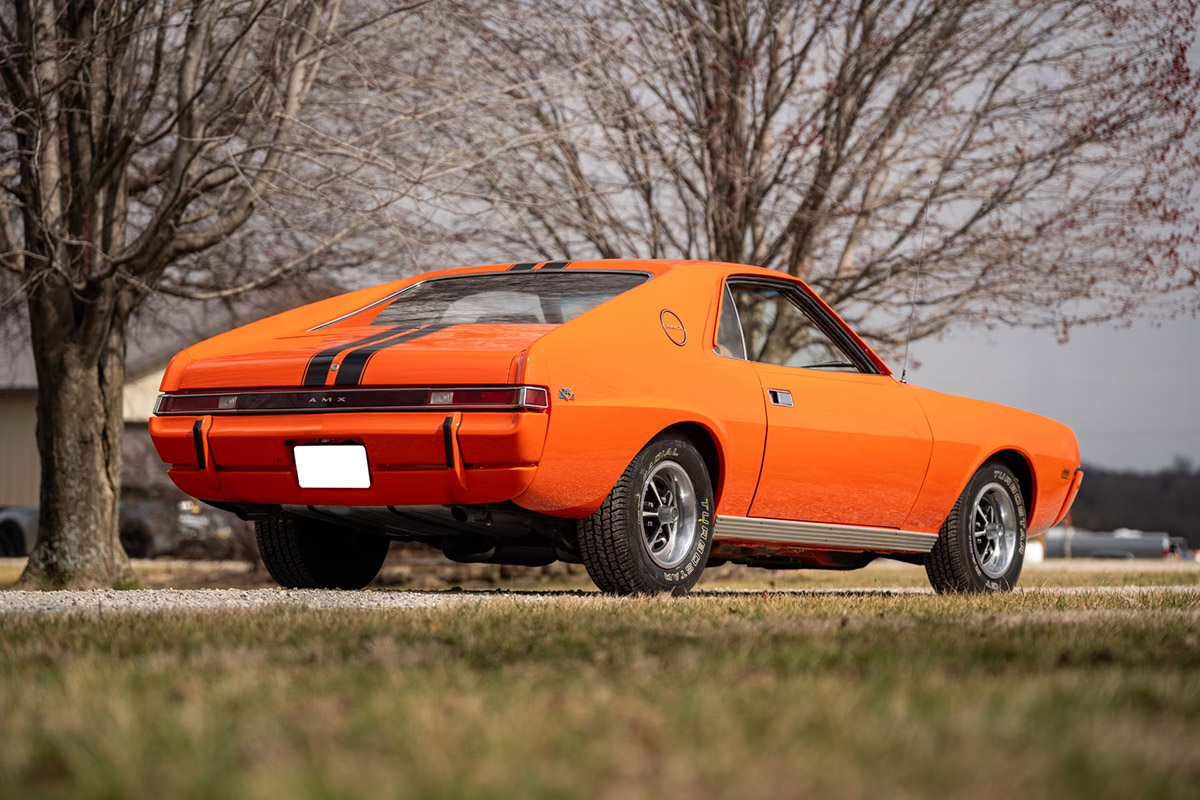
Despite AMC’s optimism about the Bid Bad Colours, the take-up wasn’t huge. For 1969, a total of 284 AMXs were finished in Big Bad Orange, 283 in Big Bad Green and 195 in Big Bad Blue, according to an AMC publication from the 1970s. Combined, those numbers accounted for less than 10 per cent of total AMX production for the 1969 model year. How many Javelins got the Big Bad treatment in ’69 is unrecorded, although unofficial figures are around three to four times the AMX total. While unconfirmed, this makes sense as the Javelin generally outsold the AMX by a similar amount.
Big Bad Colours returned for the 1970 model year, but only as a regular paint option, without the colour-coded bumpers and extra trim. The Javelin and AMX accounted for the bulk of cars so ordered that year, although some examples of the Hornet and all-new Gremlin subcompact received the special paint, too. Unconfirmed information suggests small numbers of the Rebel received Big Bad paint as part of a regional promotion in 1970, along with a handful of 1971 Jeep Renegades.
Today, an AMX in one of the Big Bad Colours is a rare and very sought-after muscle car. An example with the 390 V8, Go Package and other options is even harder to find, so to have three AMXs, in each of the three colours, all 390-powered and Go Package-equipped is a rare thing indeed.
Big Bad Trio
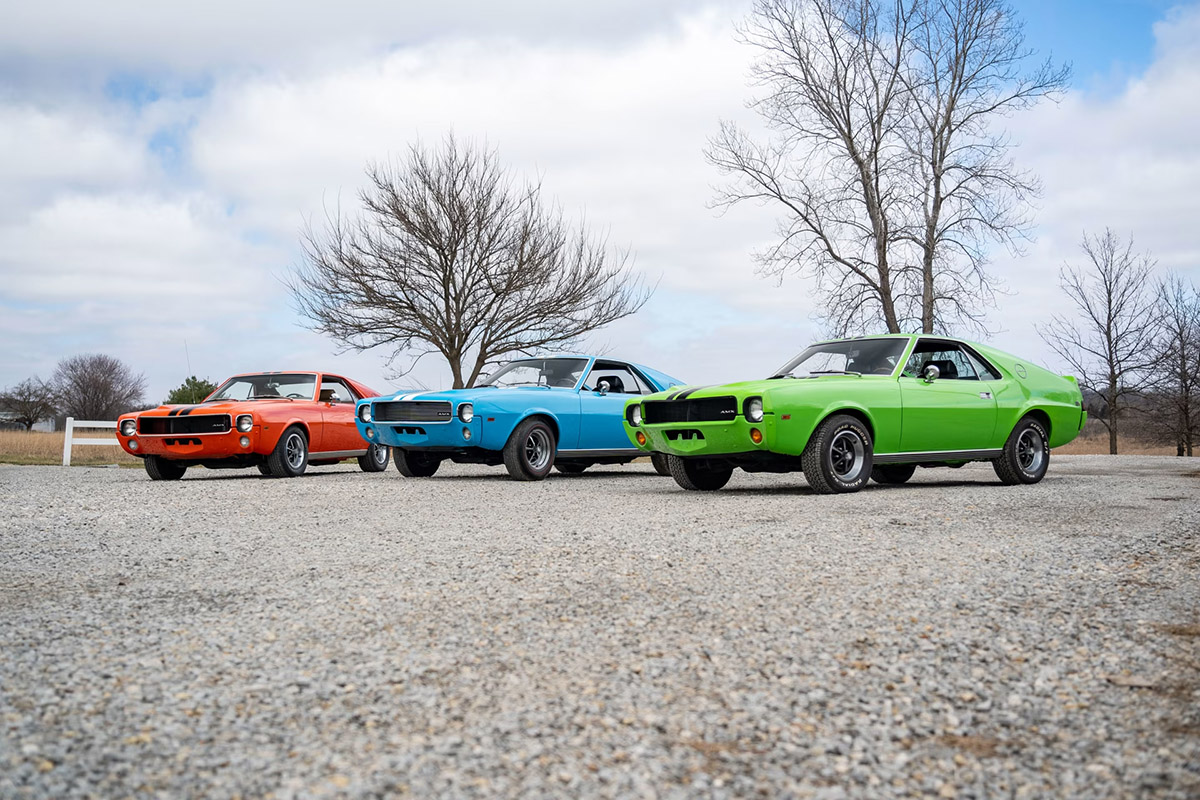
For their massive Indianapolis auction this past May, Mecum Auctions presented an AMX enthusiast’s ultimate fantasy with three 1969 AMX coupes in Big Bad Colours. A first for Mecum, it’s unlikely such a single-lot consignment has been offered by any other auction house, either.
In addition to representing each of the Big Bad Colours, the three AMXs in this one-lot offering were all factory-fitted with the big 390 V8, four-speed manual and Go Package. According to Mecum, the consignor spent almost a decade searching for the best cars with all these features to make up a ‘Big Bad AMX Trio’.
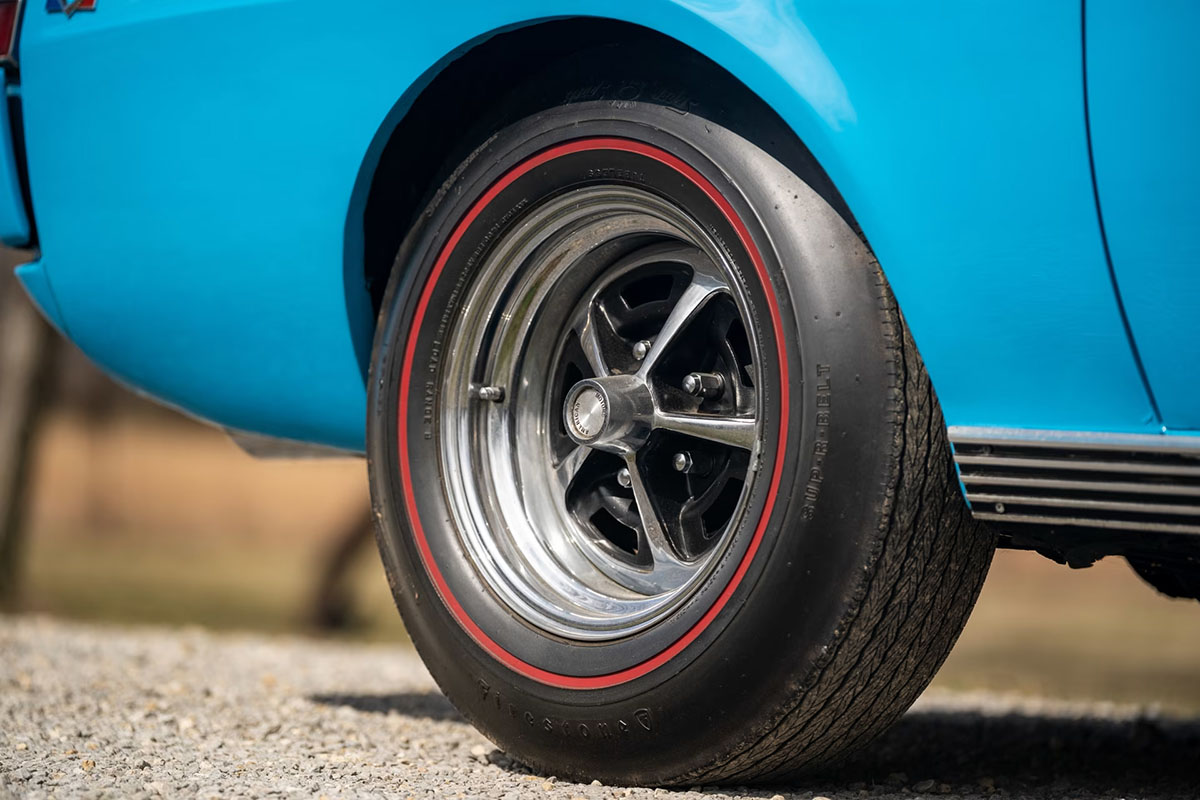
Of the trio, the Big Bad Blue car was the best, rarest and most original. Prepared to show car standard, it featured OEM fittings in a detailed engine bay, twin white body stripes (that were a separate option to the Big Bad Colours), and factory-style steel wheels. Inside, it was fitted with the instrument hood and passenger grab handle introduced during 1969, bucket seats in pleated black vinyl, a faux wood steering wheel, period radio and Hurst shifter for the four-speed manual.
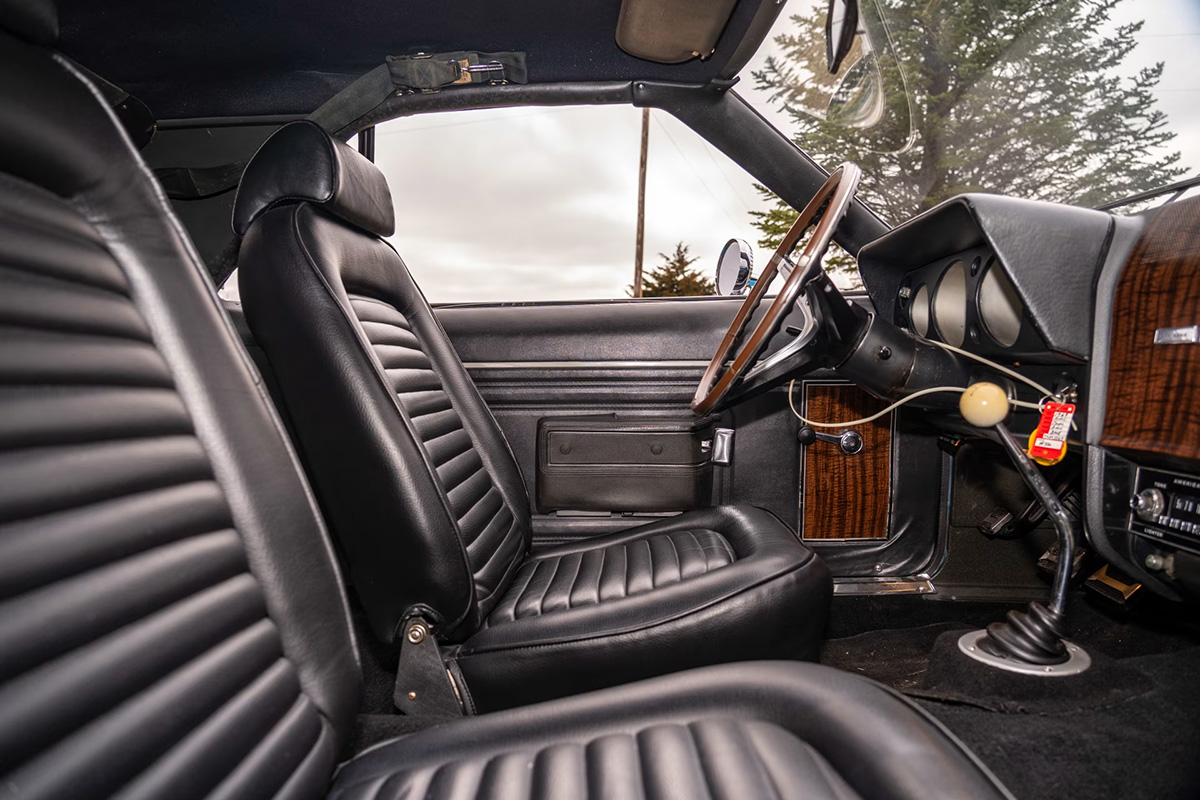
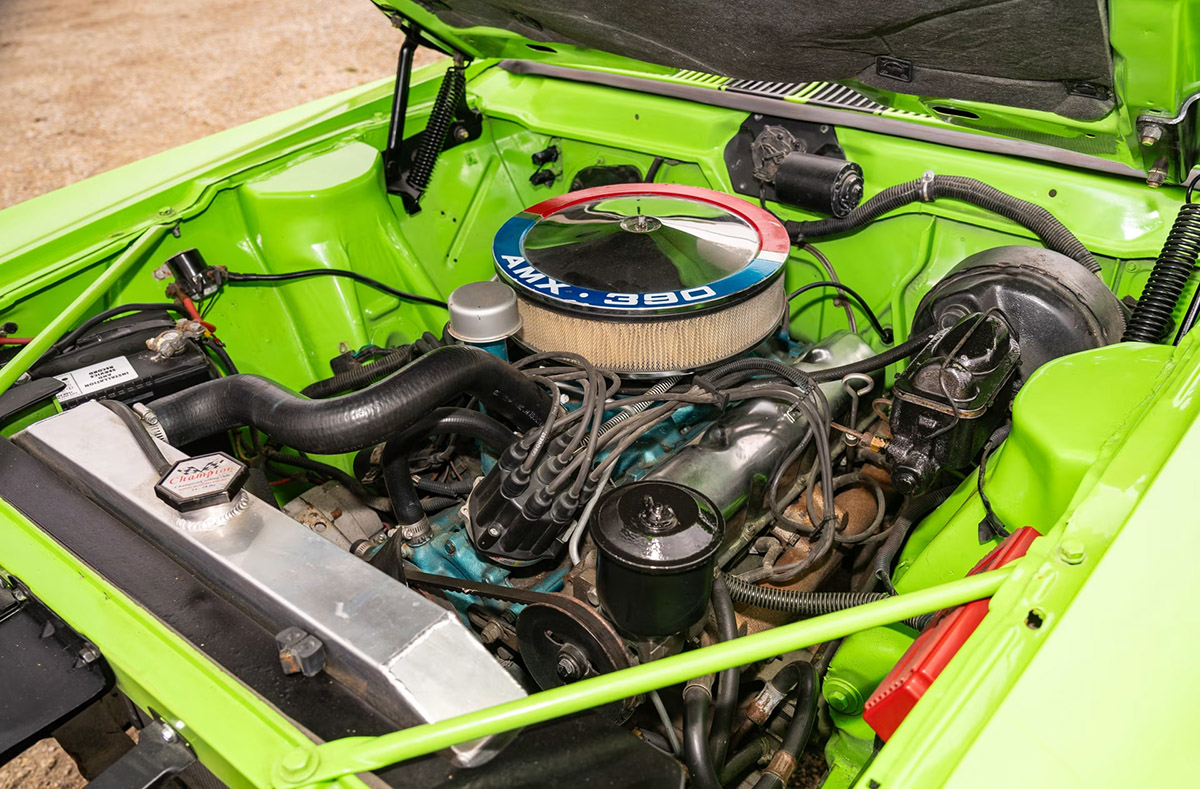
The Big Bad Orange car had some underbonnet changes made, including an Edelbrock intake manifold and carburettor, open-element air cleaner, and an aftermarket radiator. Inside, its main point of difference over the other two cars was a tan vinyl interior and gold-coloured carpets, which appear to be factory. Faux woodgrain accents on the doors and dash were the same as the blue car, with the steering wheel, Hurst shifter and radio all period correct.
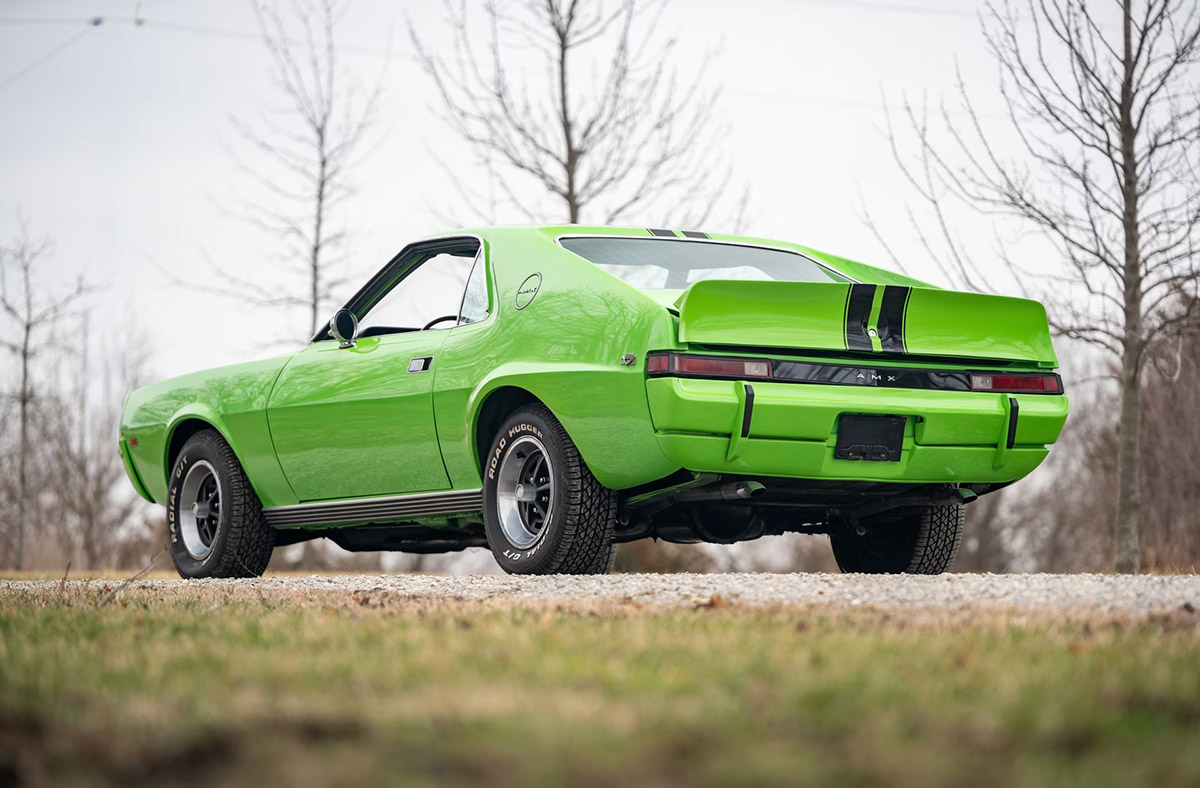
The third car, in Big Bad Green, was the furthest removed from factory spec. Amber (instead of clear) front indicator lenses, blacked-out grille trim and absent bumper trim was noticeable. The 390 V8 had an aftermarket radiator, MSD ignition and other alterations. Black cloth upholstery was in the same style as the tan trim in the orange car, but the woodgrain seen in the other two cars was absent. In particular, the doorcards looked spartan without these accents, bright metal trim and embossing. Aftermarket gauges had been fitted in place of the radio, with the shifter different to the other two cars. The rest of the interior on the Big Bad Green car looked factory, though.
Big Good Sale
All three cars were described as being restored prior to their appearance in the Mecum auction on 8-16 May. Keen interest in this unprecedented offering resulted in a final sale price of US$187,000 (AU$261,800 approx.), which translates to US$62,333 (AU$82,260 approx.) per vehicle. With AMX values averaging around half this number in recent years, the Big Bad Colours, 390 and Go Package would have contributed to the auction price in this instance, along with the unprecedented chance to snare all three examples in one lot.
Thanks to Mecum Auctions for images and information used in this article. www.mecum.com